The post Seville’s Cathedral and the Alcázar appeared first on Around the world in three years.
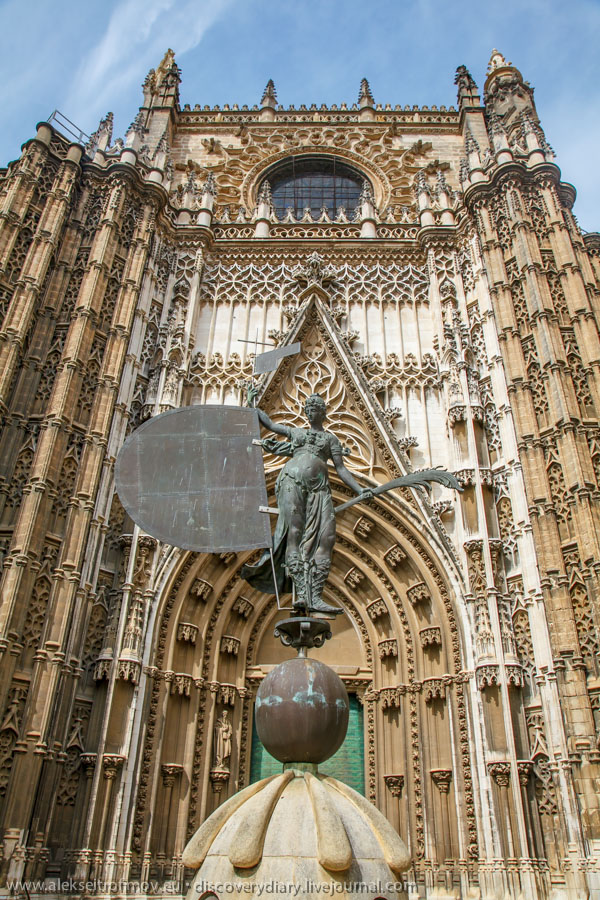
]]>The entrance:
To give an idea of the Cathedral’s size, here is a look at it from the Giralda:
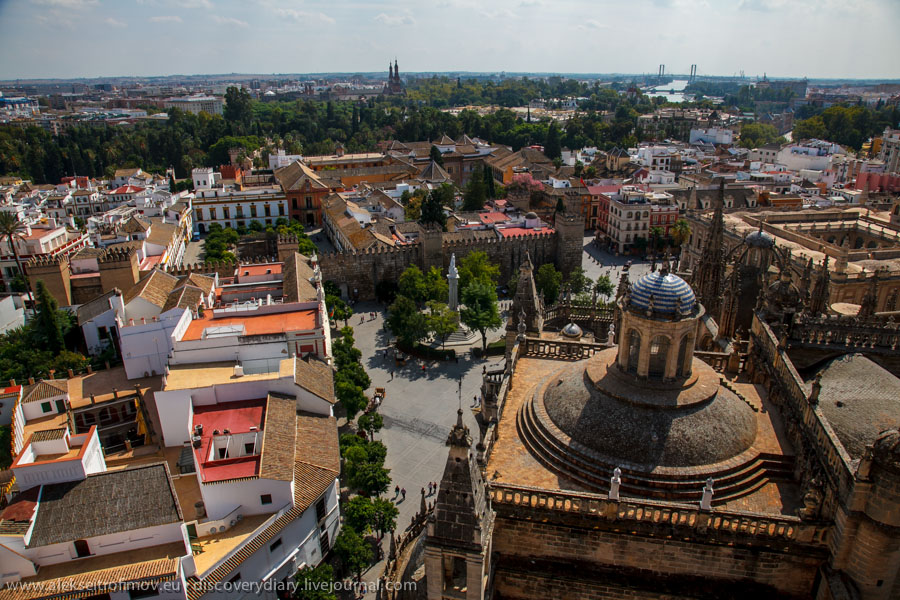
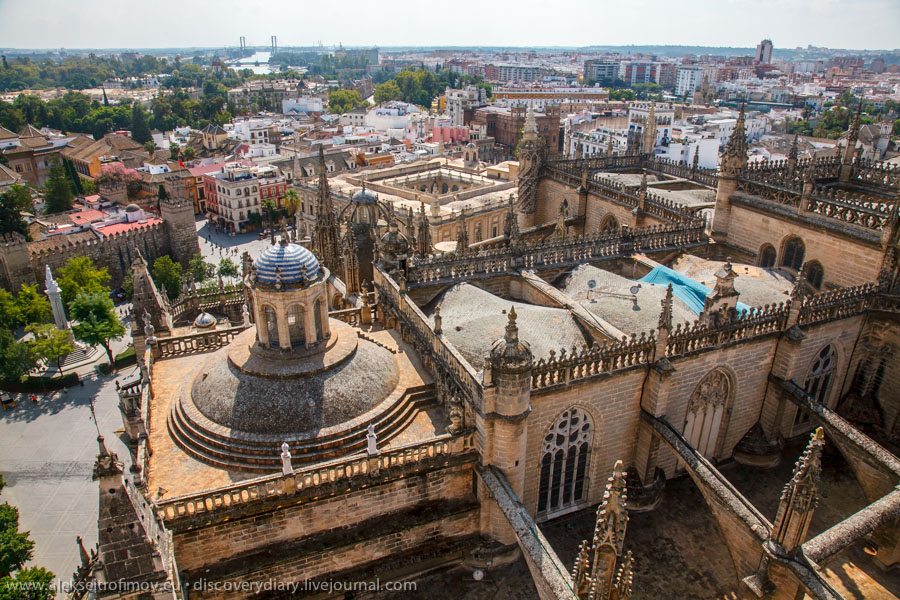
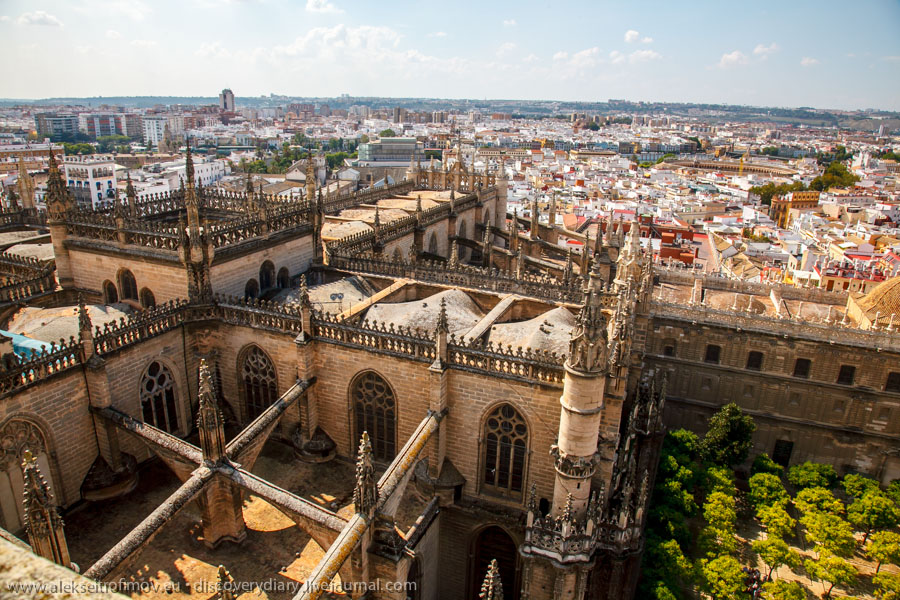
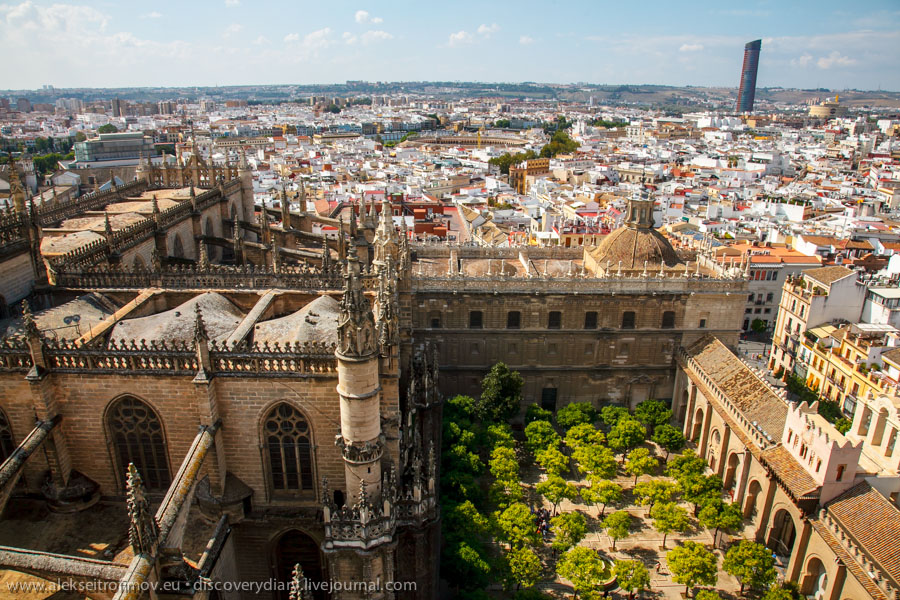
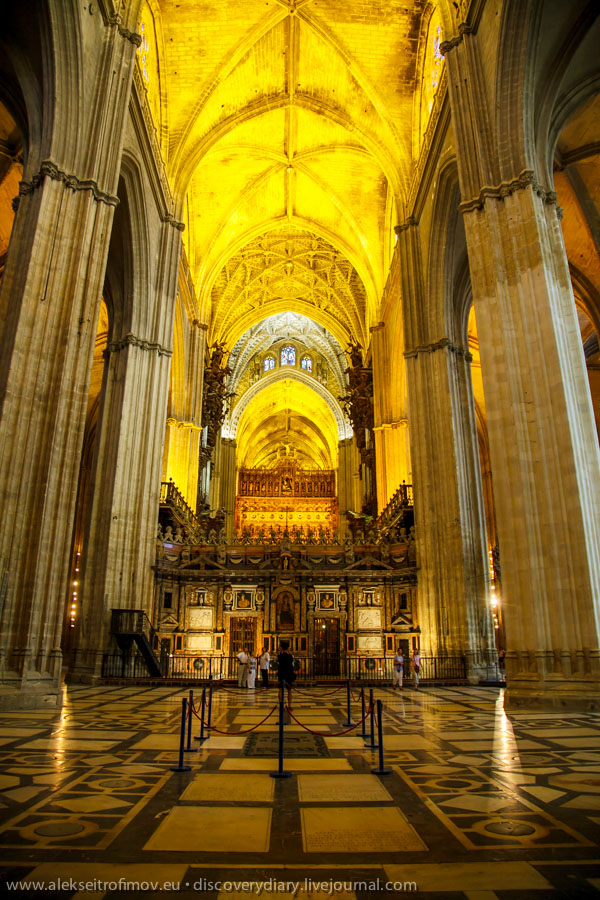
Monumental indeed.
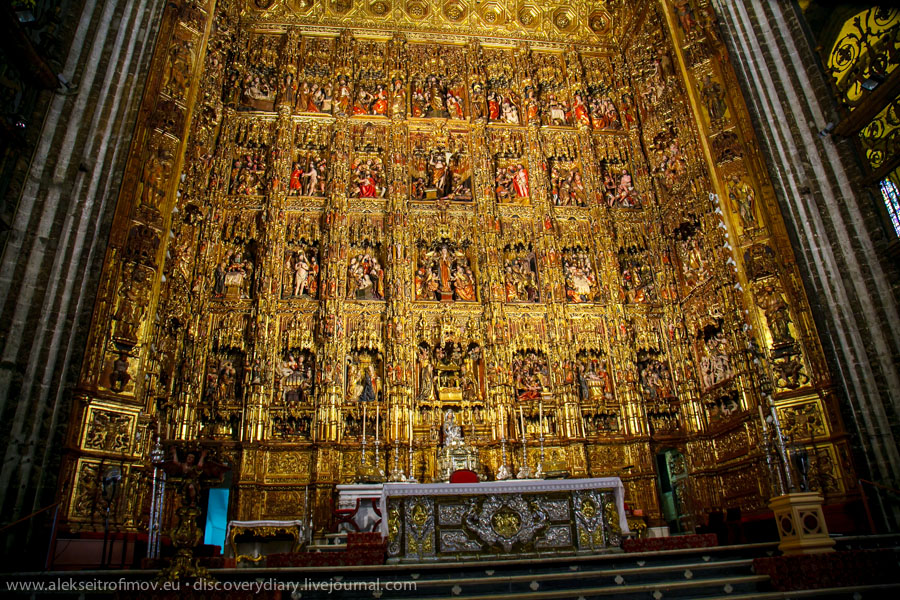
A giant gold-covered altar – the largest in the world.
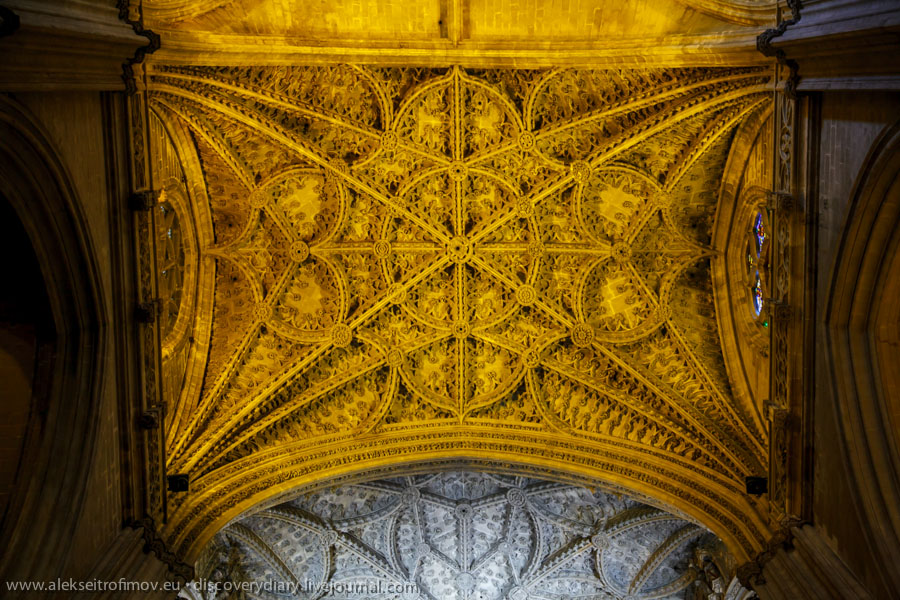
An intricate ceiling:
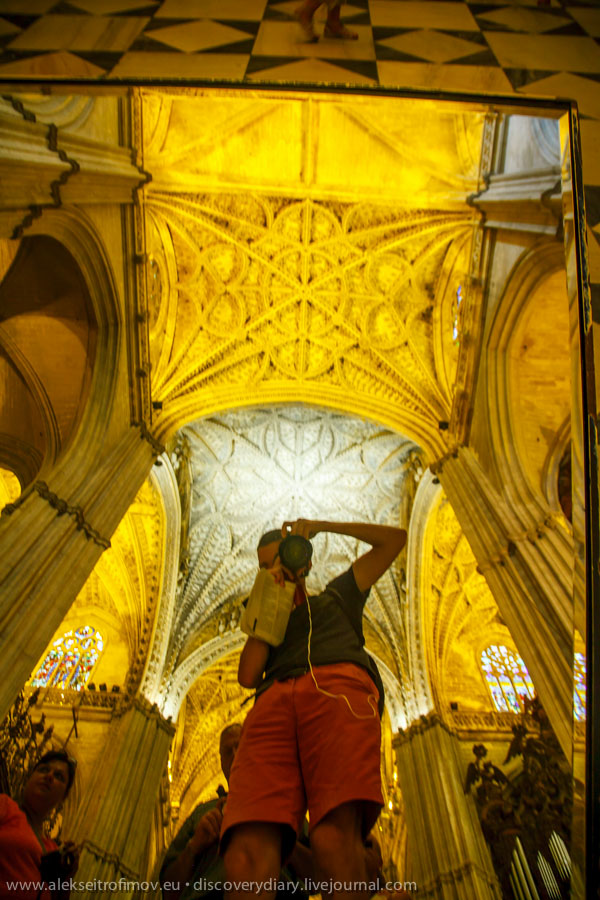
A mirror is installed apparently for selfies:
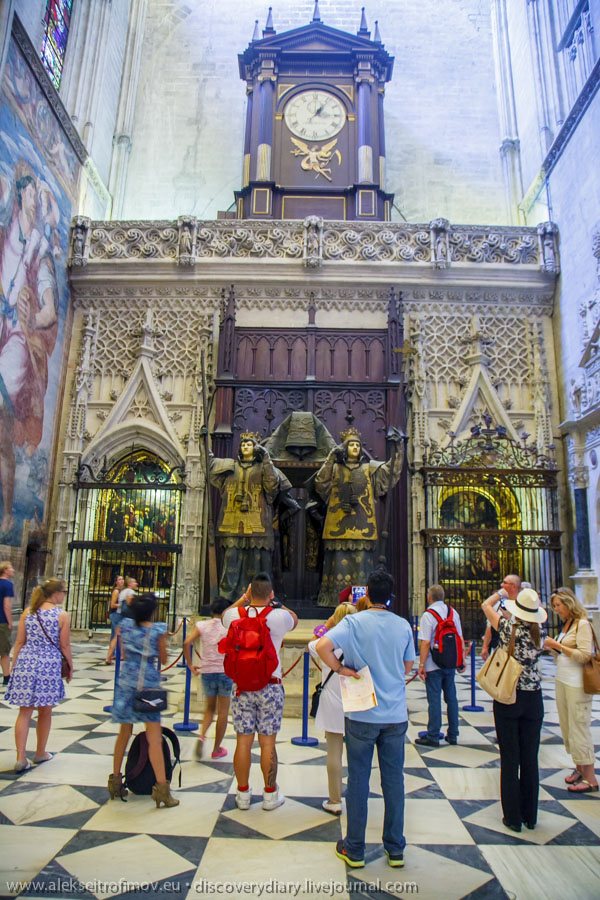
The tomb of Columbus. Actually, the Cathedral of Santo Domingo in Dominican Republic also claims to house the earthly remains of the great explorer. The truth is that the bones of Columbus have travelled around for various reasons and so there was ample opportunity for confusion to arise. Nowadays the most widely accepted theory is that both Seville and Santo Domingo have a justified claim – most likely the bones have been separated and there are some in each Cathedral.
The four human figures holding up the sarcophagus symbolise the four kingdoms that formed Spain at the time.
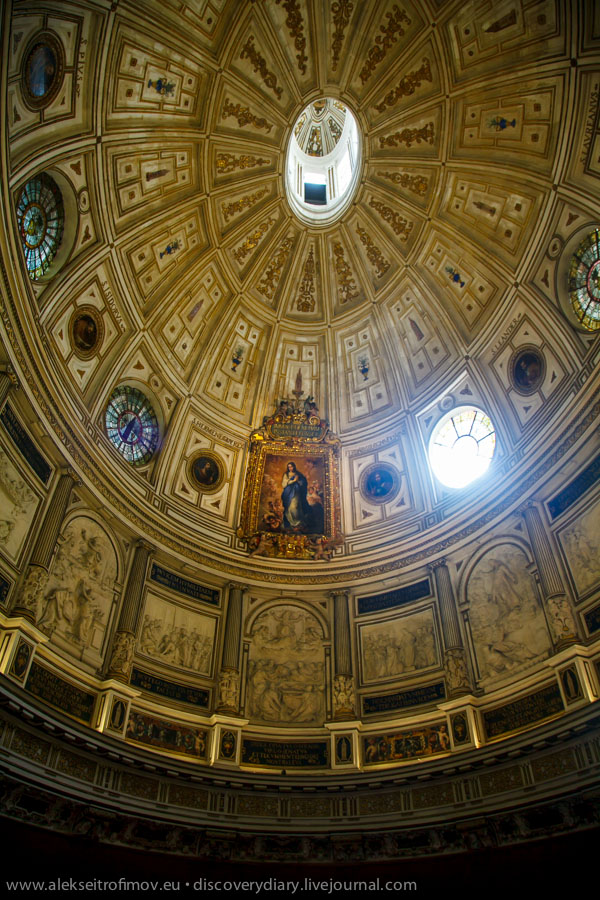
A ceiling in a chapel.
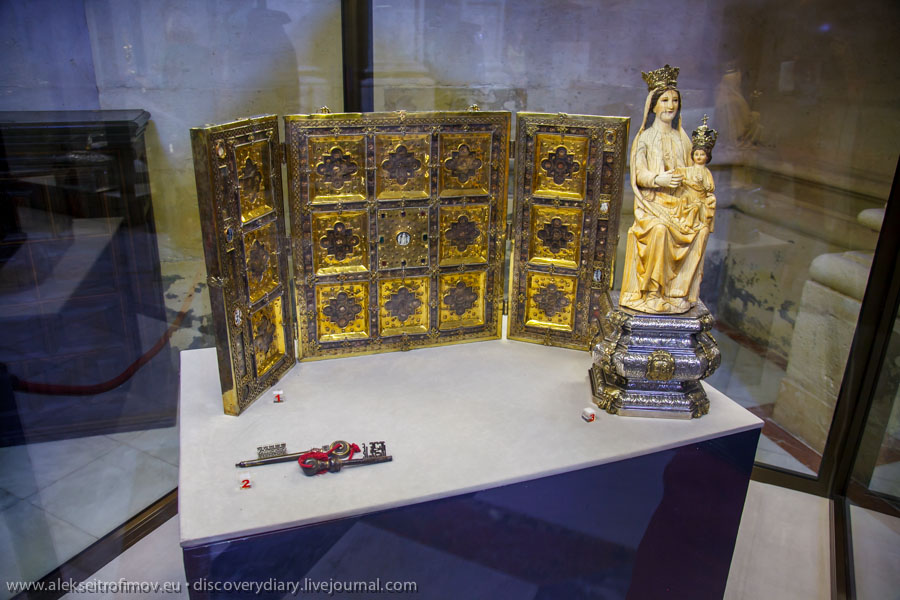
These are the keys of Seville, given over to the Castilian king when he took Seville in 1248 from the Moors.
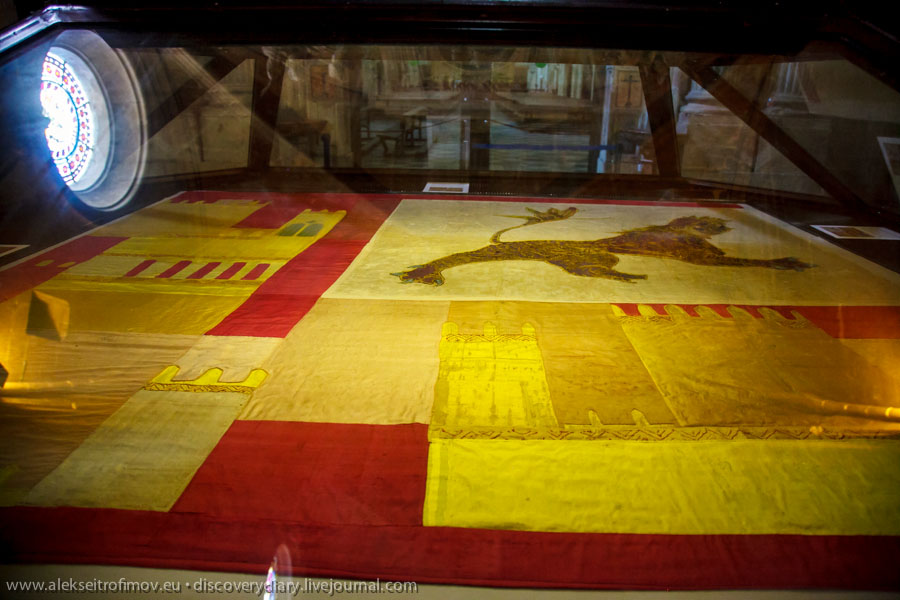
An original flag of Castilla and Leon which was used in that victorious war. We can indeed see a castle and a lion.
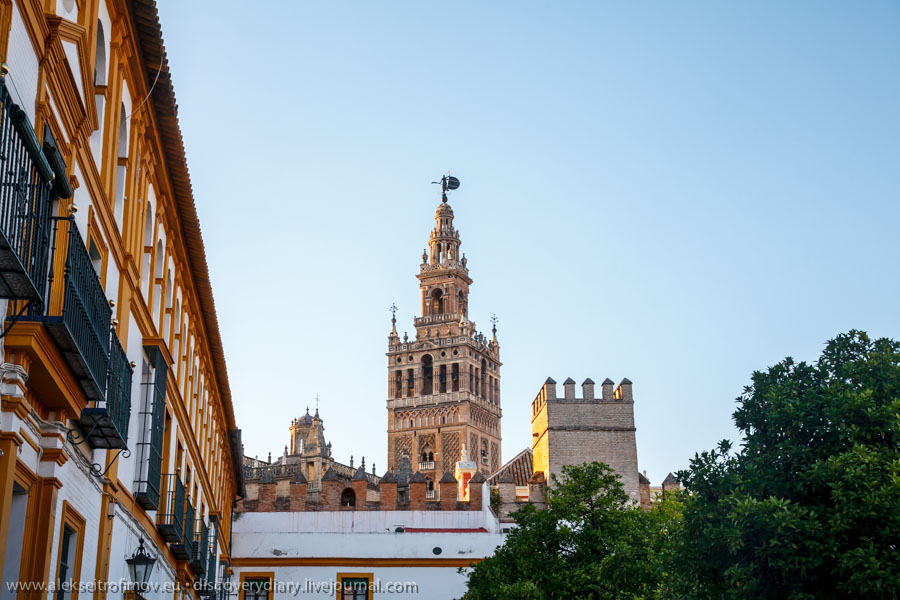
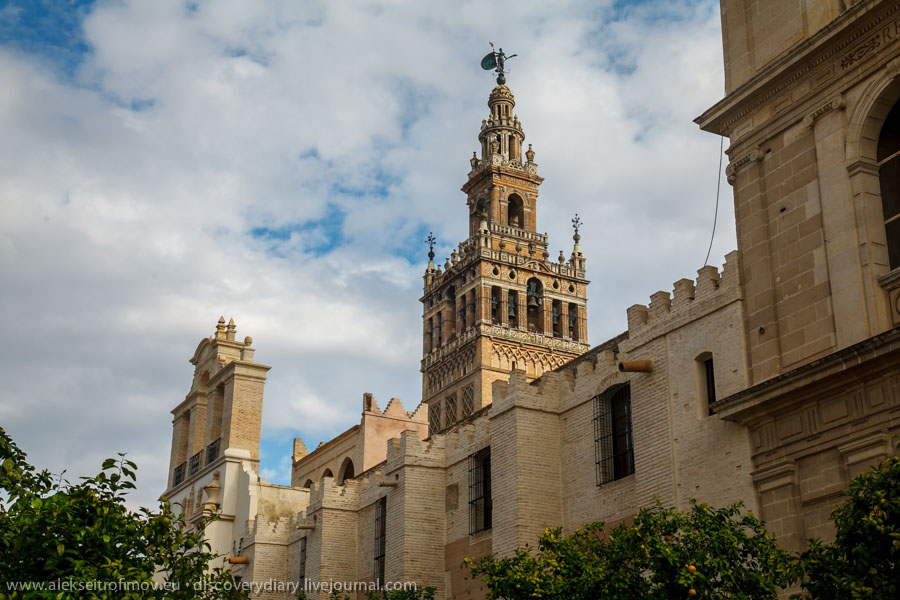
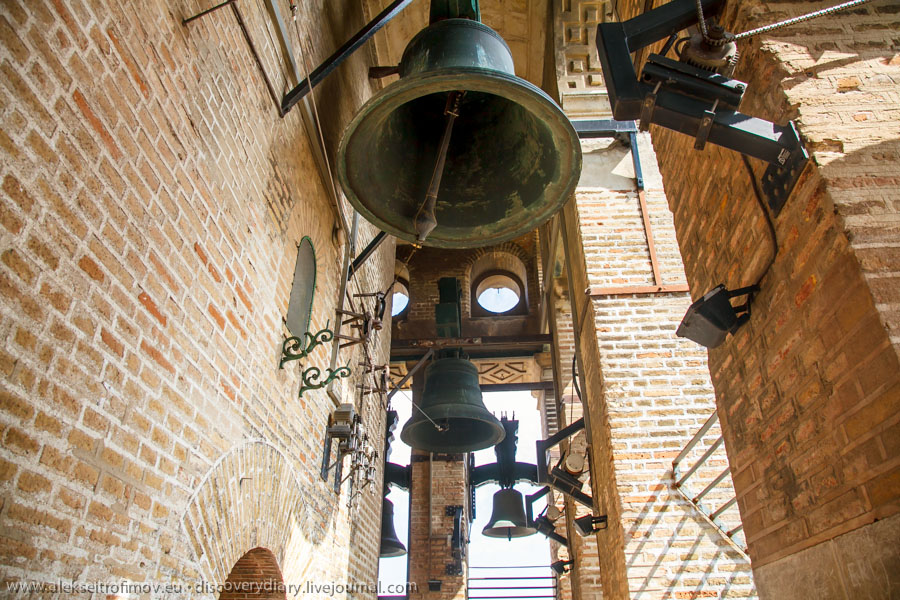
The Giralda is so tall it can be seen almost from any point in Seville. The Moors built it in imitation of the Qutubia Mosque in Marrakesh, and it was the minaret of Seville’s Grand Mosque. The Christians converted it into a bell tower.
The height is 104 metres.
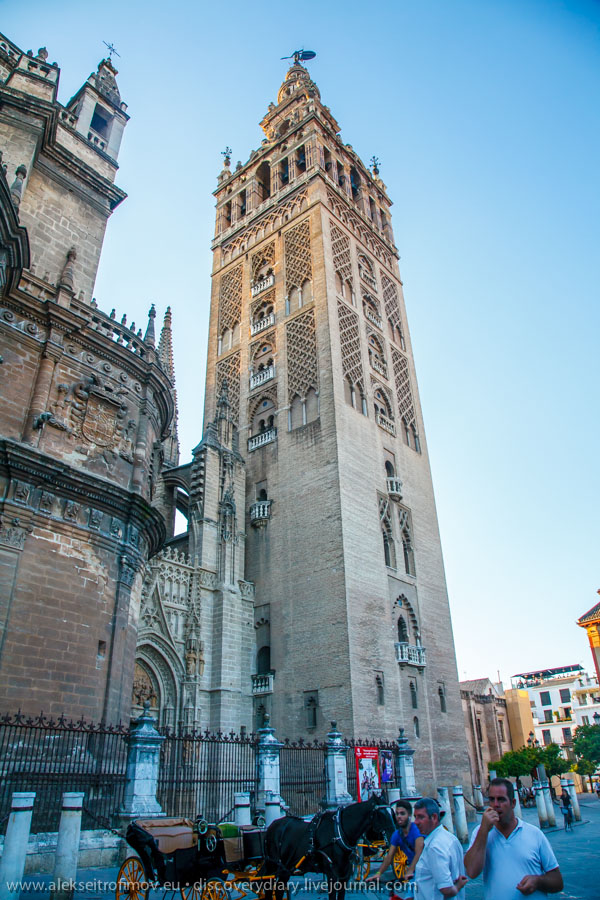
The Giralda is remarkable for its interior – it boasts an internal causeway sufficiently wide that it can be climbed on a horse. Indeed as you climb up, you walk on a slightly inclined floor without any steps all the way to the top.
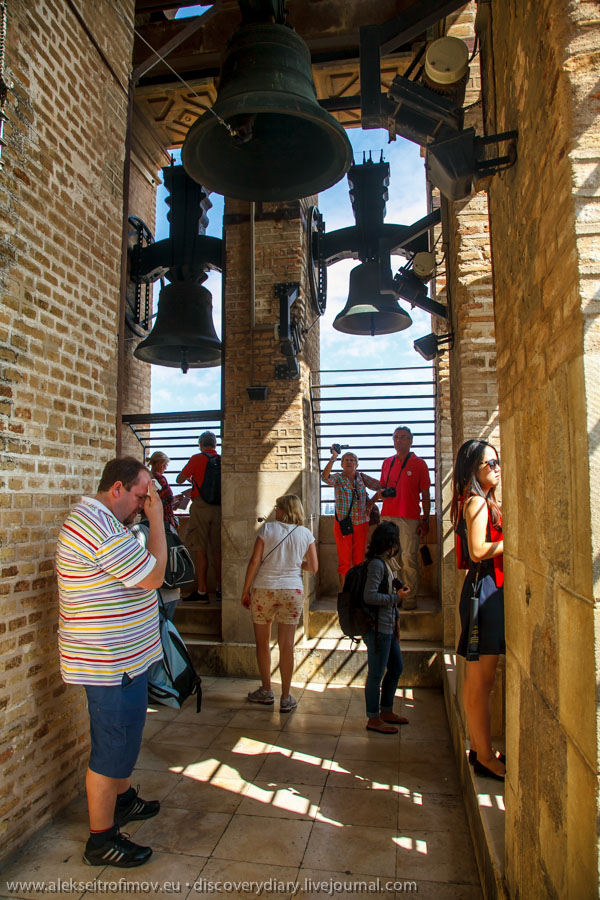
The top observation desk inside the Giralda, offering quite a view of Seville:
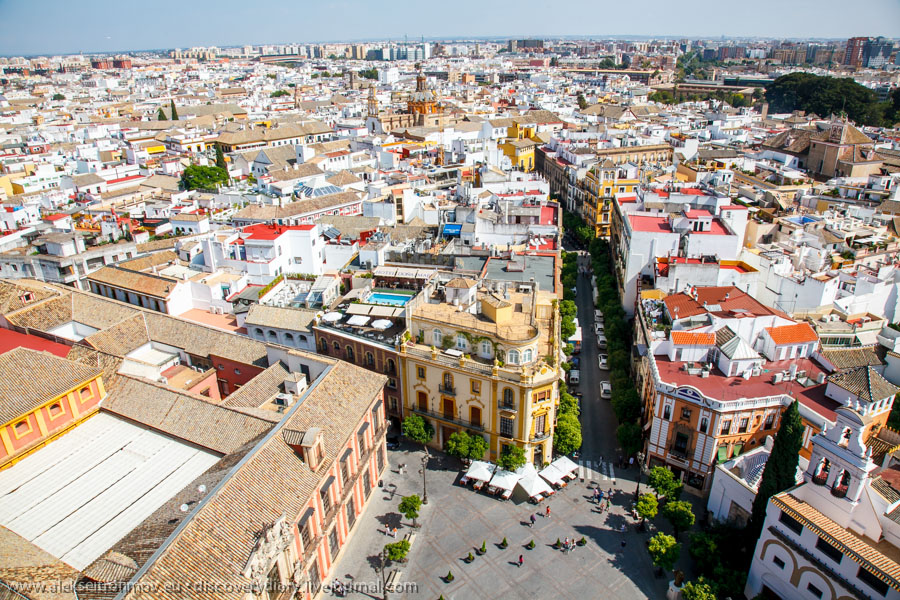
The view:
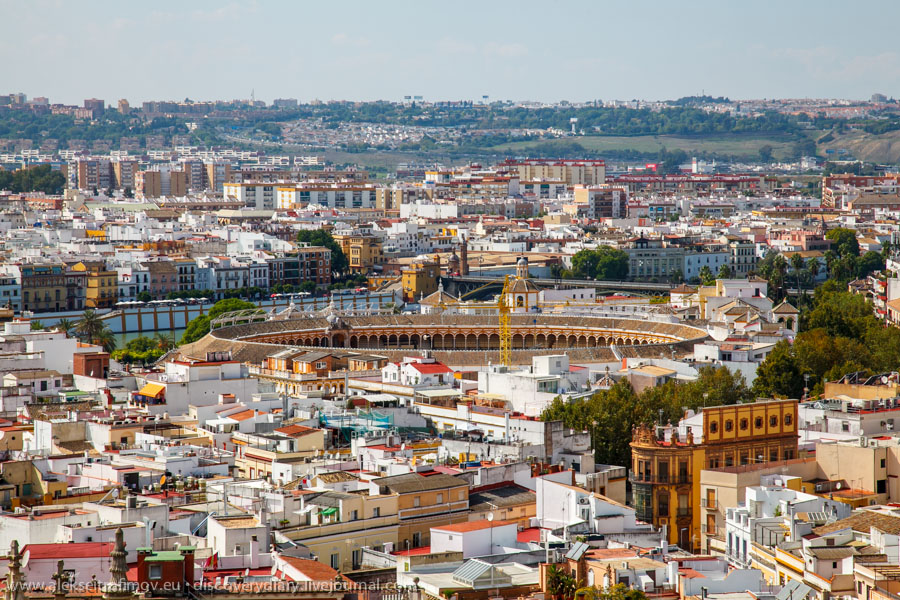
The bullfighting arena:
The visit ends in an orange orchard. The exit:
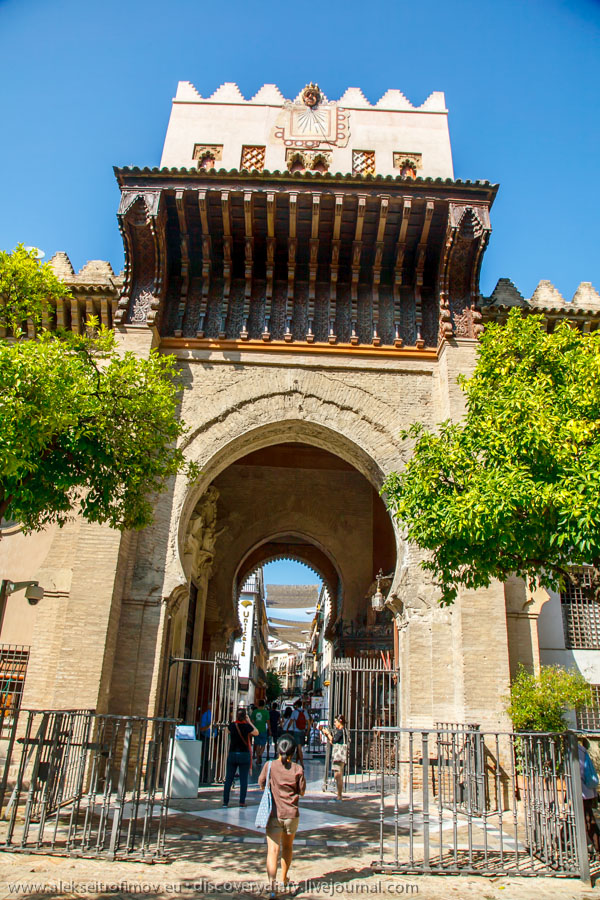
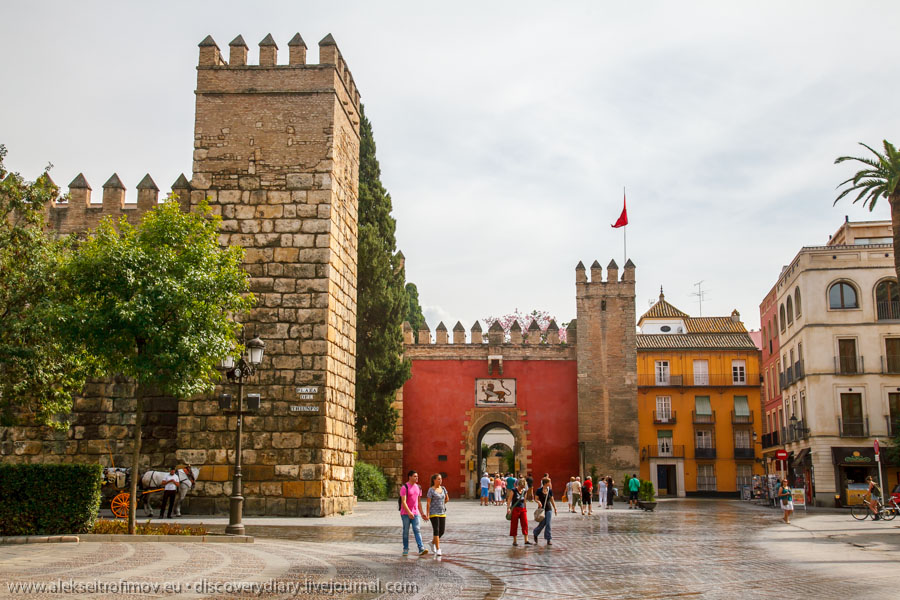
The Alcázar is the second major sight of Seville. This ruler’s castle-palace is unusual for being built by the Spanish, even though the style is very much Moorish. Indeed most of the artisans who worked on the palace were Muslims sent by the Sultan of Granada, who was a great friend of the King of Castilla at the time, Pedro I.
The entrance of the Alcázar:
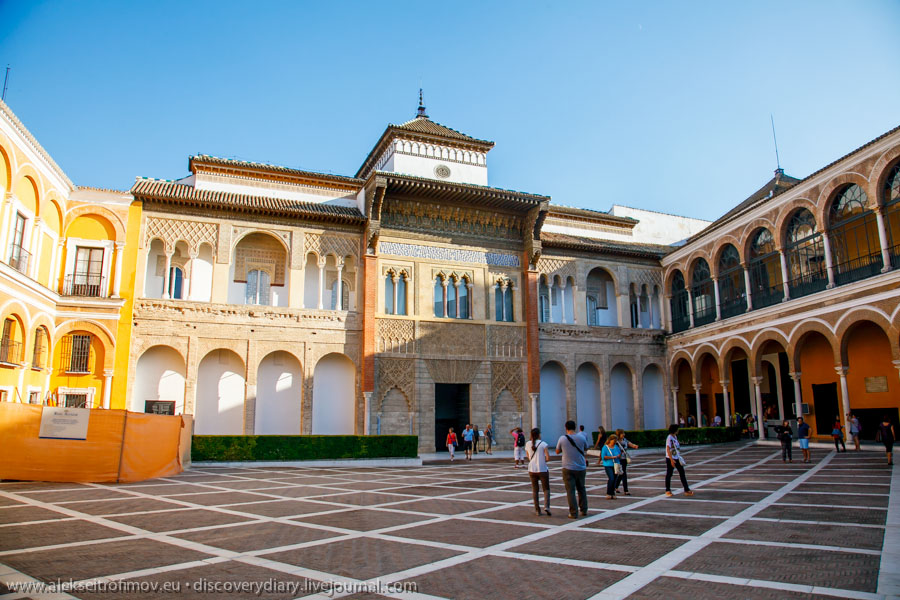
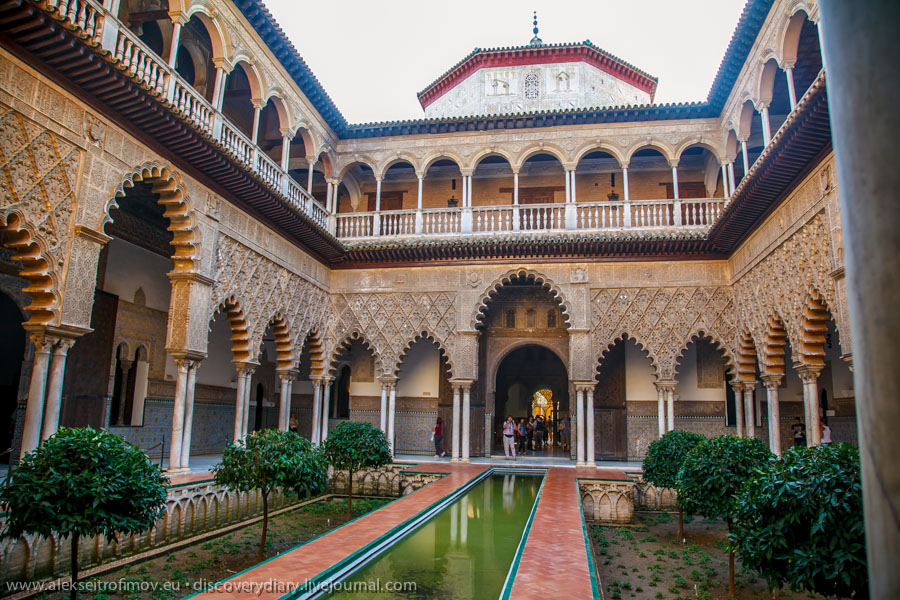
The main courtyard inside the Alcázar and the entrance to the King’s rooms:
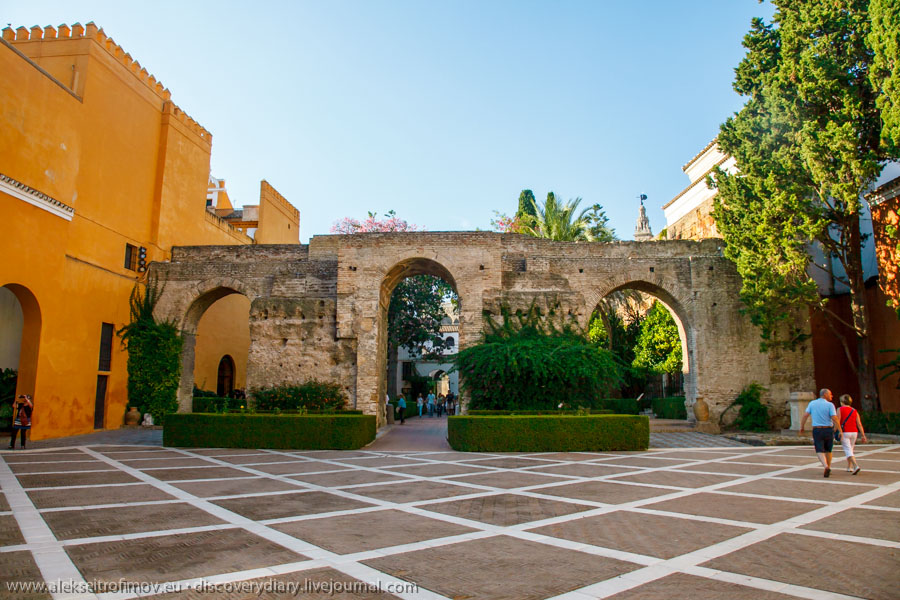
Looking back at the main entrance.
The royal rooms. The Alcázar remained a royal palace for over 700 years and part of it is still used by the Spanish royal family as their residence in Seville. This is where the wedding of Charles Quint took place.
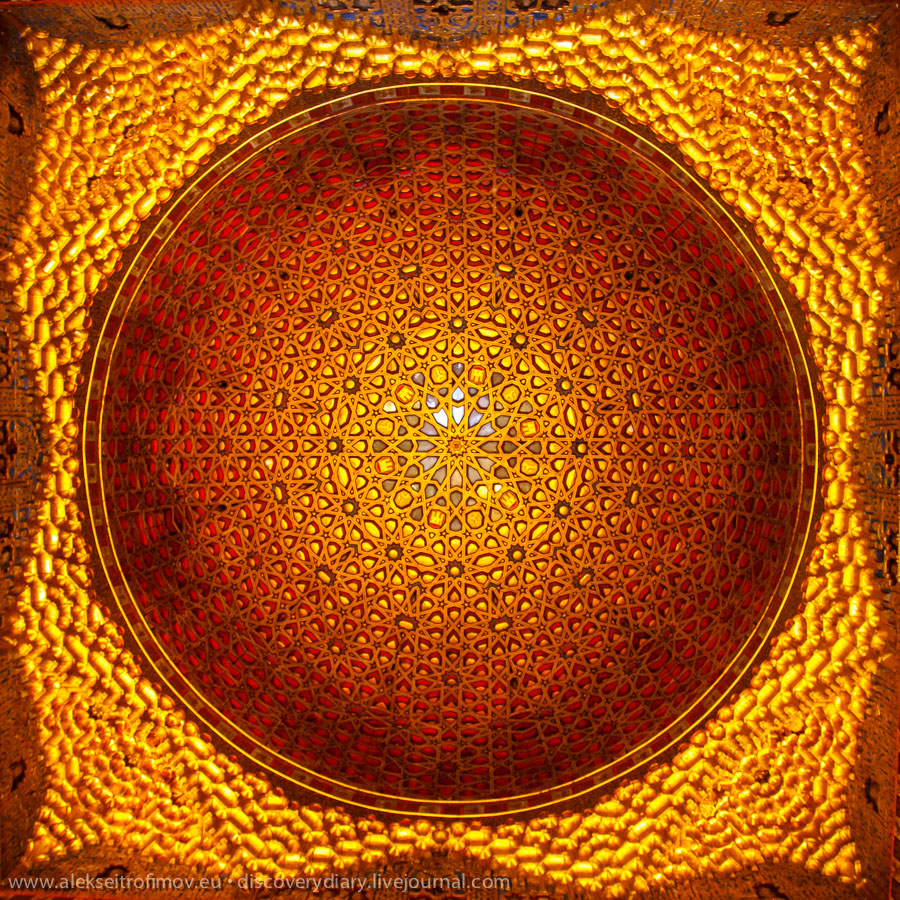
The incredible ceiling in the so-called Red Room, or the Hall of the Ambassadors. The famous story of this room is that Pedro I murdered here the Sultan of Granada who had usurped the throne of Granada from his friend, a once and future Sultan.
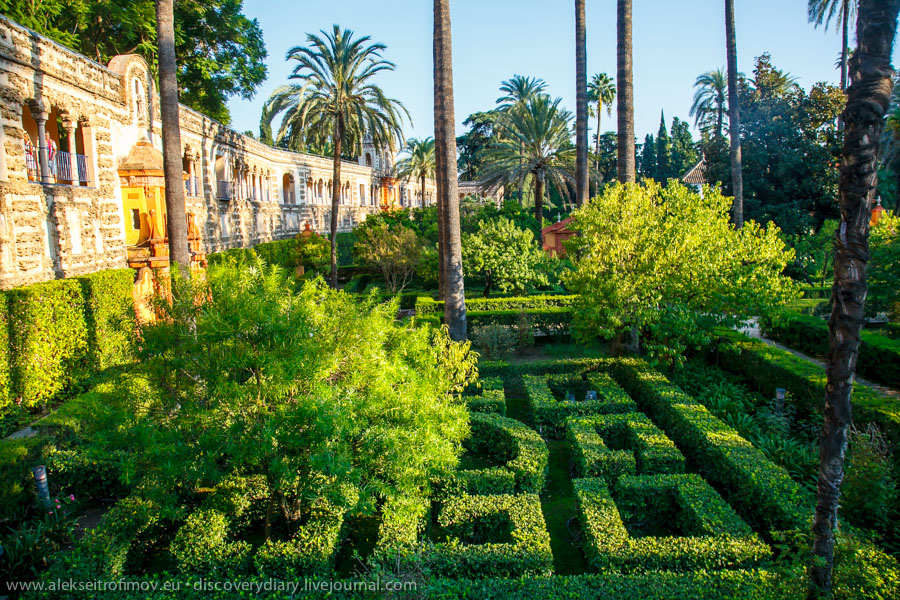
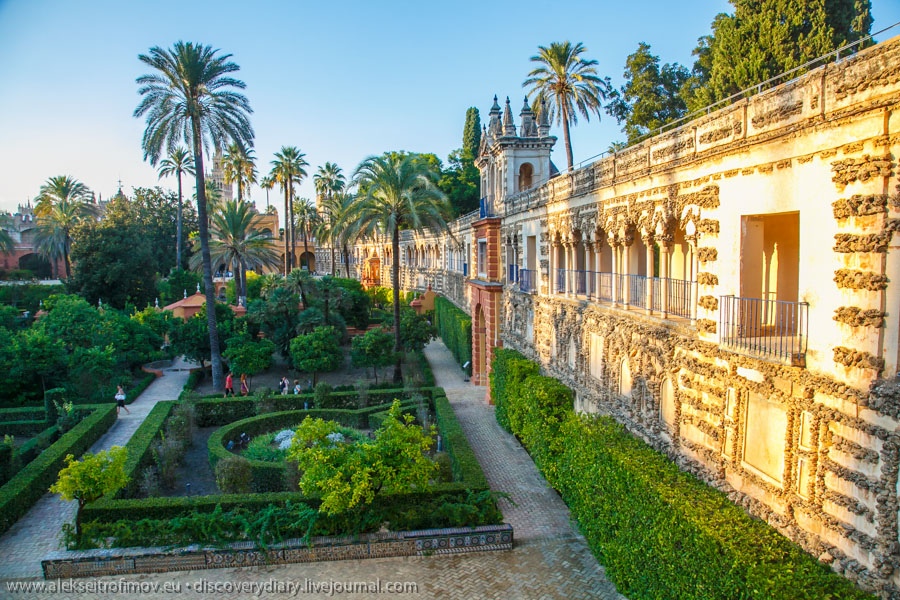
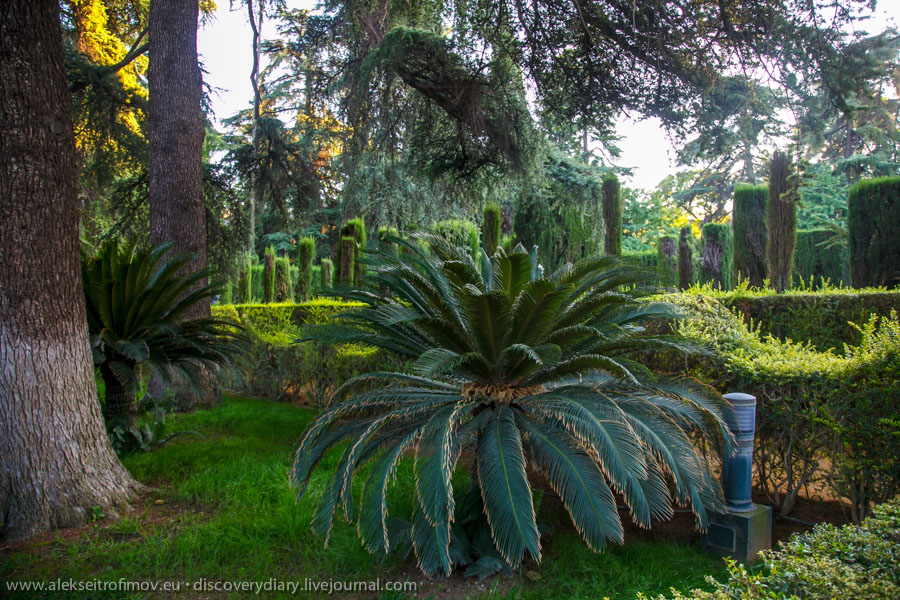
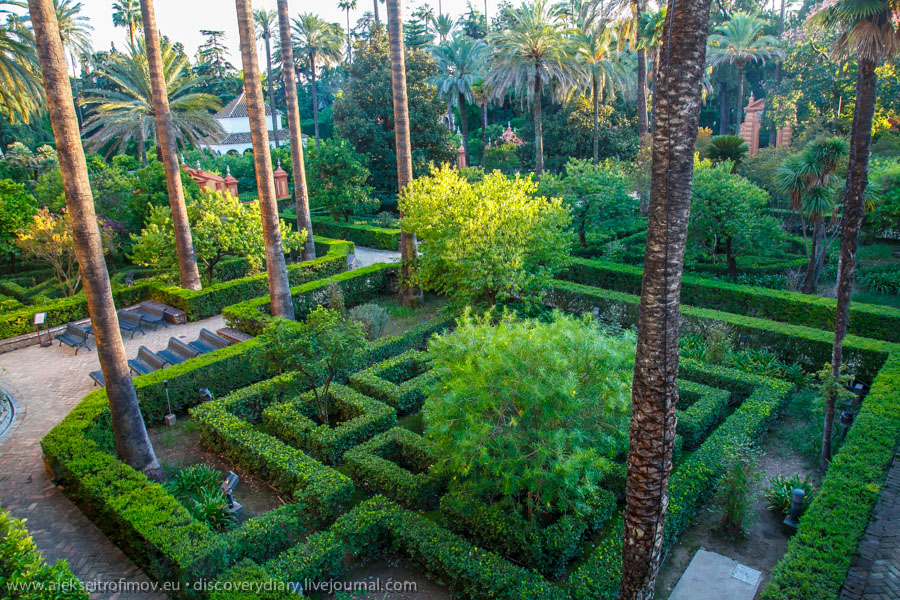
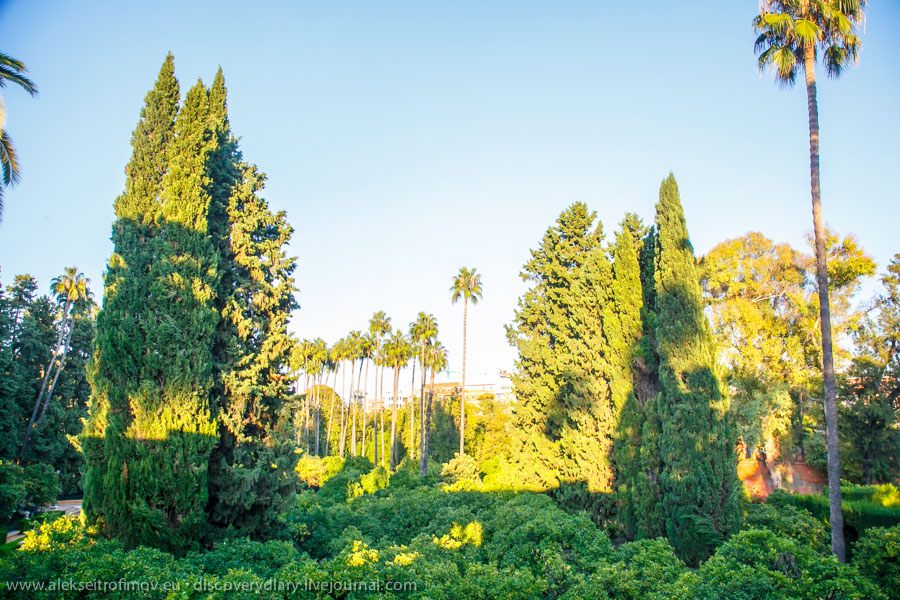
A giant exotic park is attached to the Alcázar.
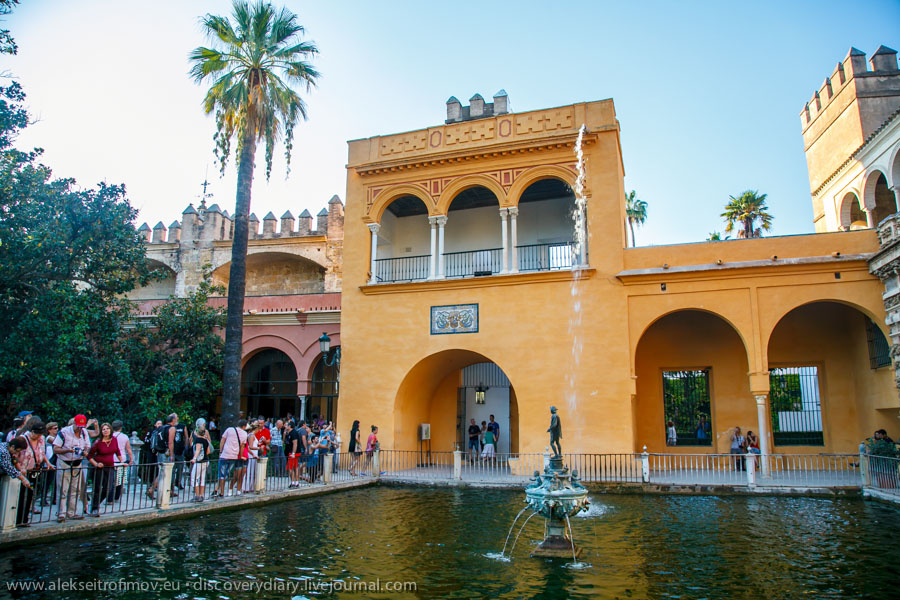
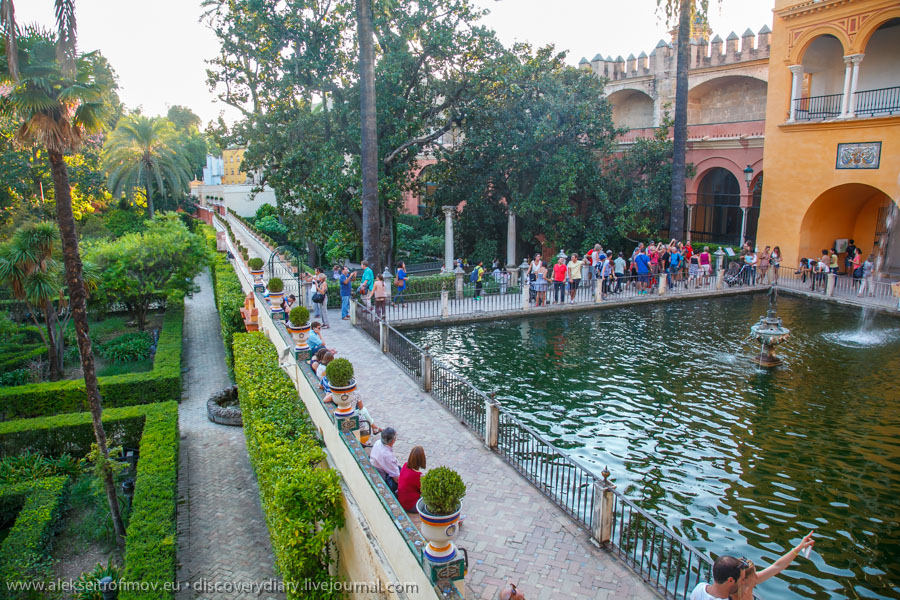
The Alcázar in Seville leaves a very different impression than the Alhambra in Granada. The Alhambra’s location is more picturesque and the whole ensemble is almost written into the nature. At the same time the Alcázar appears more bright, festive, cosy, and of course it is surprising and astonishing that such luxury and beauty and tranquillity are located in the very centre of a large and hectic city.
The post Seville’s Cathedral and the Alcázar appeared first on Around the world in three years.
]]>The post Gorgeous Sevilla appeared first on Around the world in three years.
]]>So much so that I even have trouble choosing where to start. Let it be the fairytale-like Plaza Espana. This ensemble was built in 1928 for the Ibero-American exhibition and like the Eiffel tower never left – turning instead to a symbol of the city.
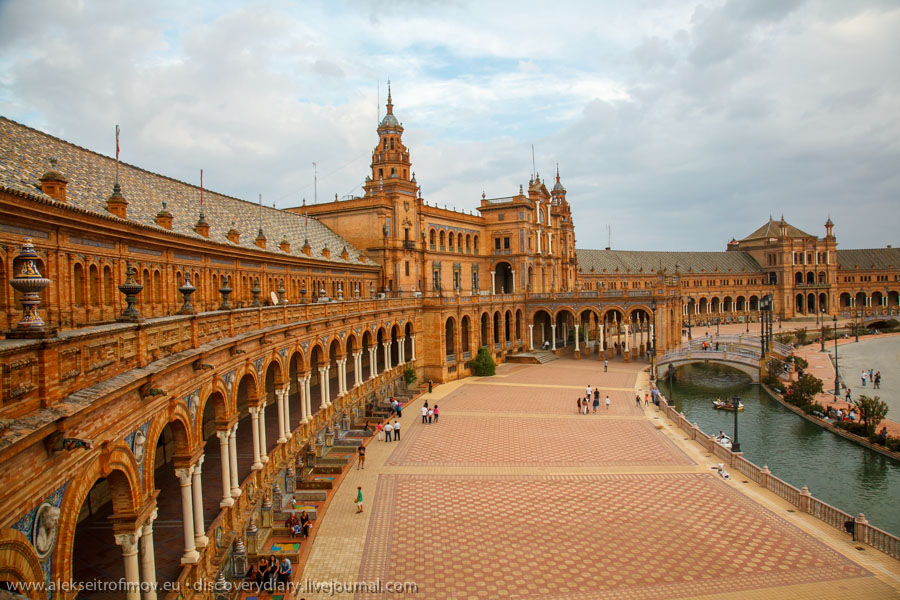
The semicircular square is limited by the channels.
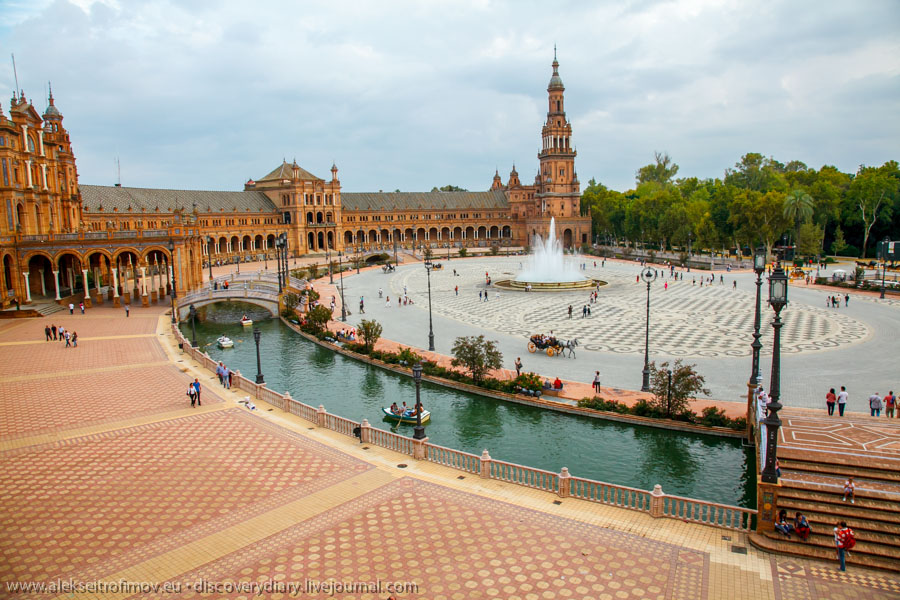
How it looks from the enormous Maria Luisa park which complements the ensemble:
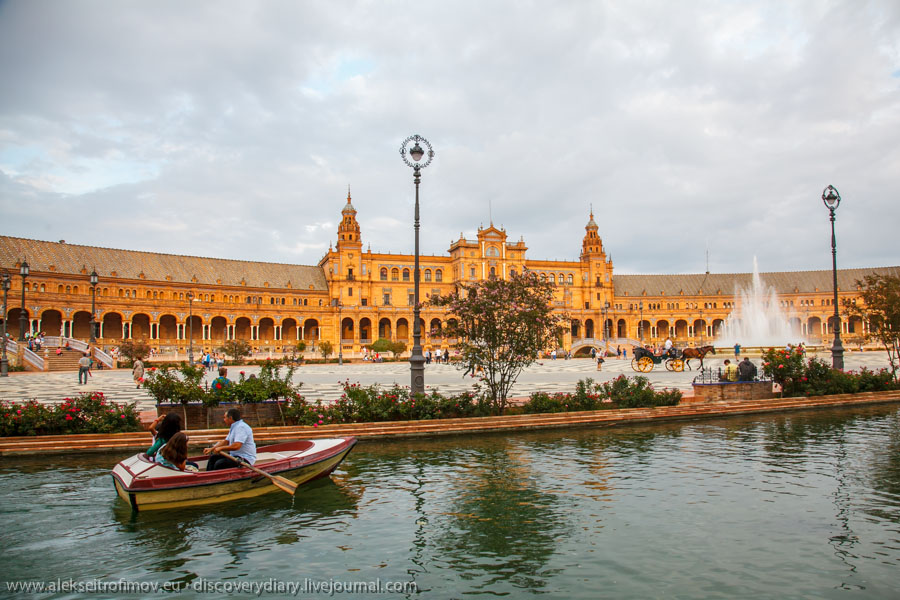
Granted, the Neomauretanian style is a little kitsch, but here it is so absurdly festive, it just sweeps you off your feet!
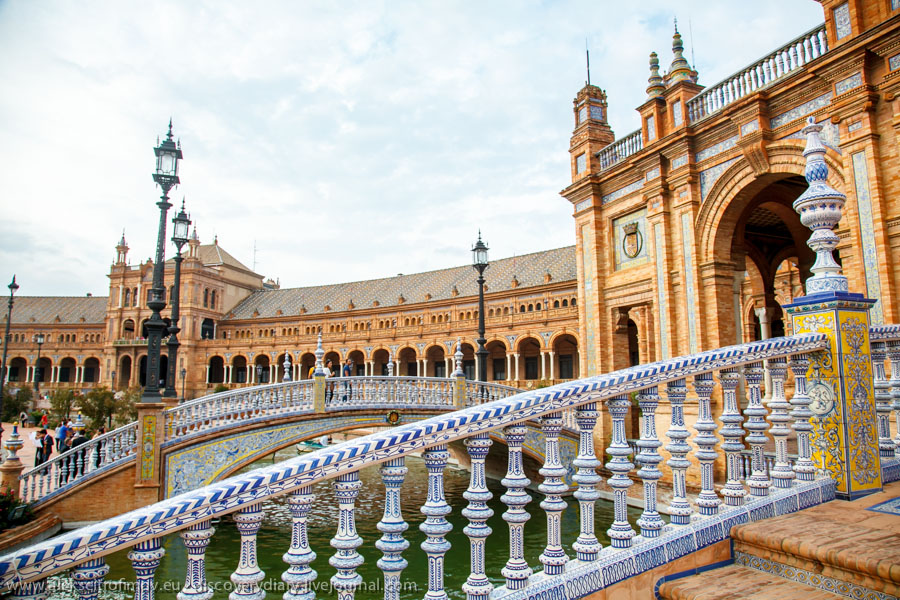
Boats roam the channels:
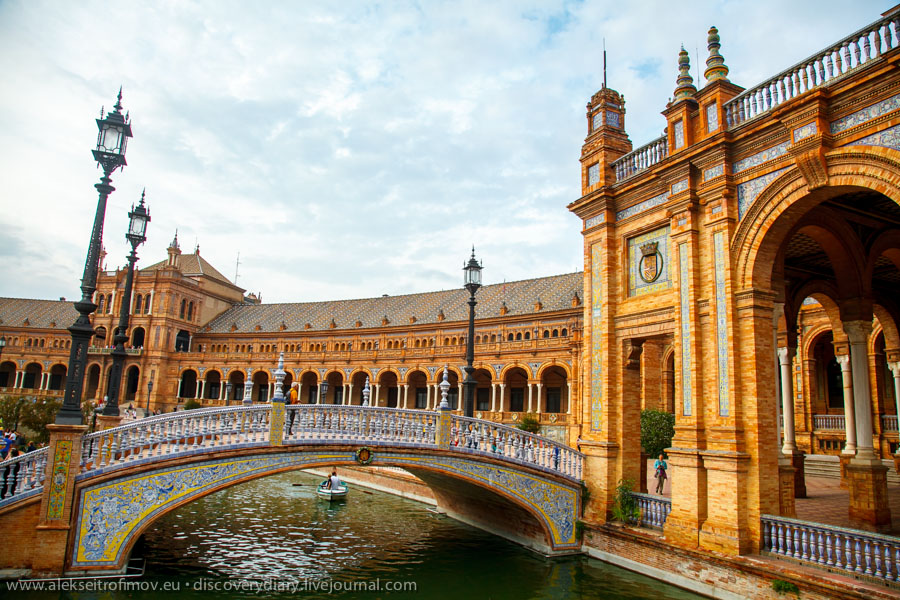
Nowadays the buildings that once hosted the exhibition are housing the city government and its various related offices. A casual visitor will simply enjoy the stroll and wonder at the beauty. Of course it’s a common stop for the newly weds. It’s been used in some major movies too, such as Star Wars:
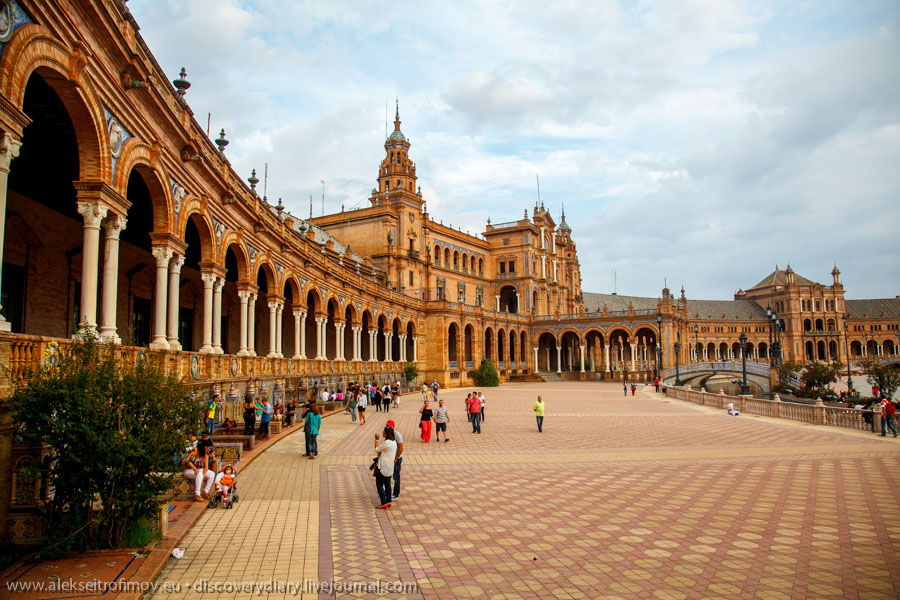
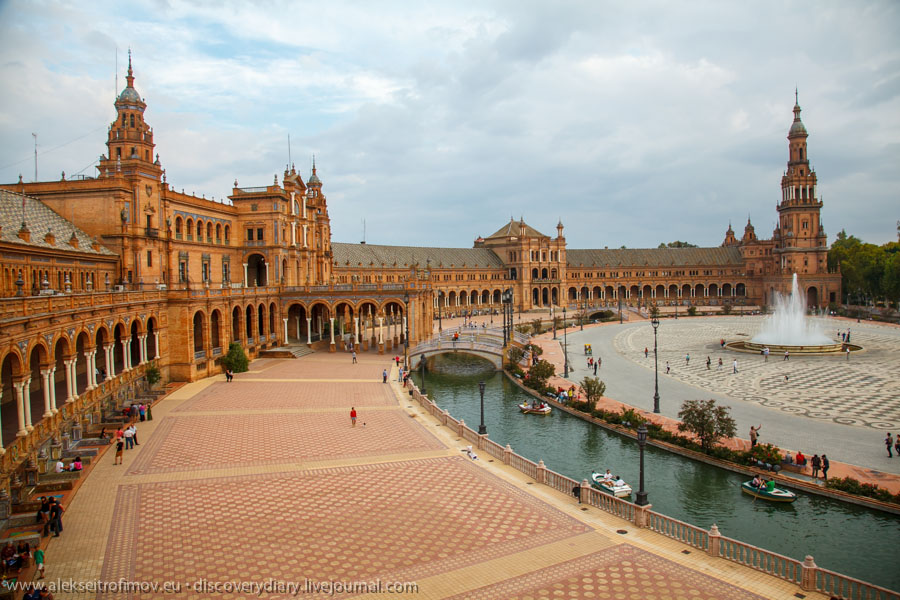
The niches around the semicircle are filled with mosaics that represent every province of Spain in alphabetic order. I was wondering what will happen if Catalunya becomes independent – will they destroy the corresponding mosaics?
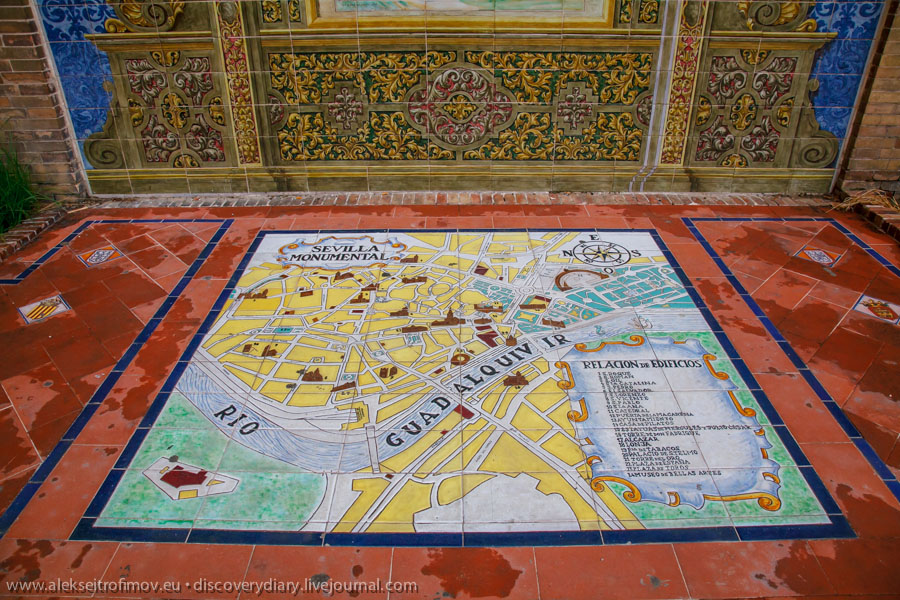
I decided to describe the two most famous attractions of Sevilla, the Cathedral and the Alcazar, in a separate posts. In this post I will talk about the “secondary” attractions. See what goes for “secondary” in Sevilla!
Andalusia is the birthplace of modern corrida and Sevilla was close to its genesis. Some of the most famous toreadors lived and fought here. One of the largest corrida arenas in Spain is also found here – it’s called Plaza de Toros de la Maestranza. You immediately notice it as you look over the city:
The edifice is enormous, as you can see. The reason it is rounded is so that there is no corners where the bull might hide. The arena in Sevilla is in fact an ellipse, not a circle. It’s the only arena which was built as an ellipse not by design, but rather due to an error of calculations by the architect. Surprising!
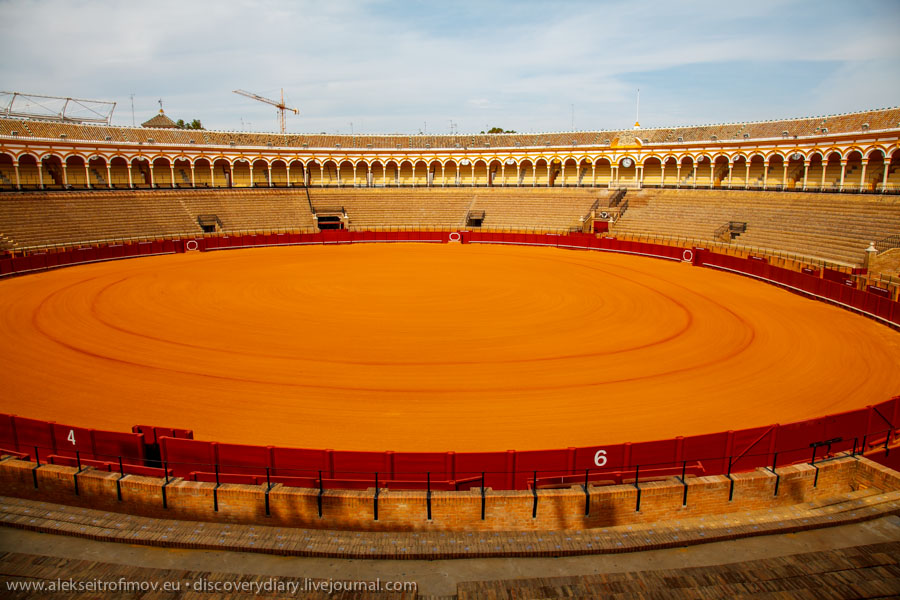
Somehow these colours remind me of a certain flag.
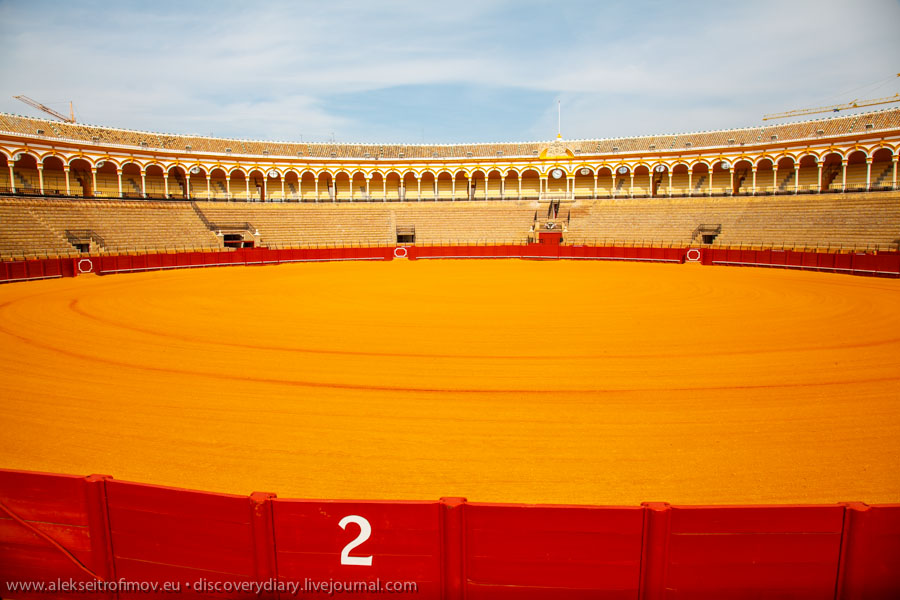
Just when I was in Sevilla the last corrida performances of the season were taking place. But I didn’t even consider buying a ticket. First I’m sure they’d been sold out long ago; second, even they hadn’t been, to sit several hours under the scorching sun observing animal cruelty would be a strange pleasure.
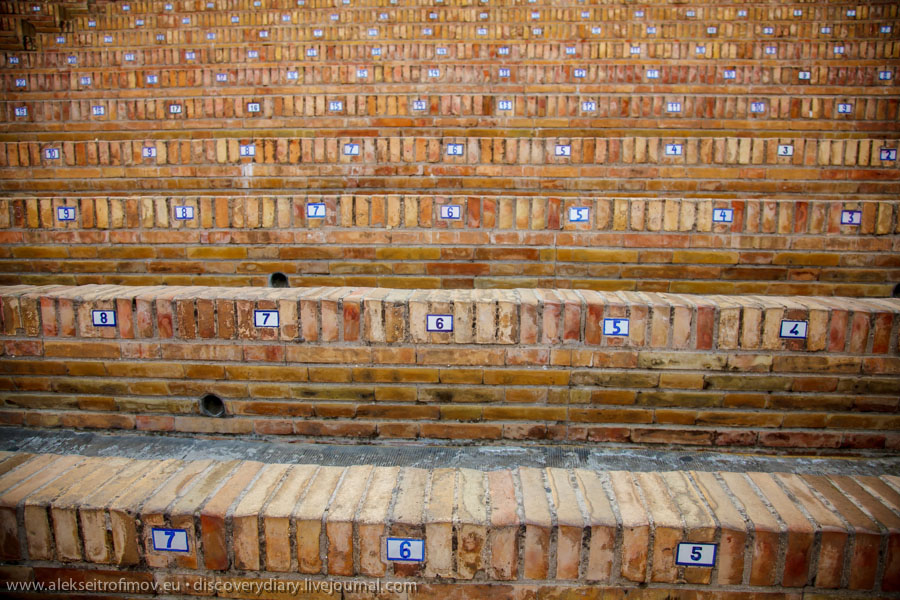
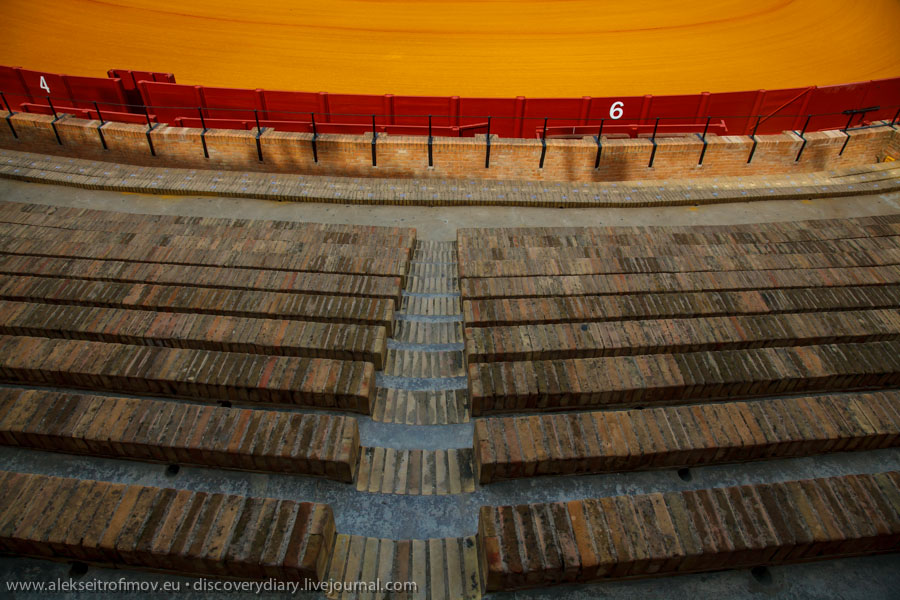
In the Royal box it’s probably less tiring though.
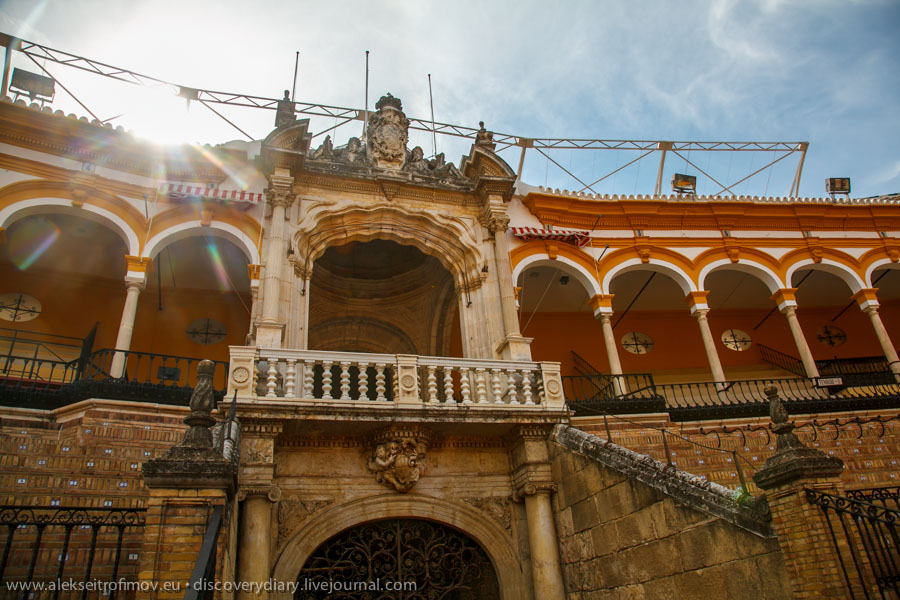
You can visit the arena on an organised tour which includes also the attached museum. The guide tells you all about the origins and rules of corrida. Indeed it is a true spectacle with rather rigid rules. Each performance is divided into the so-called tertia. The killing of the bull by the matador is but the last of the moves.
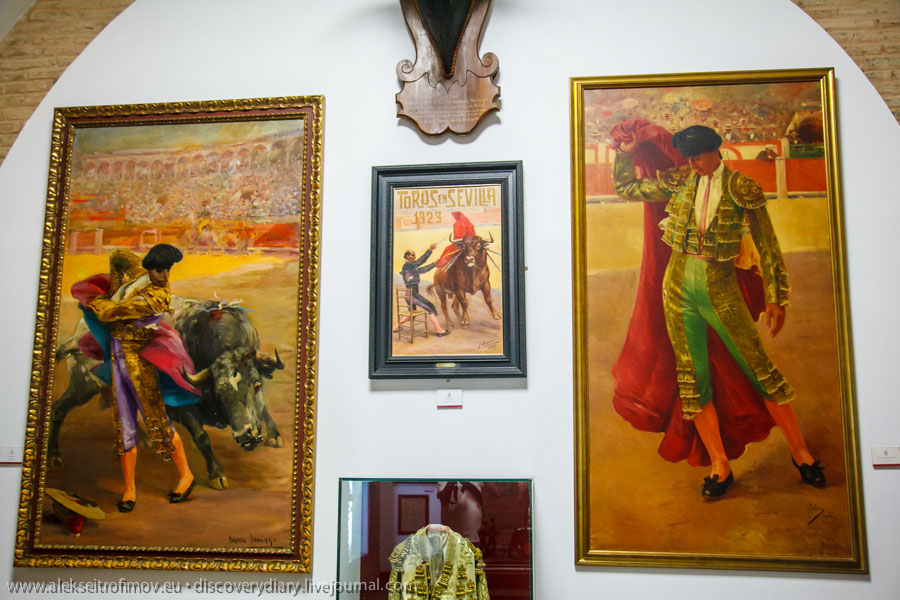
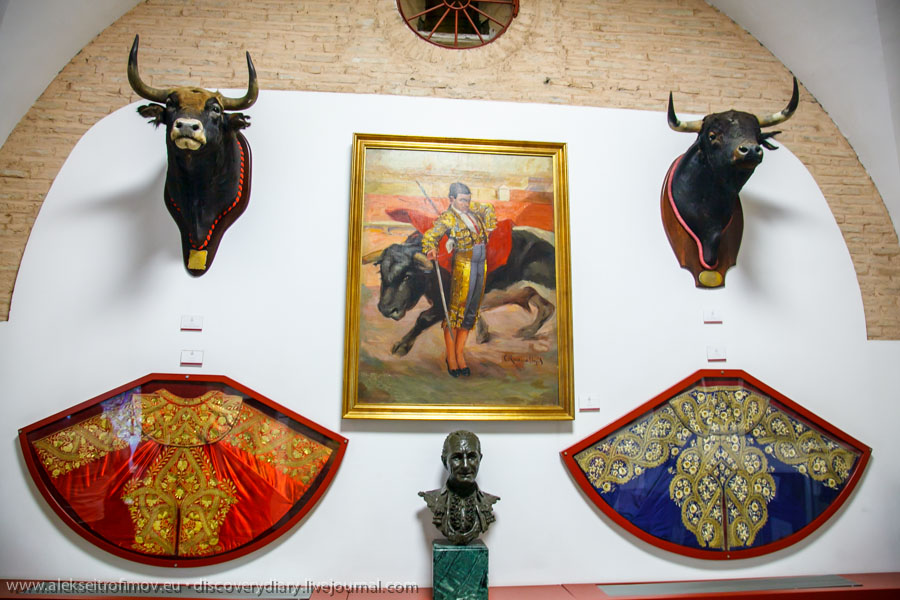
This photo shows the two most famous matadors of Sevilla – friends and competitors.
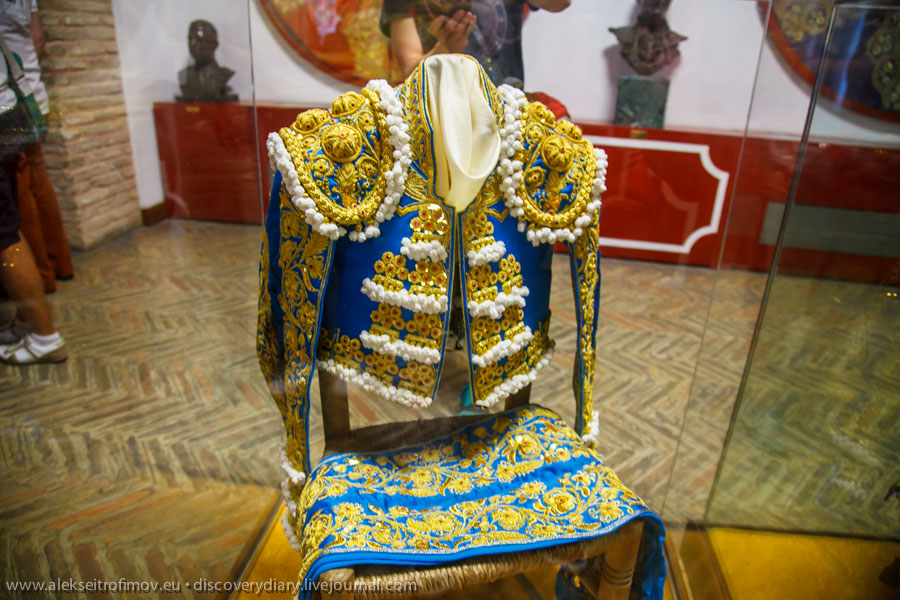
The matador uniform is in fact rather heavy. Note the blood stains on the right sleeve.
Nowadays many people abhor corrida and perceive it as an expression of animal cruelty. While I agree, I think even more cruel is the way we treat the same animals in our industrial abattoirs. Compared to this endless cruelty, corrida is just a small drop in the ocean.
The toreadors would step onto the arena through this gate. These rooms by design are isolated from the rooms where the bull would be waiting, in order to prevent all attempts at tampering with the animal.
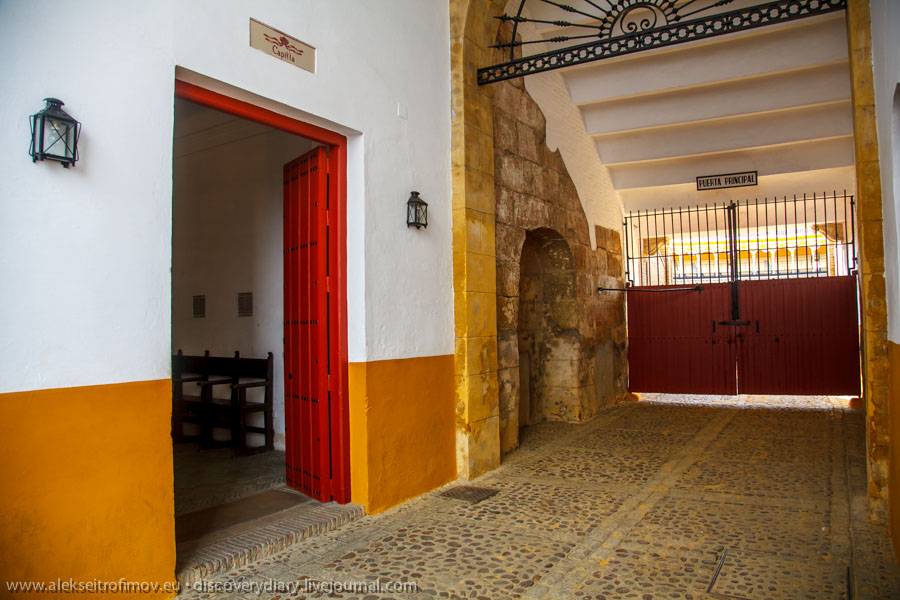
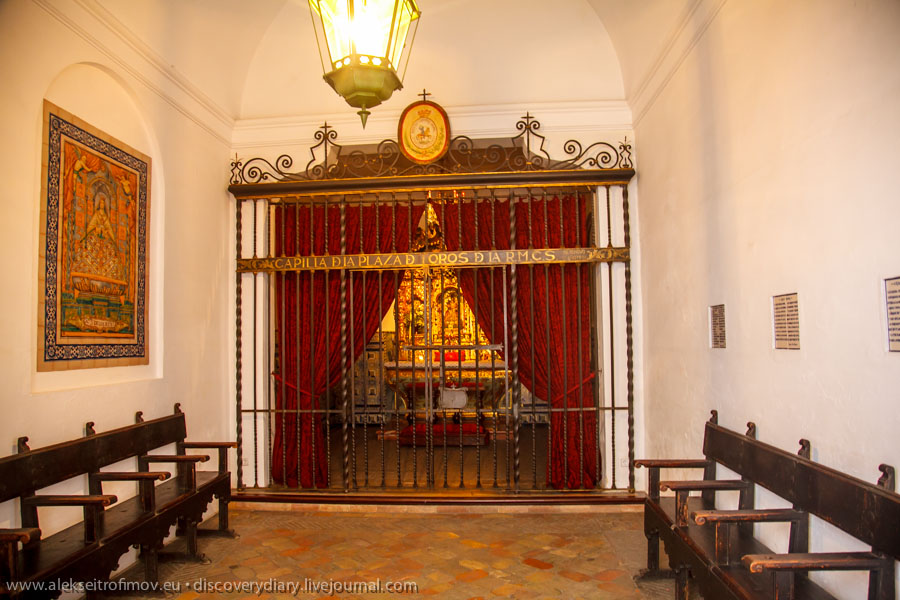
On the right on previous photo you can see the chapel door. The toreadors tend to be very religious people – easy to understand – and they pray in the chapel before stepping out to fight.
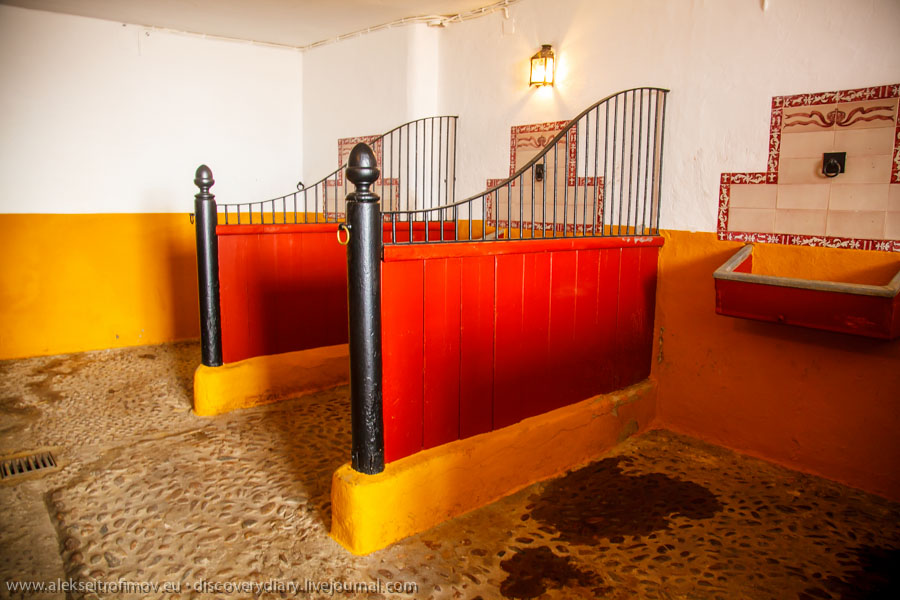
The horses of the picadors would be kept here.
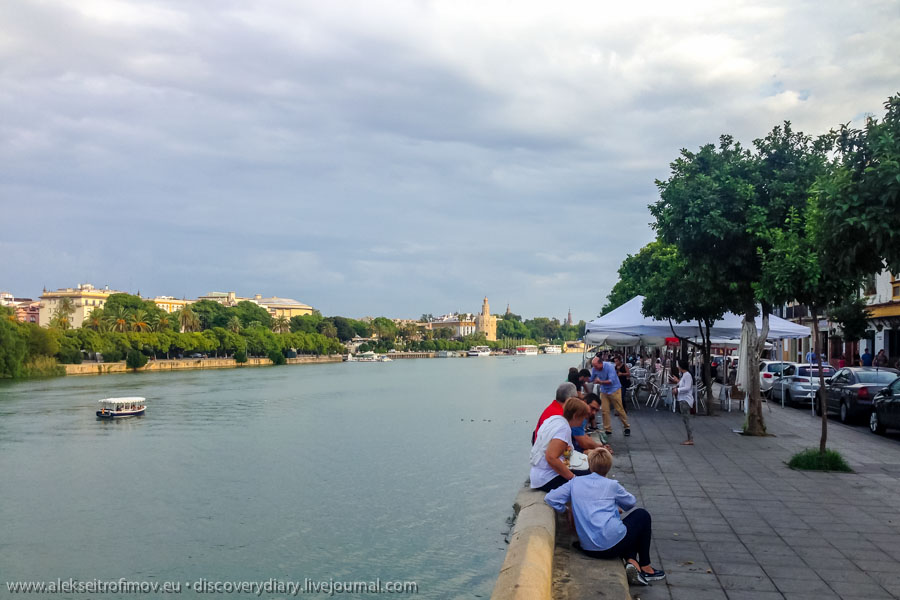
Not content with corrida, Sevilla is the birthplace of flamenco. This haunting art form was created in the Gypsy community in the Sevilla’s Triana area. Triana is located on the Western shore of Guadalquivir river, away from the city centre. Looking South from a bridge over Guadalquivir, the city centre is on the left and Triana is on the right.
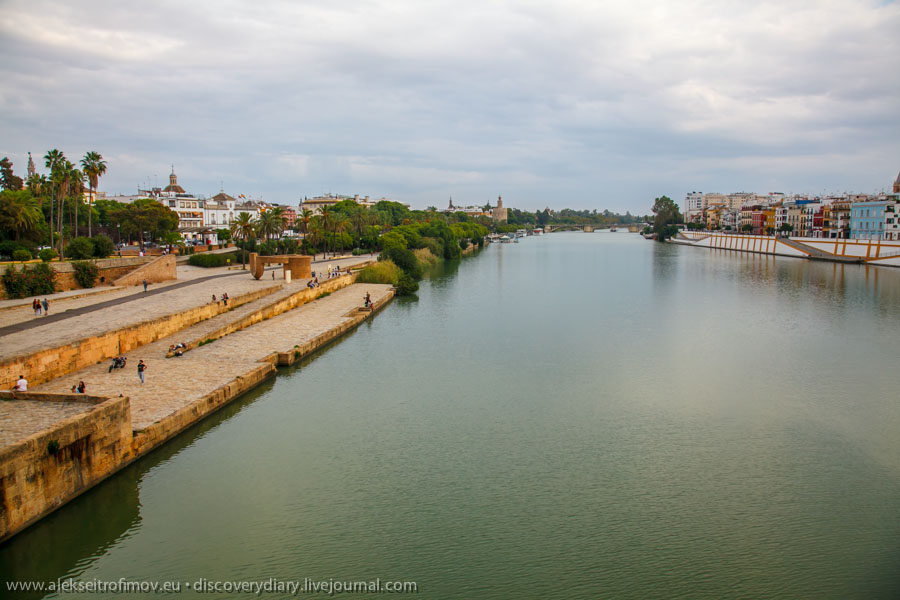
The Triana riverside. Today it is no longer that poor quarter where the Gypsies would be dancing and singing.
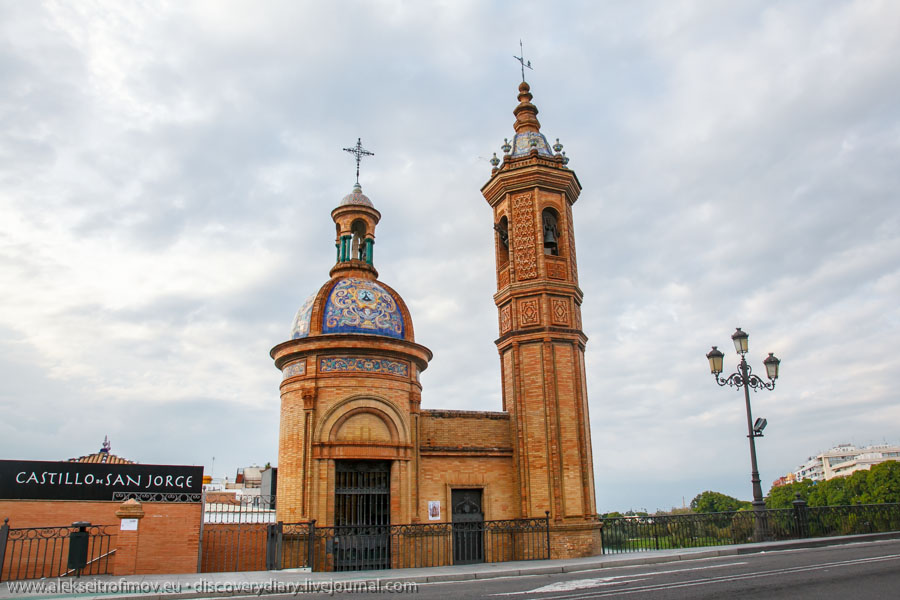
The restored San Jorge castle – housing the Inquisition museum.
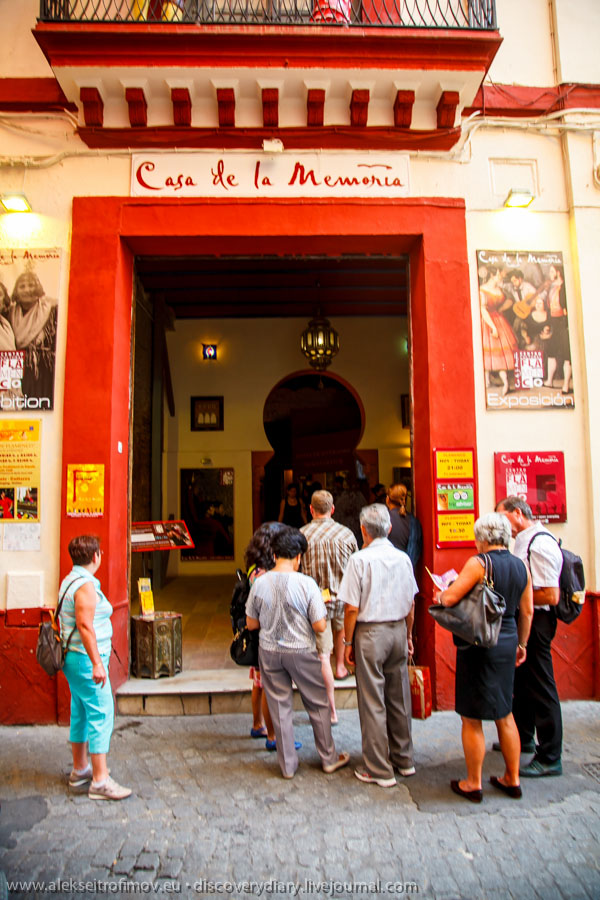
I seized the opportunity to visit a flamenco performance and opted for the company called Casa de la Memoria. Their performances are considered authentic and were highly recommended by some locals. TripAdvisor also gave them a high rating. I could see their popularity right away – as I arrived about 5pm, all tickets for 8pm and 10pm performance had already been sold out. But there was also a 6pm show, and I joined it. The tickets have no seat numbers, so the seats go on the first come, first served basis. You are advised to arrive at least half an hour in advance if you want a good seat. Something I experienced first hand. This kind of a queue forms before every performance – waiting for the doors to open:
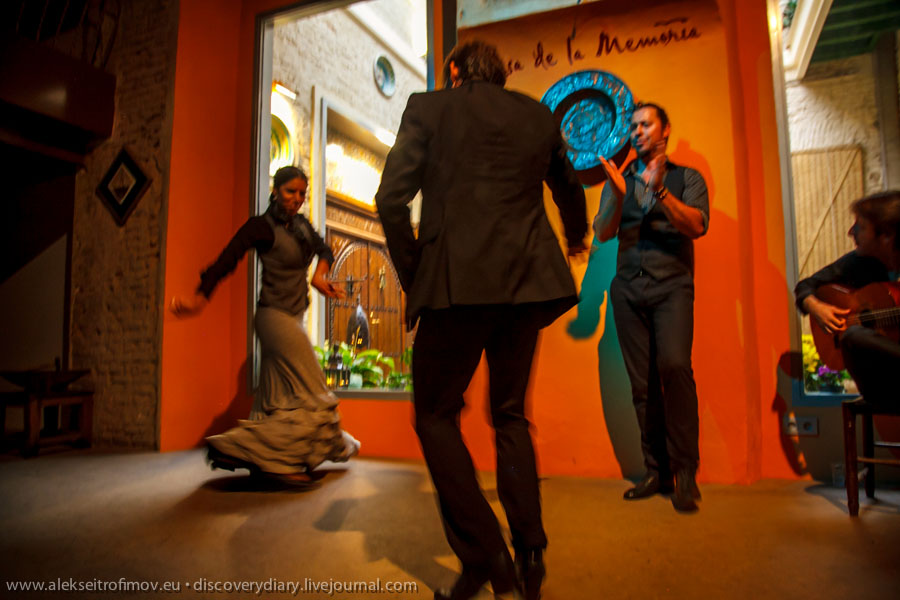
No photos are allowed during the performance except in the last 5 minutes. There are three parts to a performance – singing, guitar, and dance of two dancers. At the end all artists perform together.
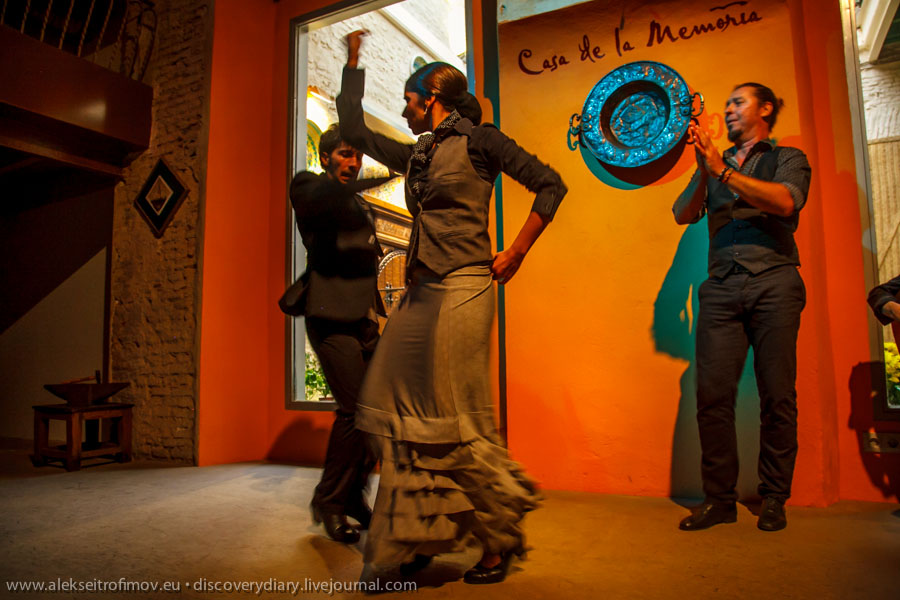
I used to take flamenco classes for about a year long time ago. Later I’ve taken contemporary dance classes for many years, so I can appreciate the level of difficulty of the things the dancers were doing. Breathtaking.
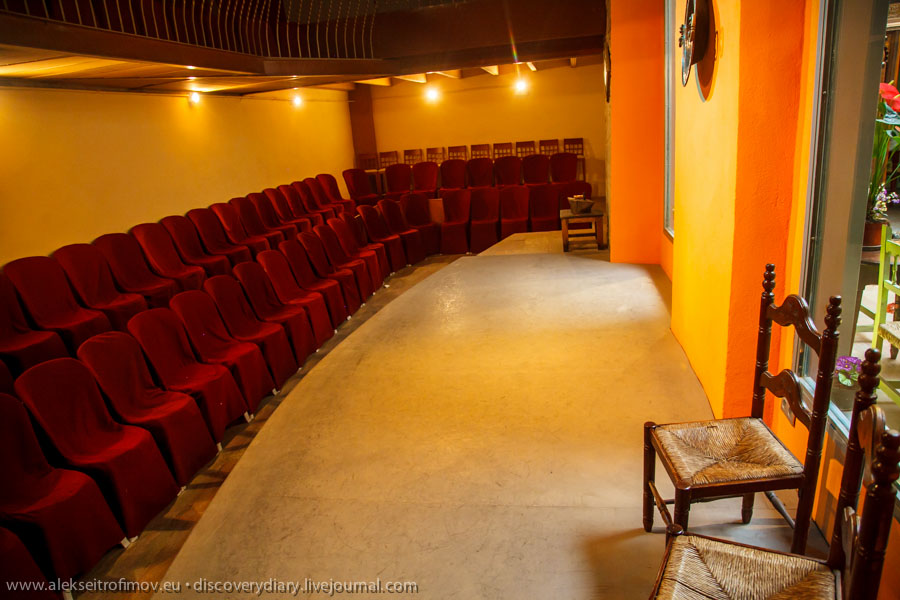
This is the performance area. Long and narrow, and if you sit in the middle of the first row, like I did, you can literally touch the dancers; whereas sitting on the sides doesn’t offer much of a perspective at all.
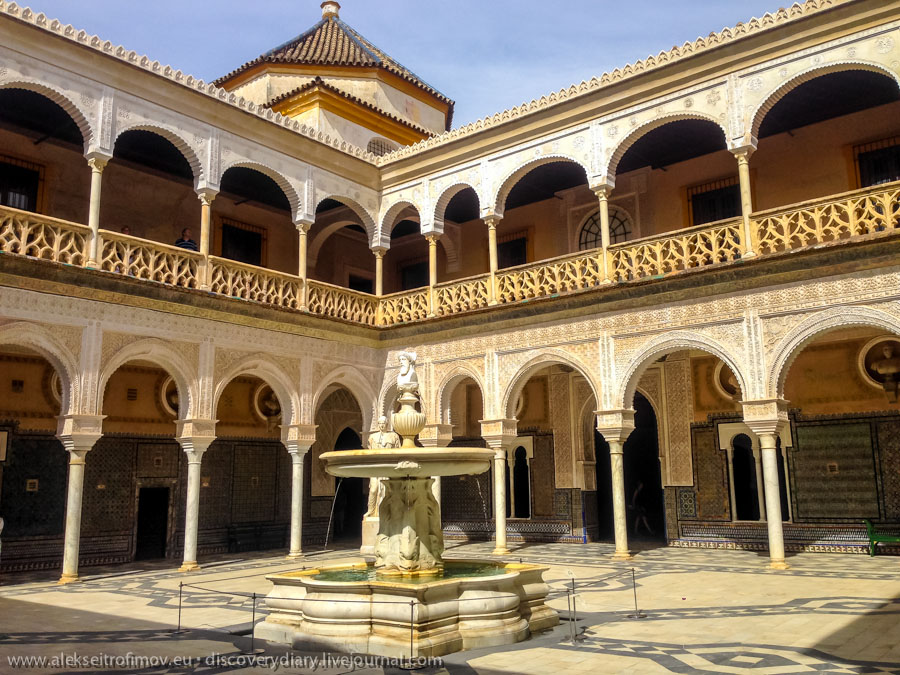
The Pilates House is so called as it is considered to be a copy of a palace in Jerusalem that belonged to Pilates himself. It is of course only a legend, born thanks to the palace’s builder and first owner’s pilgrimage to the Holy Land. The dukes of Alcala, some of the richest aristocrats in Spain, used to live in the palace until it passed to the dukes of Medinaceli, who occupy the palace to this day.
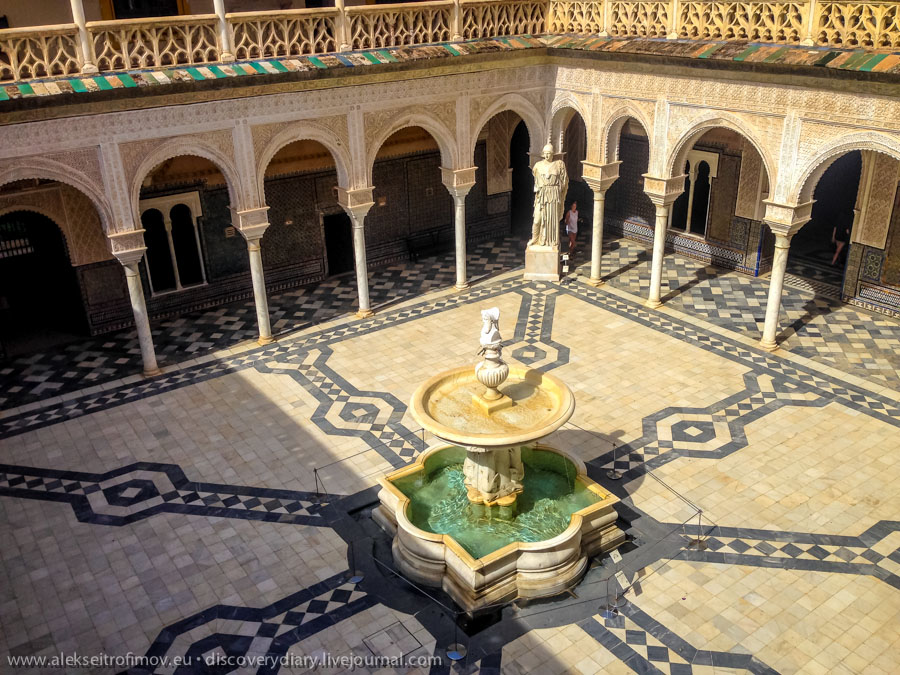
The internal patio is considered the most important element of the edifice.
The glorious gardens.
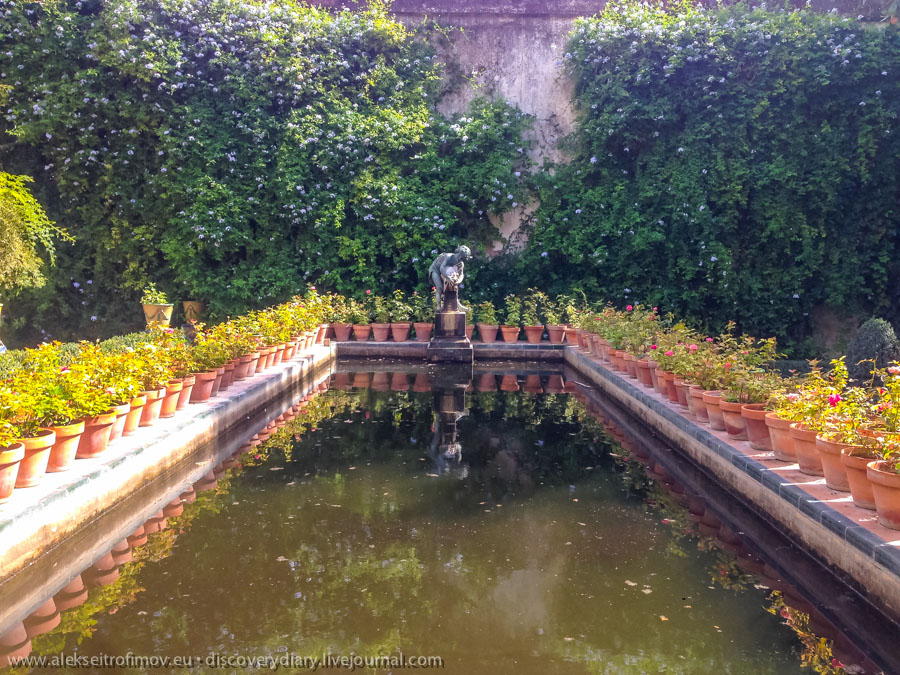
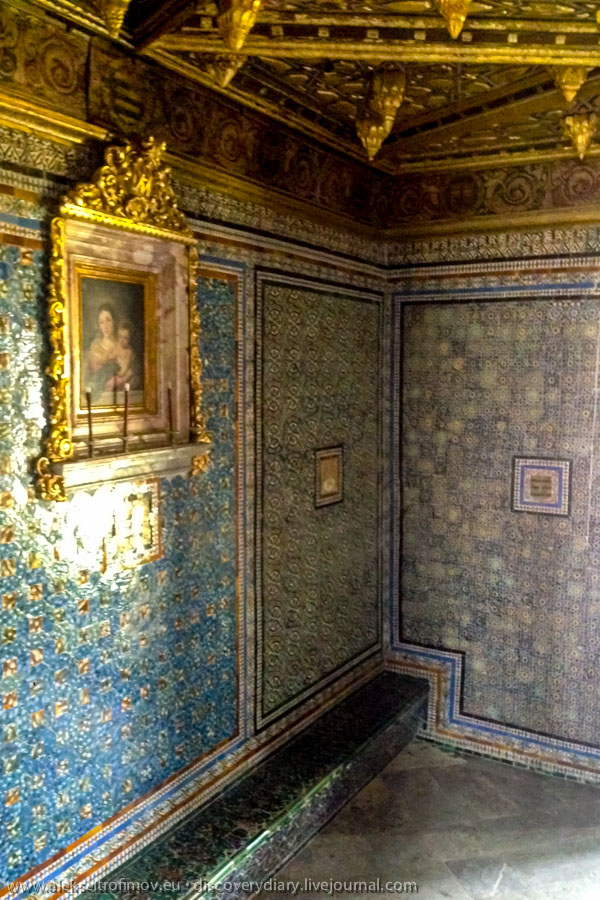
And internal passages covered in azulejos – the tourists are only allowed to see a small selection, including a museum where all kinds of curious objects can be seen – such as handwritten letters of the Catholic Kings, Queen Isabella’s original dresses etc.
The patio from above:
You can wander around the old town of Sevilla forever. Indeed it is one of the largest preserved medieval towns in the world.
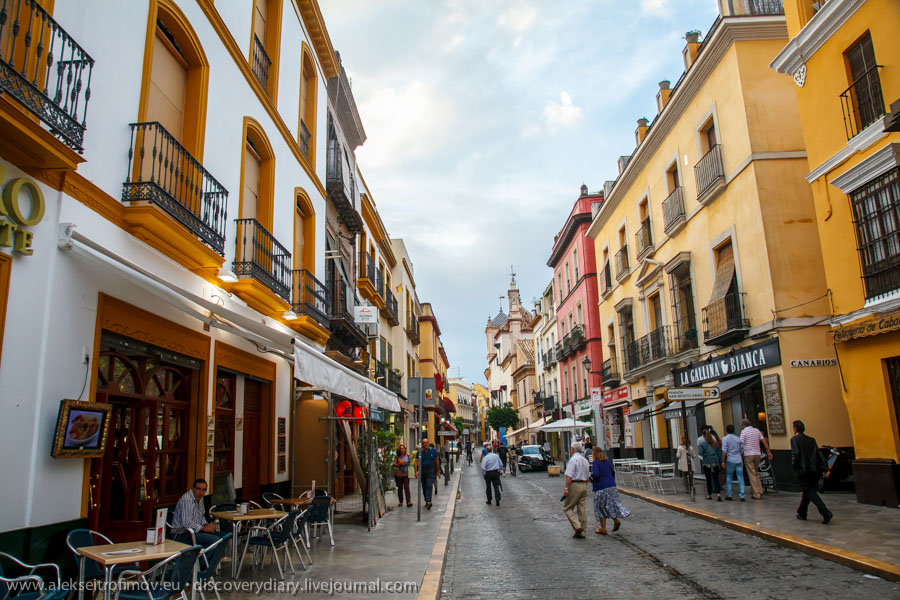
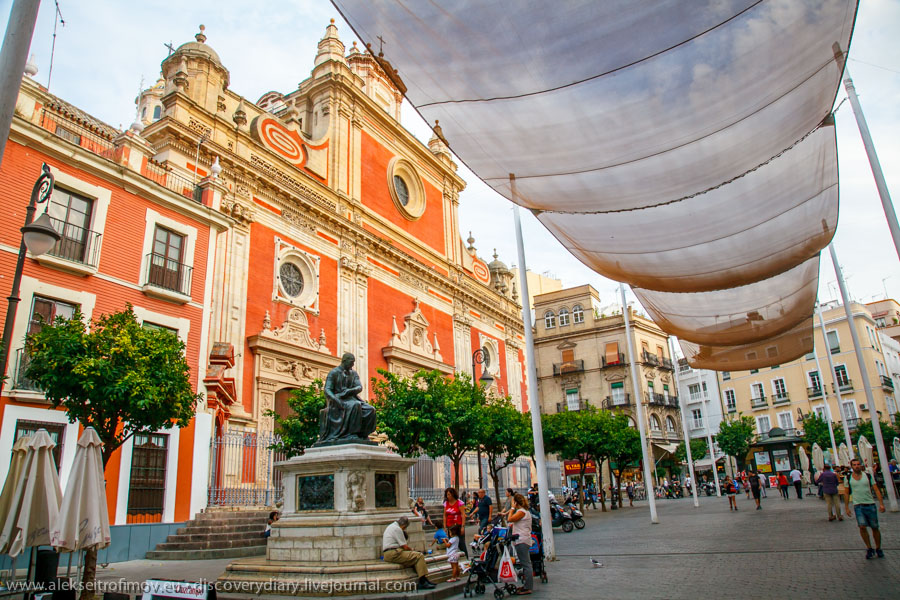
On every turn new luxurious buildings appear in front of your eyes. In a lesser city they would qualify as a major attraction, here it’s just one of many. For example this is a gigantic Iglesia del Salvador.
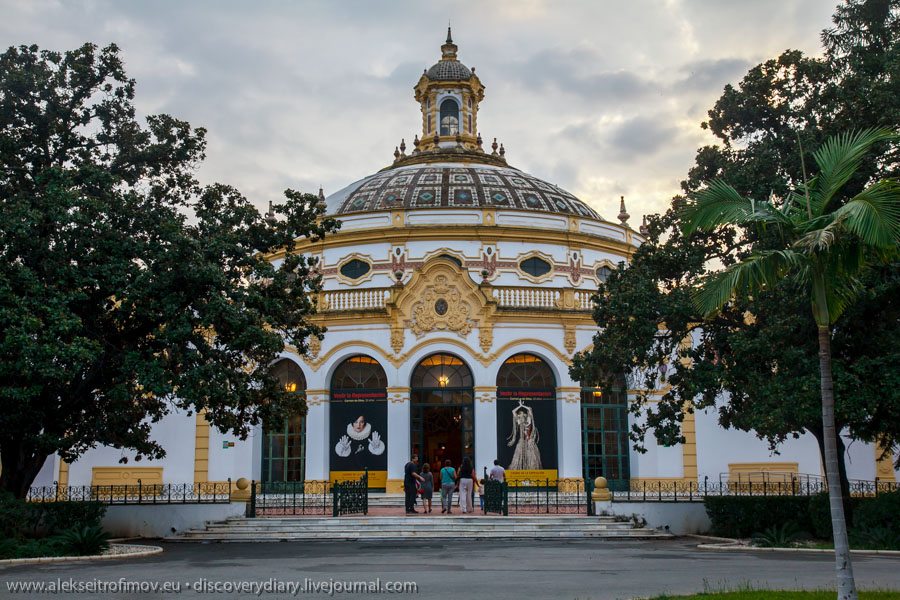
Lope de Vega theatre.
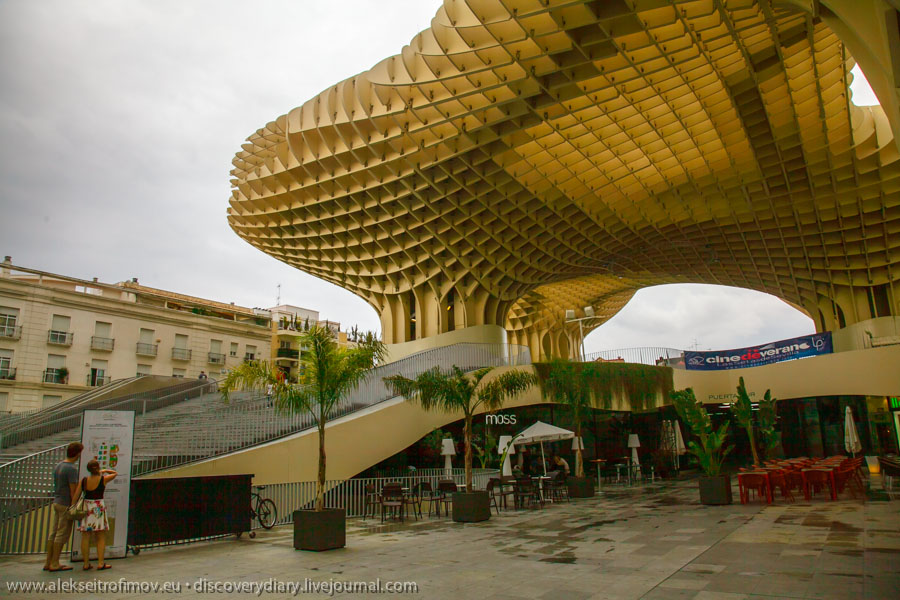
This unusual wooden structure, called Metropol Parasol, occupies a whole square in the business centre of Sevilla. It was conceived as yet another symbolic building and a tourist magnet. It houses an archeological exhibition, restaurants and concert halls. However its first fame was of a rather scandalous nature – the initial project was found to be impossible to implement due to the lack of proper testing of the planned material, i.e. wood. As a result the cost of construction skyrocketed from 50 to 100 million euro – which was a huge scandal in Spain (though these amounts are nothing compared to the waste linked to Sochi Olympics, for example).
A Columbus memorial in a wonderful park next to Alcázar.
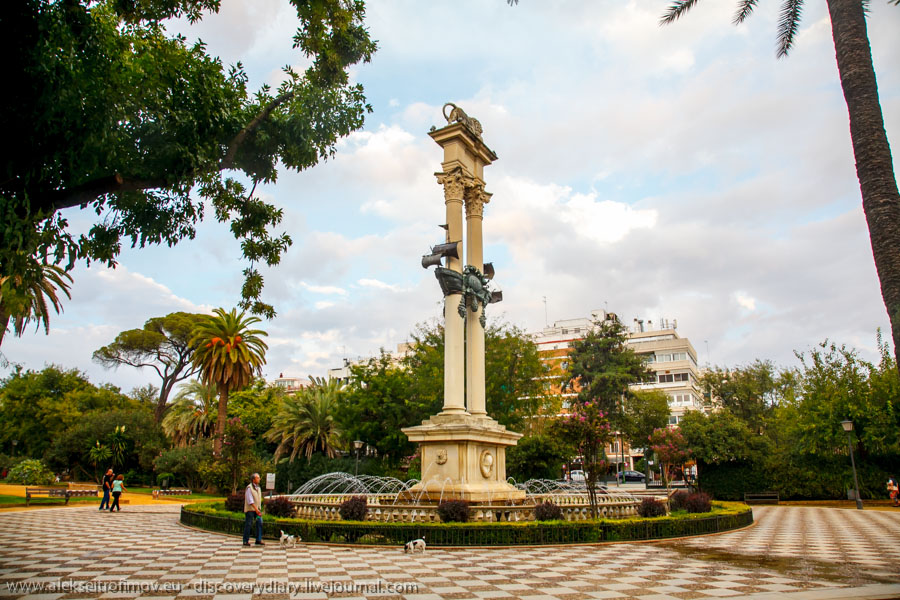
A picturesque paseo in the same park – the gardens of Alcátraz are behind the wall.
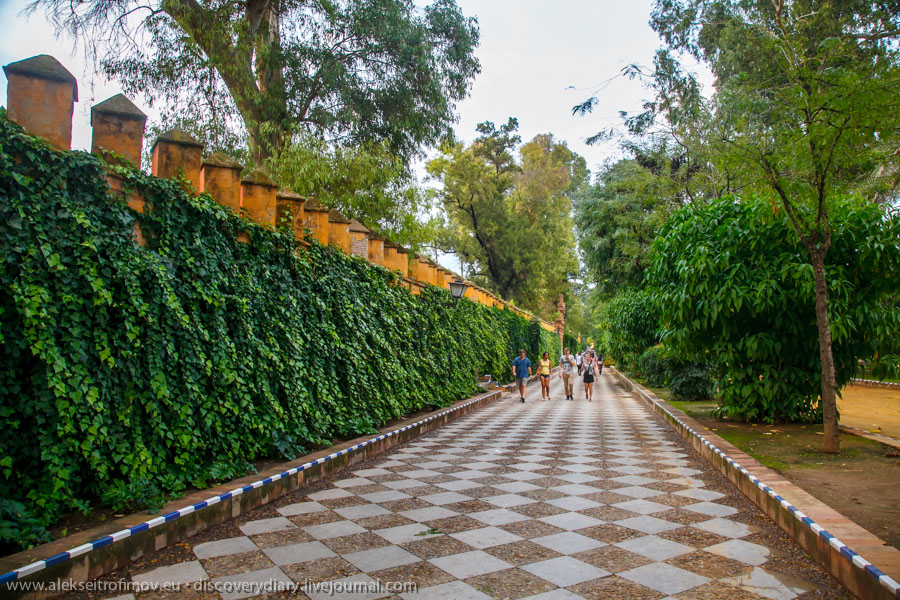
The next post will be about the two most famous attractions in Sevilla. These are the Cathedral and the Alcátraz palace.
The post Gorgeous Sevilla appeared first on Around the world in three years.
]]>The post Tarifa appeared first on Around the world in three years.
]]>I arrived in Tarifa at the time when the season was winding down, though not the winds. Tarifa stood half-empty, and yet the weather was warm and of course windy. A dreamy mood at the beach:
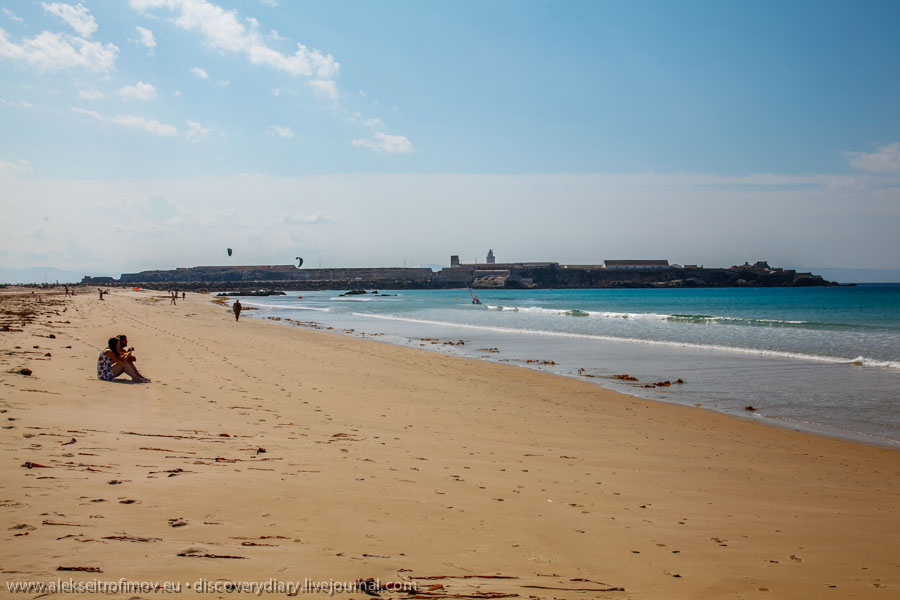
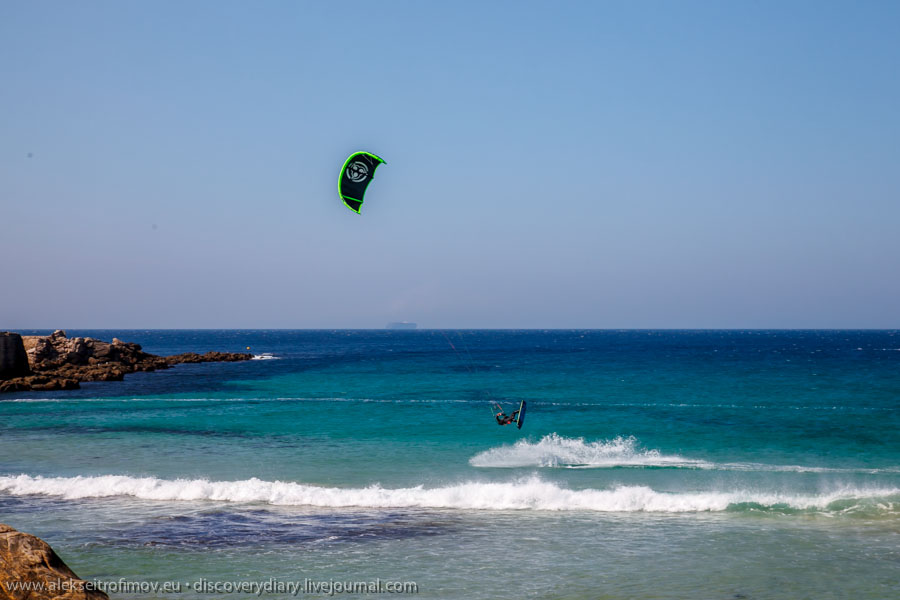
Several kitesurfers rode the winds:
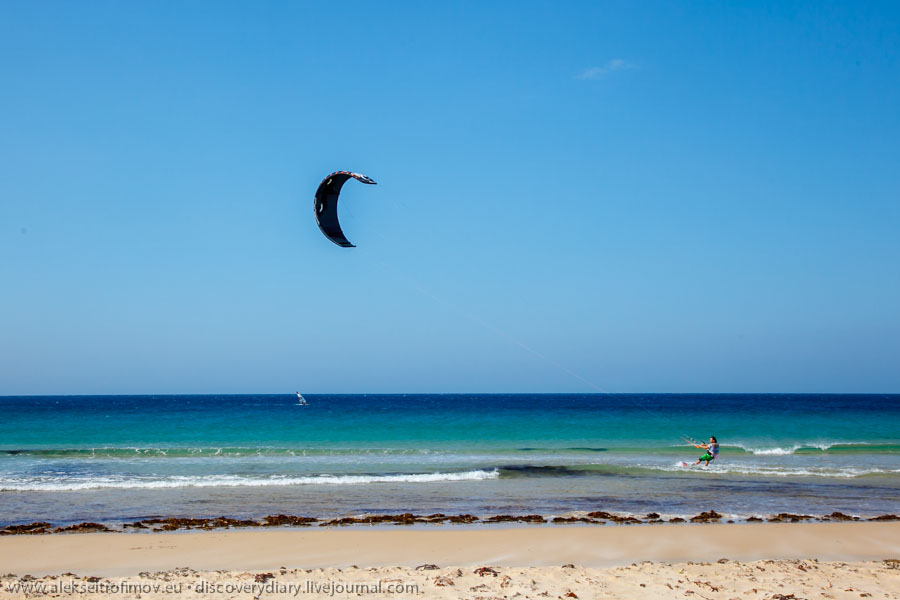
As I observed their saltos in the air for a while, I got more and more impressed. The strength and the skill required were obvious from simply comparing the several men that were in front of me – one was producing some incredible somersaults in the air, the other would keep falling hard on the surface of the water. You have to be quite brave too – an error results on a rather unpleasant impact as you hit the water.
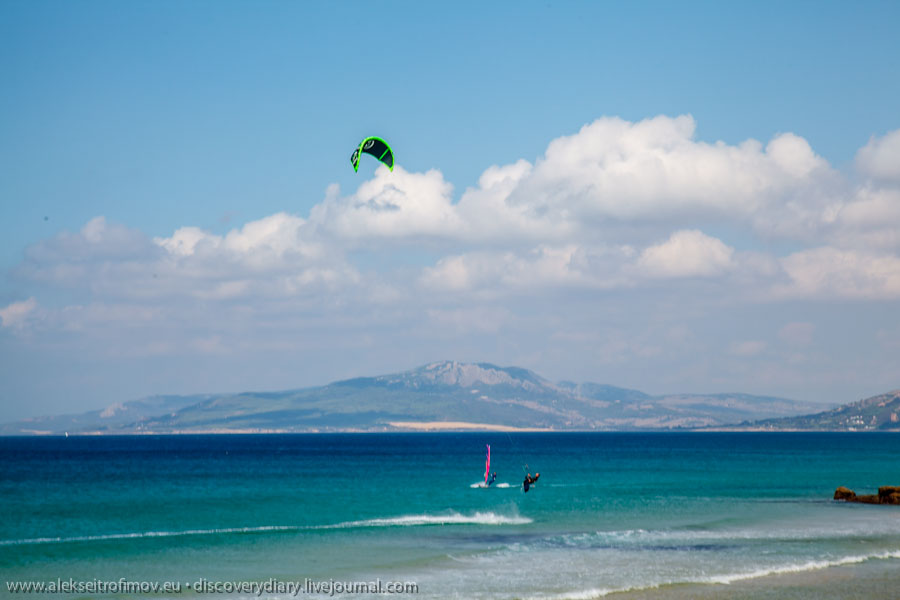
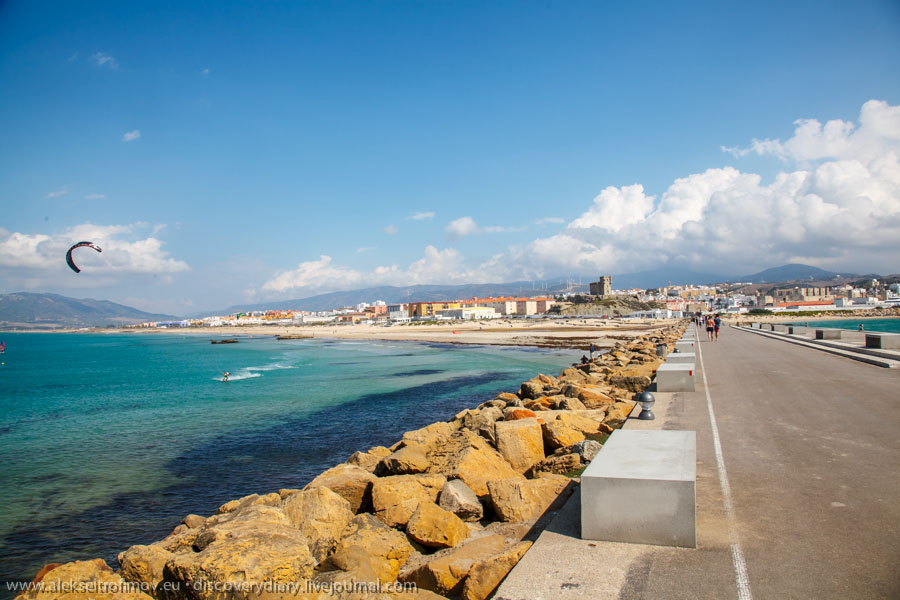
As you walk South on the beach, eventually you pass the kitesurfers to reach the end of Europe. A look back at Tarifa. The tip of Europe is in fact a bridge that connects Tarifa to a small island called Isla de las Palomas. You cannot visit the island.
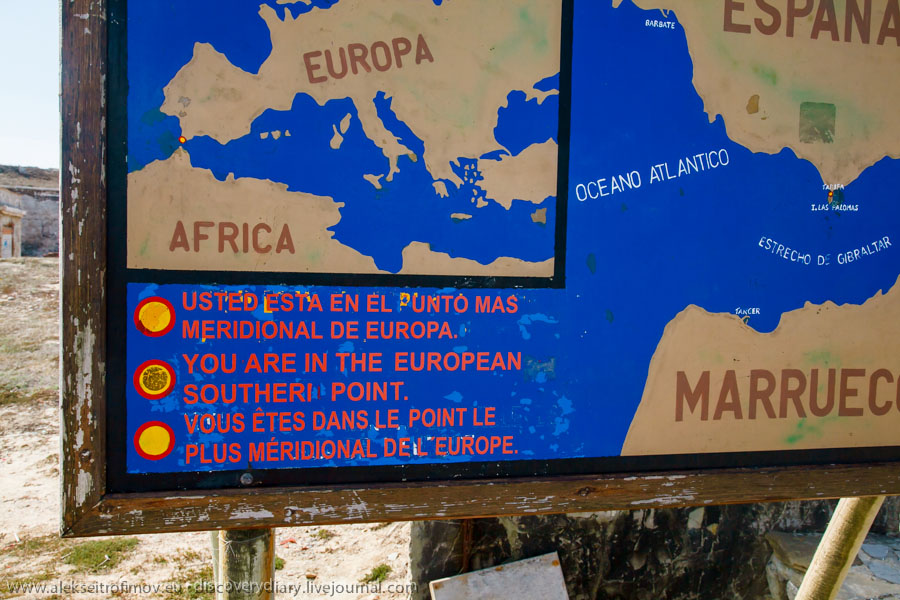
But you can approach and read this confirmation that yes indeed you have reached the Southern tip of the continent.
I returned back to Tarifa. As a matter of fact it is a very old settlement, comparable to Cádiz in terms of age. It was a Phoenician base later appropriated by the Romans, but its’ true importance came at the time of the Arab invasion – indeed it was here that in 710 the first warriors led by Tarif ibn Malluk stepped on the European soil. The leader’s name became the name of the town.
Her you can see the historical fortress of Tarifa, called Castillo del Guzman. It is the large fort on the right, not the small one on a hill.
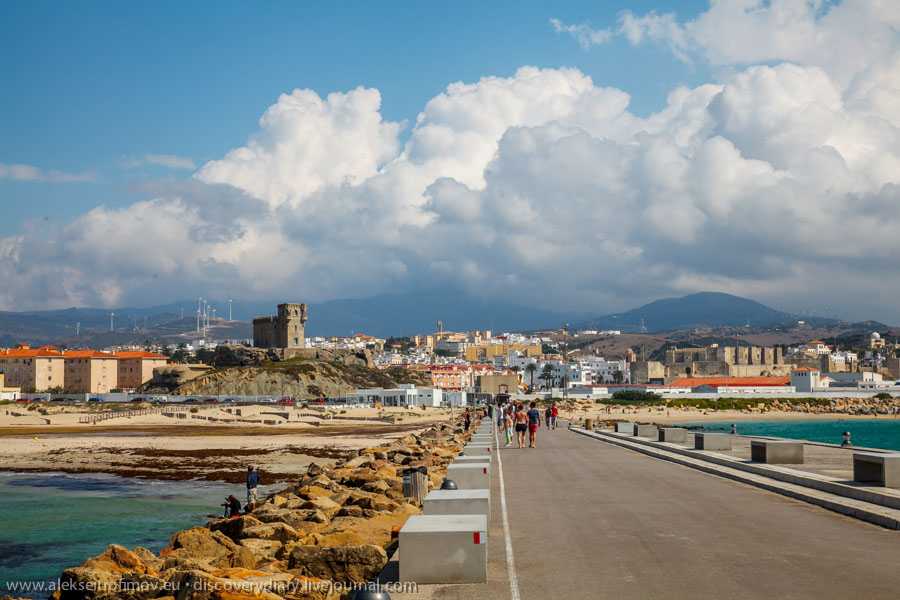
According to a legend, in 1294, right after Tarifa was captured by the Spanish, the Moorish troops besieged the fortress hoping to take it back. They succeeded in capturing a son of Guzman, the Spanish commander of the fortress, and demanded that he abandon the fortress lest his son is executed. Guzman himself threw a blade to the Moors so that they can put their threat to action. For this heroic loyalty Castilla rewarded Guzman – the castle has his name to this day and his descendants – the dukes of Medina-Sidonia – went on to rule the Cádiz province for many centuries.
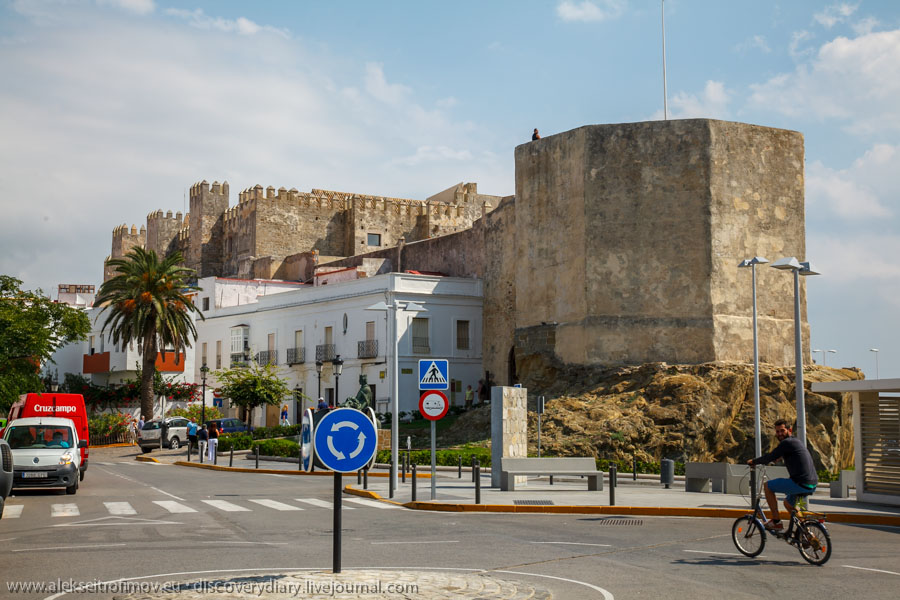
The thick internal walls as seen from the first courtyard of the fortress.
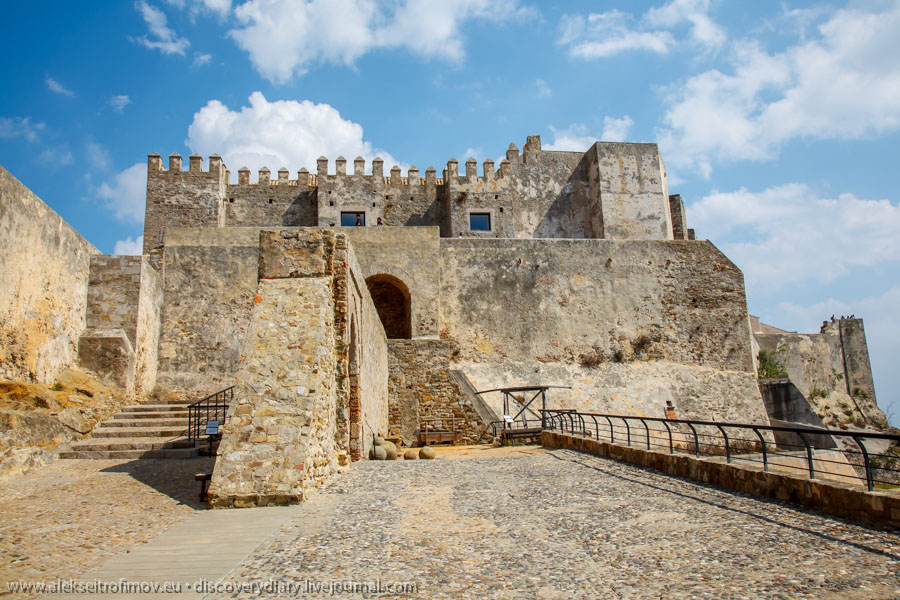
Although the fortress itself is closed for restorations, it is possible to walk inside the internal walls.
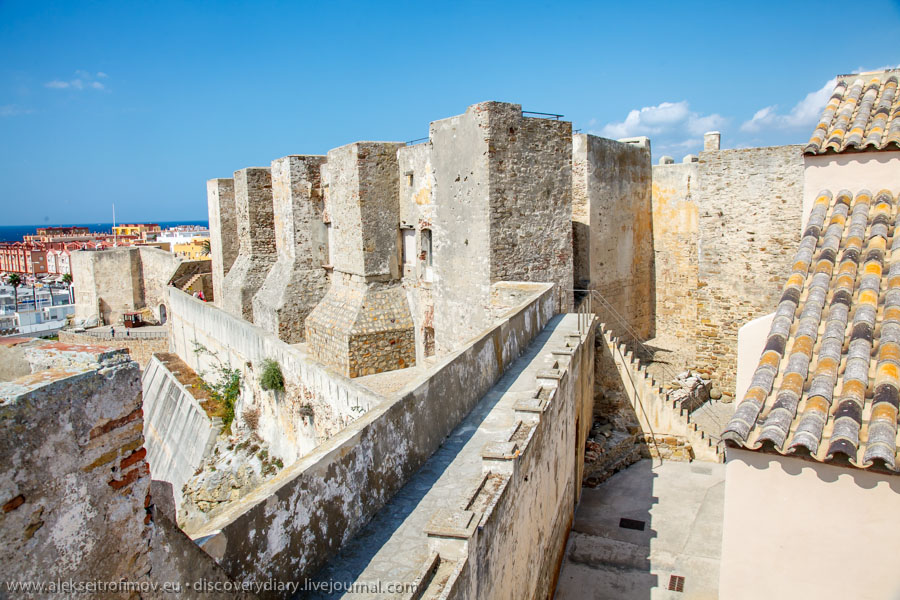
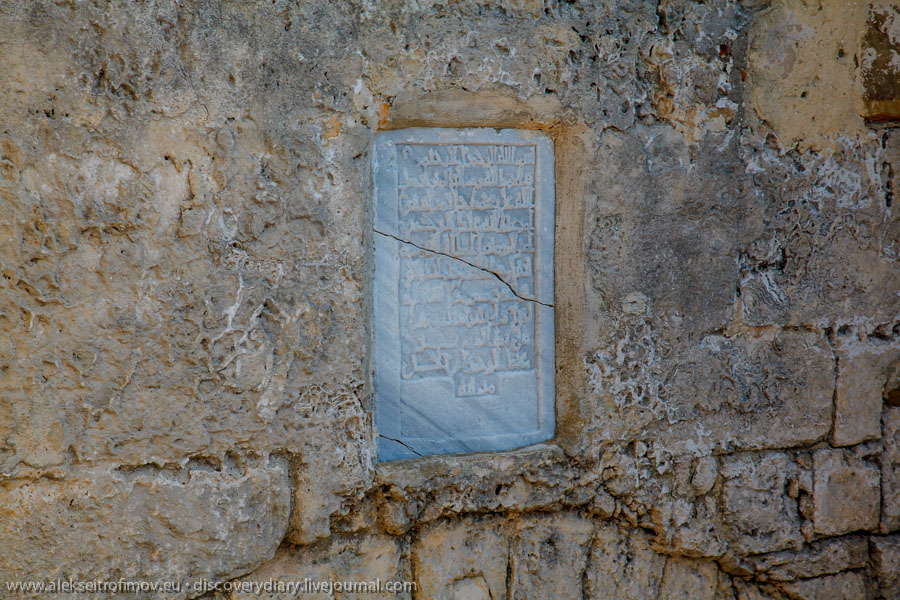
The traces of the true founders of the castle – the Moors.
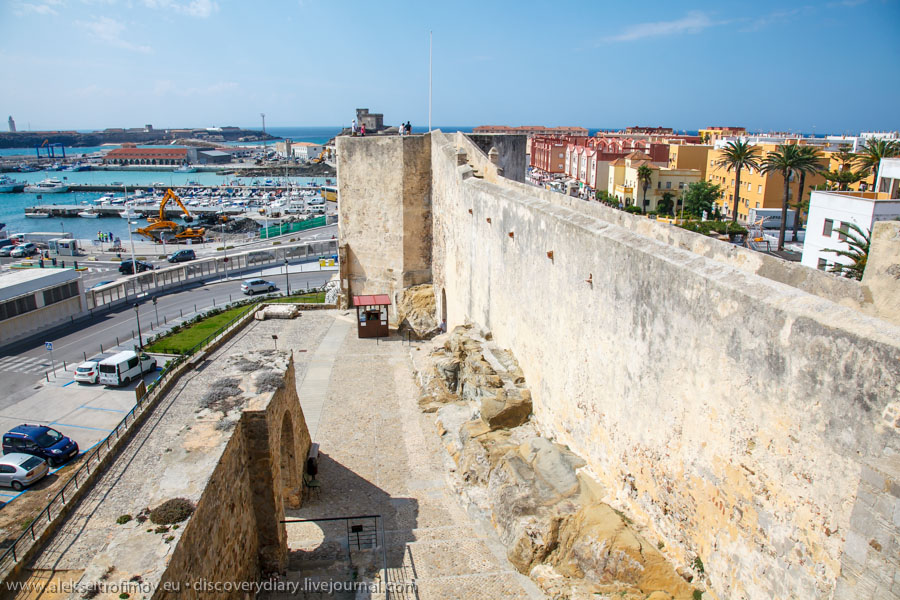
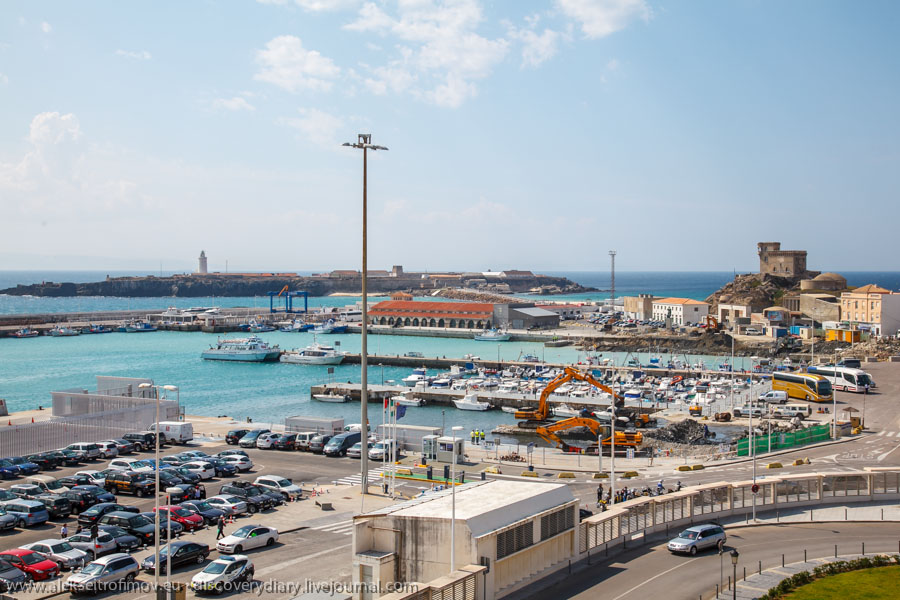
The view from the walls. The port of Tarifa and Isla de las Palomas. The kitesurfer beach and the Atlantic ocean are to the right.
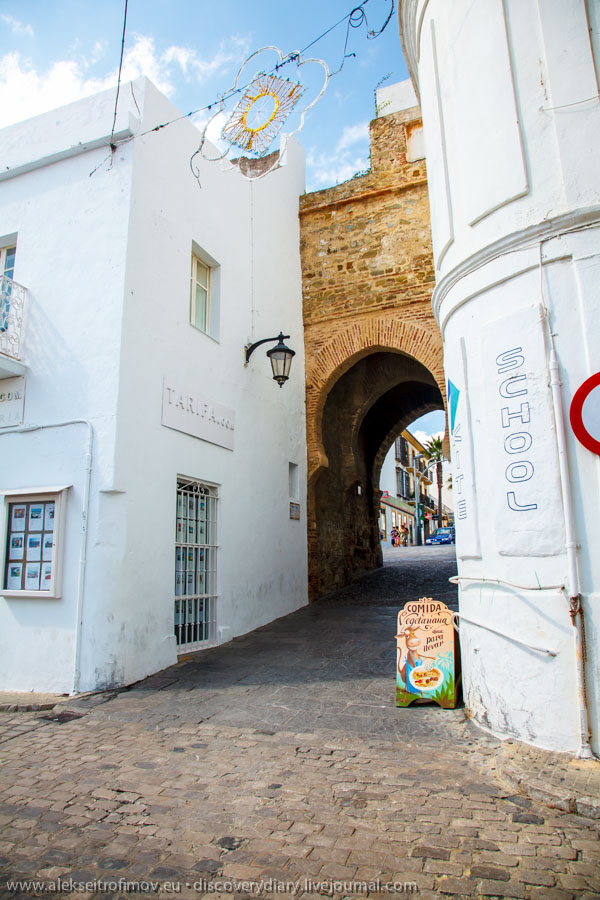
And finally the entrance of the Old Tarifa – Puerta de Jerez, where the road to Jerez started – the entrance and exit of the Old Town.
The post Tarifa appeared first on Around the world in three years.
]]>The post Gibraltar appeared first on Around the world in three years.
]]>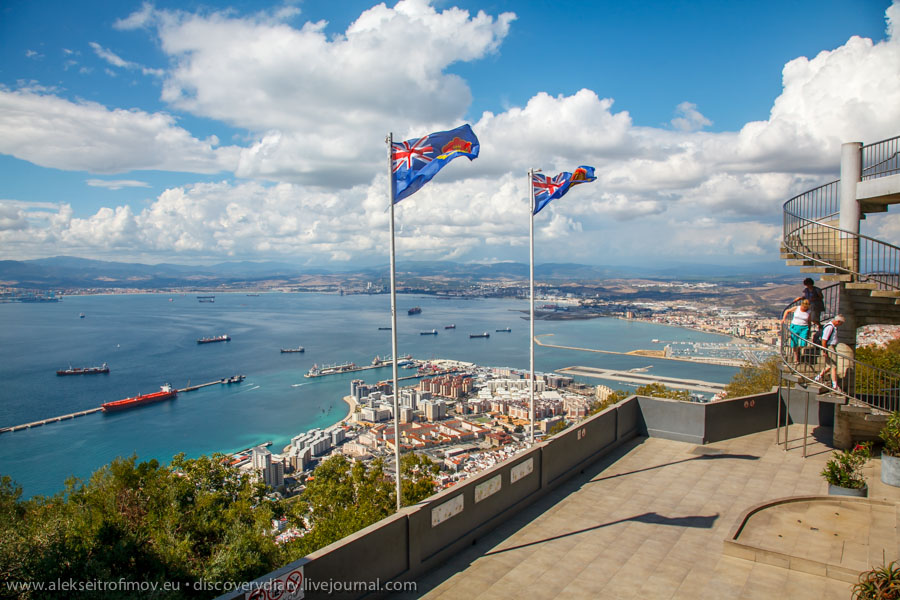
Actually at first approach the Rock looks thus. Indeed on the generally flat Southern coust of Spain the Rock looks like a geological misunderstanding, placed by an unknown magician to divide and lure conquerors. This photo was made already after crossing the border.
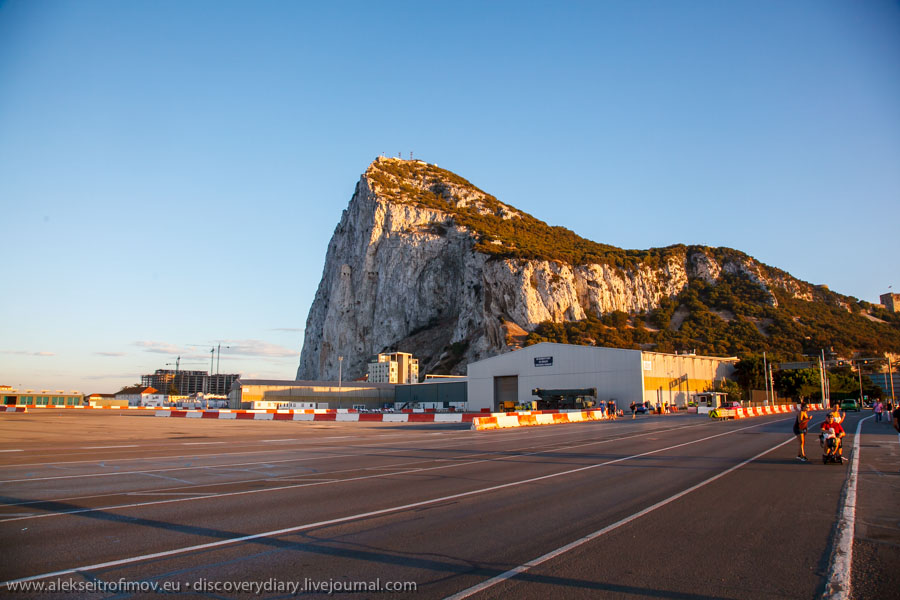
In fact I stayed in La Línea de Concepción, a small township immediately to the North of Gibraltar. In Gibraltar itself there are about five hotels which charge crazy prices, whereas La Línea is full of very cheap hotels – I stayed in a very proper place for all of €22 per night. As you can actually walk from La Línea to Gibraltar quite easily, I saw no point in insisting on staying there. Crossing the border with my passport was a pure formality. Of course as Gibraltar remains staunchly British, the currency used here is the British pound. (I note in passing that you are much better off exchanging your euros into pounds on the Spanish side of the border – in Gibraltar the currency exchange tariffs were a rip off.) Gibraltar has the right to mint its own coin – a Gibraltar pound – which looks very much like the British coin, however formally it’s not accepted outside of Gibraltar, so you better get rid of them here. I bought 10 pounds before crossing but later discovered that in fact you can pay everywhere in Gibraltar by credit card – so even 10 pounds was too much.
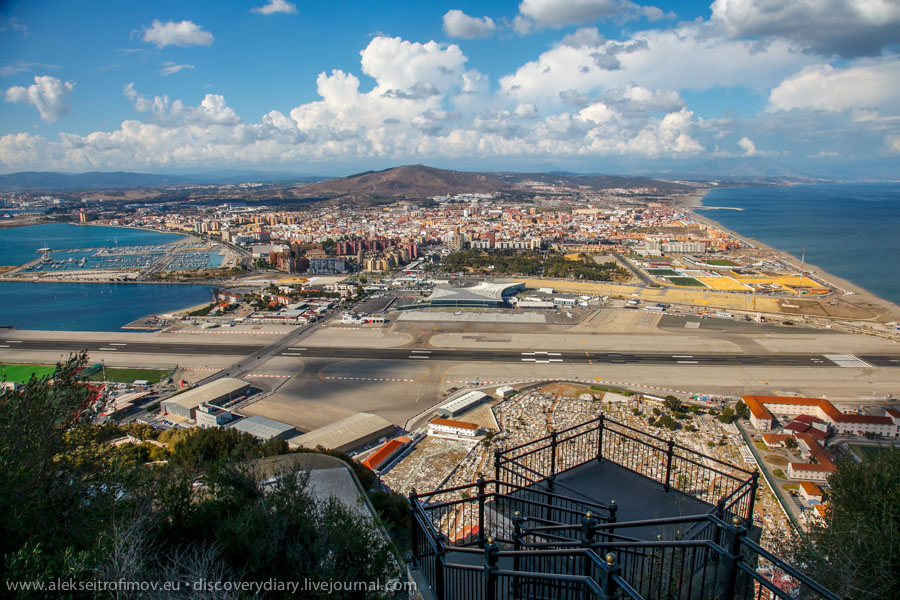
The border from a high point in Gibraltar. Here you can see La Línea in the distance, then the border installations and even closer is the runway of the Gibraltar airport. As you cross the border you have the option of walking across the airport runway – much like you would cross a road, with traffic lights and all. You can also take a bus.
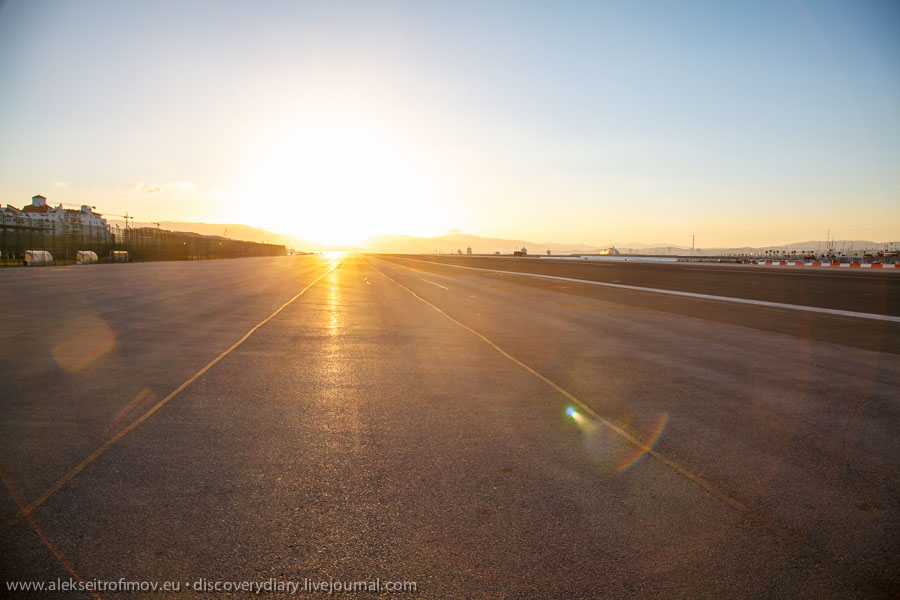
But I did cross the runway on foot on my way back. The setting sun lighted it.
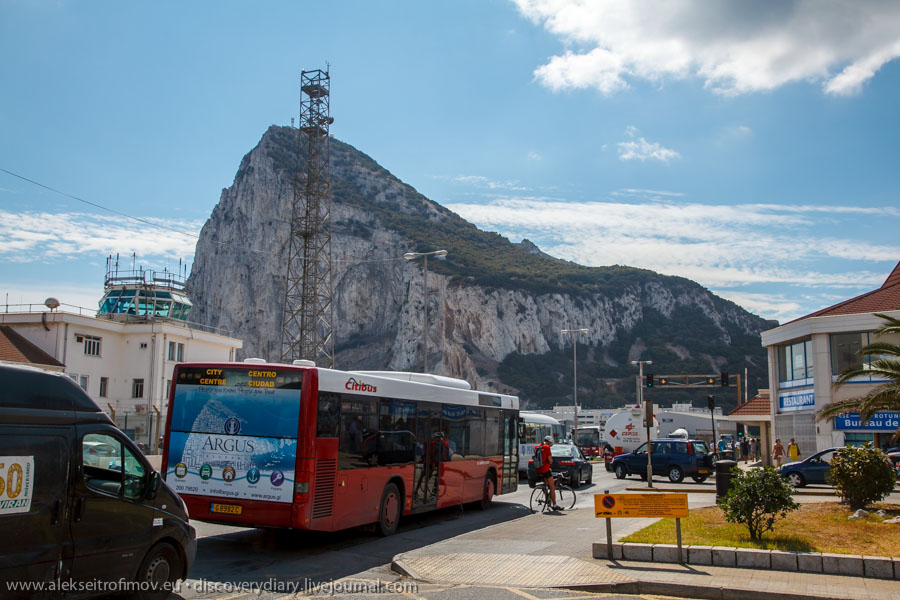
The bus from the border takes you smack in the middle of Gibraltar. I took it in the morning as it was included in the price of a cable car ticket that I bought before crossing the border. This is a very good idea as it allows you to skip the endless queue lining up by the cable car office – that queue apparently takes 1.5 hours.
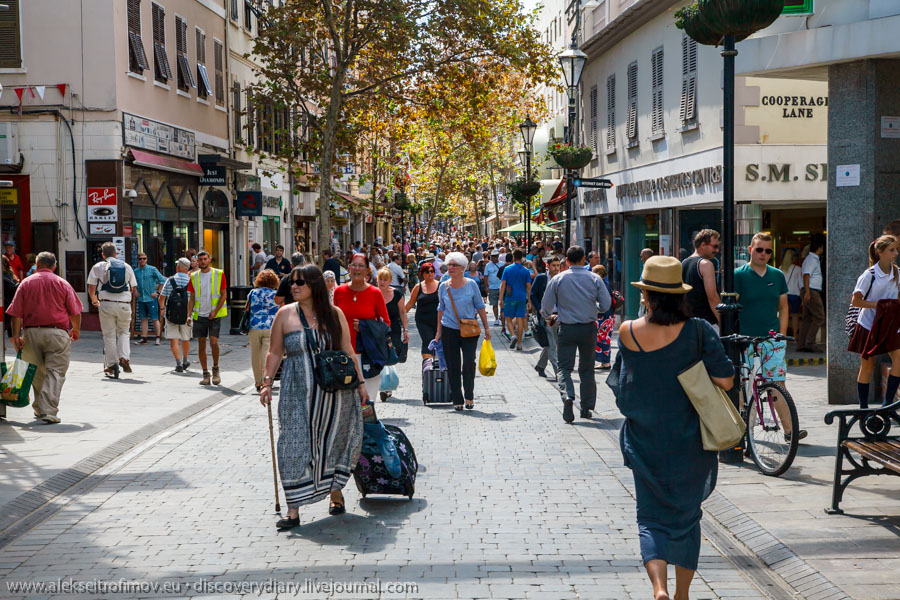
The Main Street of Gibraltar. So British.
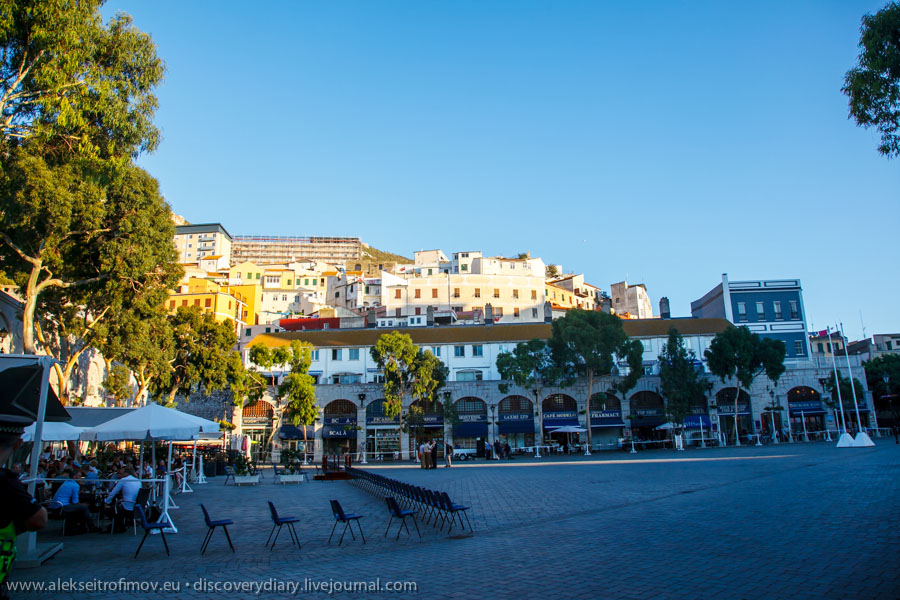
Grand Casemates Square – that would be the main square of the city. A ceremony is being prepared that I couldn’t identify.
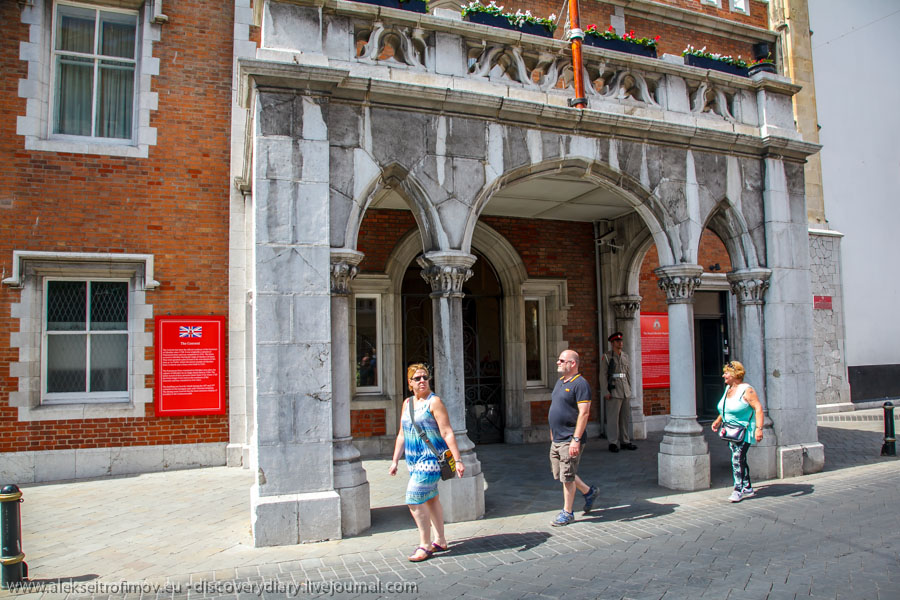
The Governor residence.
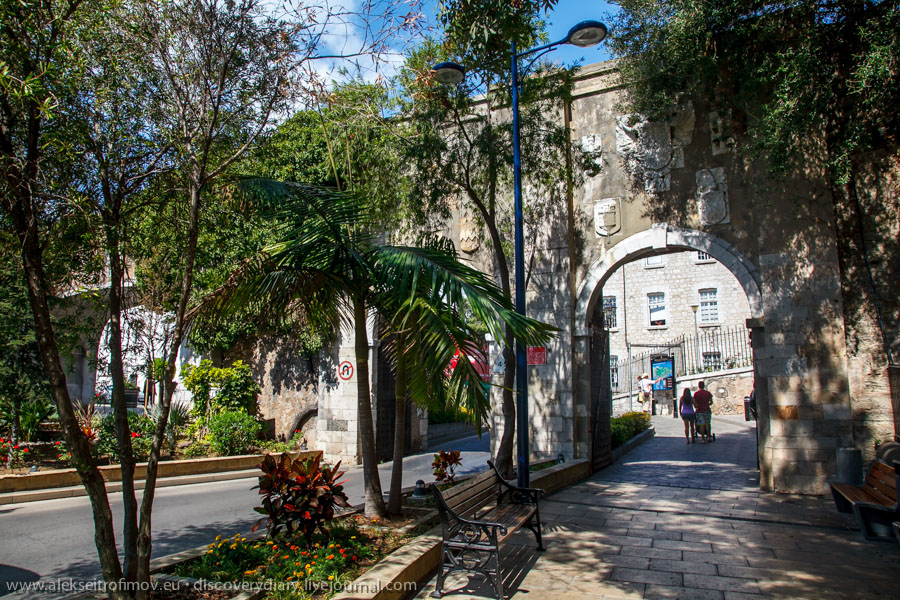
The end of the Main Street is marked by these gates in the city wall built by Charles Quint himself, when Gibraltar was still the property of Spain. To this day the Spanish cannot accept the loss of the Rock.
The main tourist attraction of Gibraltar is surely the Rock itself. You can climb it on foot but cable car is so much easier and quicker. The view from the cable car as we go up – direction North.
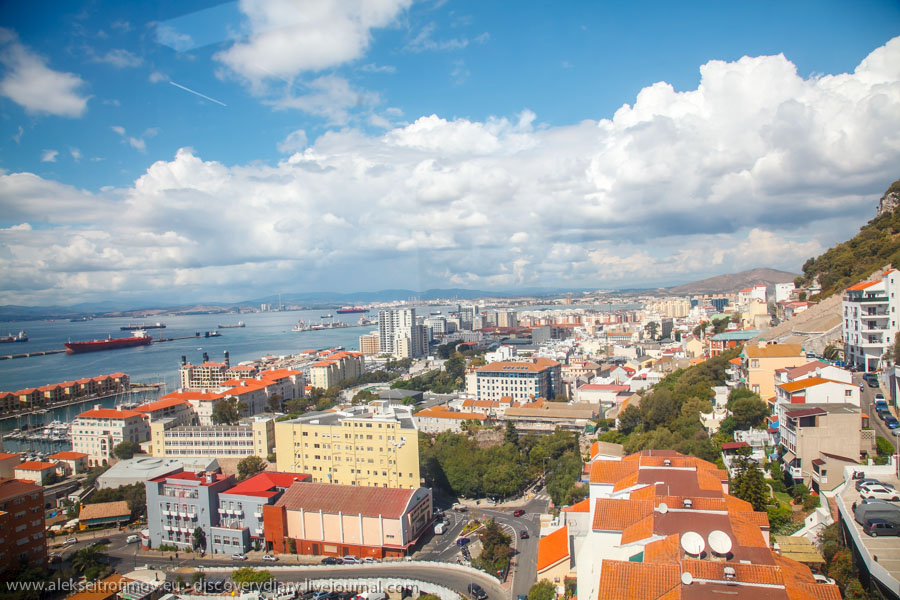
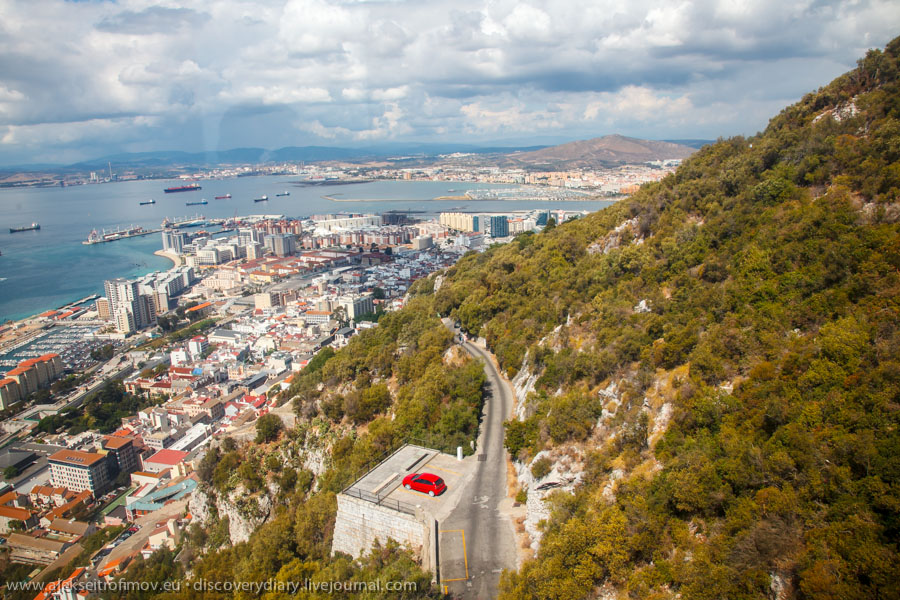
We are getting ever higher.
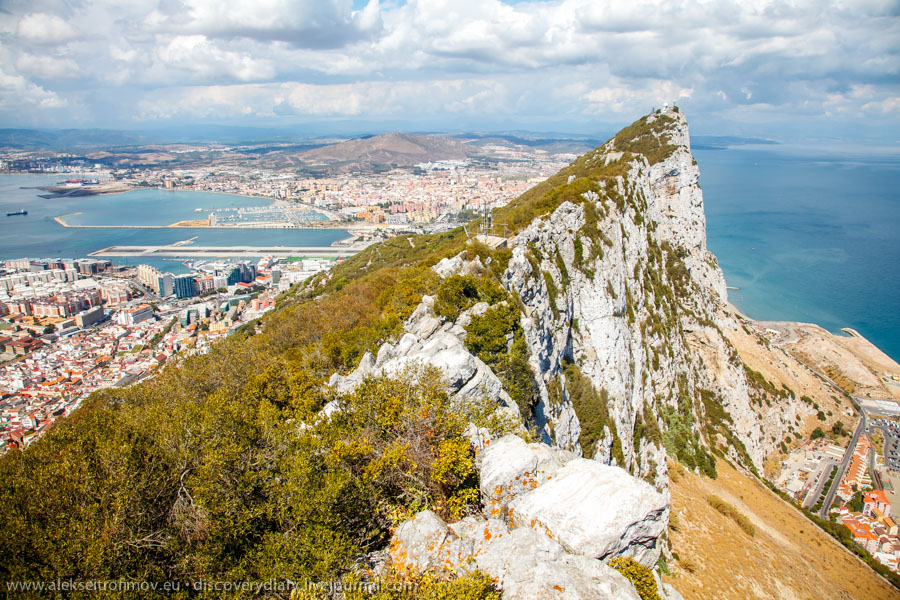
Finally we get to the very top of the Rock. The view from the lookout to the North. The Rocks has several peaks, and this is the Northernmost – you can see La Línea behind.
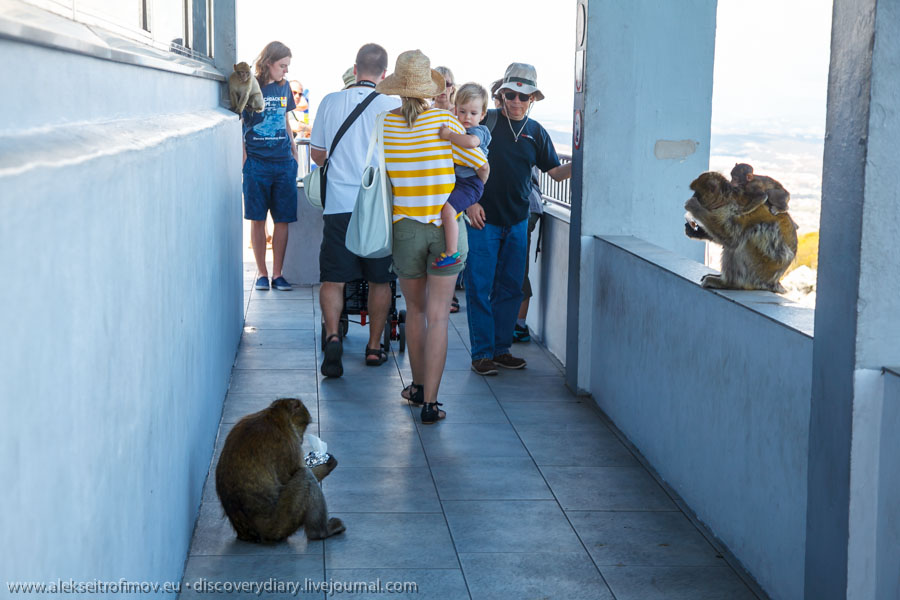
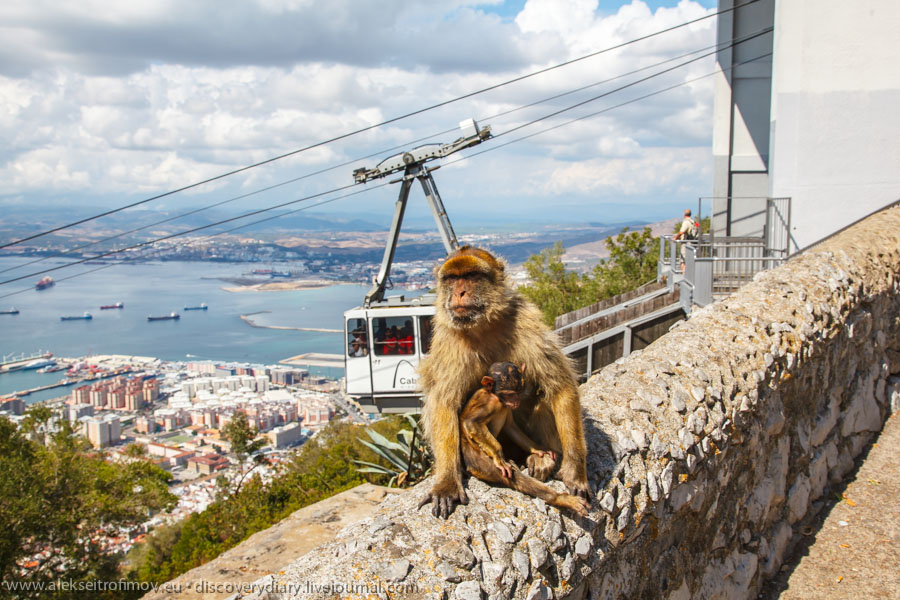
The cable car station at the top of the Rock is the kingdom of apes who live there in the wild. It is the only place in Europe where a population of free roaming apes persists. They say that the English will stay in Gibraltar as long as there are apes. In the 20th century the ape population declined to the point of extinction and reinforcements were brought from Africa. The apes are not timid at all, you have to watch your steps as they will gladly snatch any object that they might find interesting.
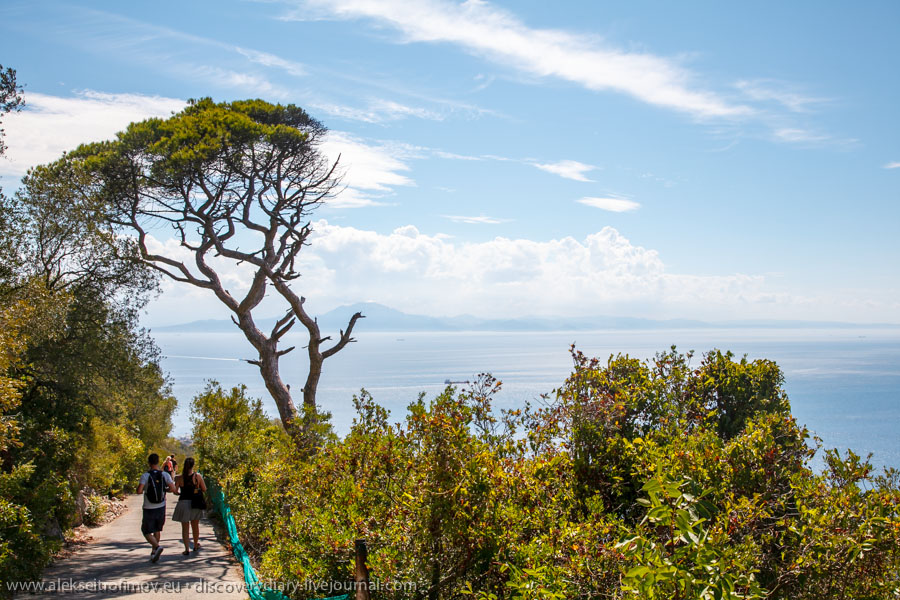
I headed on foot from the cable car station to the Southern peak of the Rock – the so-called O’Hara Battery.
Southern peak
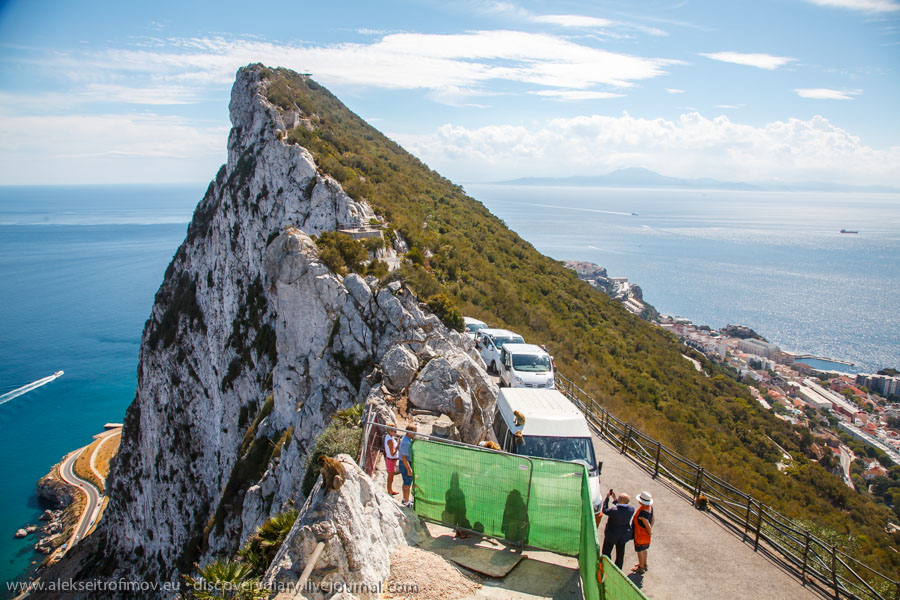
From up close
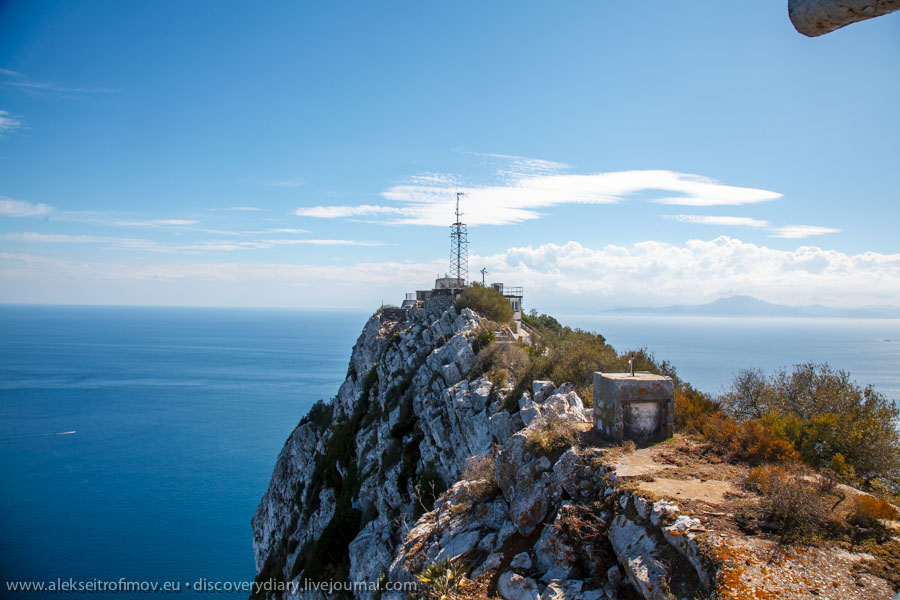
As you climb the peak, you get to see the Battery:
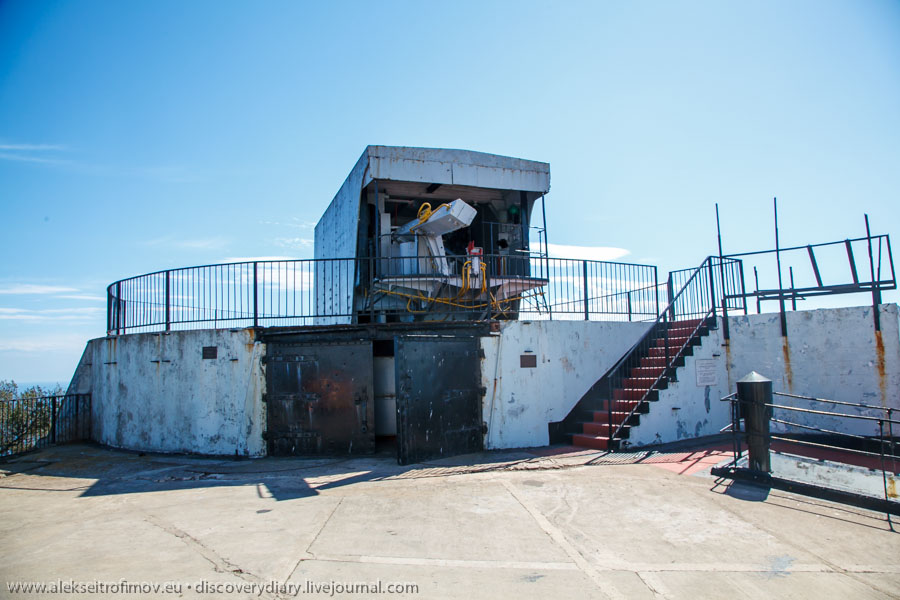
This is where the cannon is pointed. South. Here you can feel while throughout history Gibraltar was the key to the strait below.
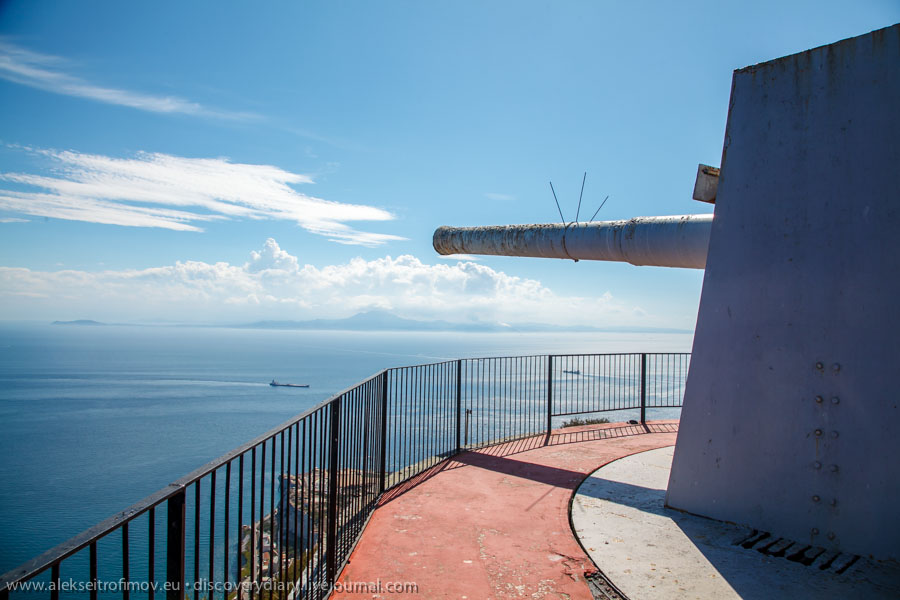
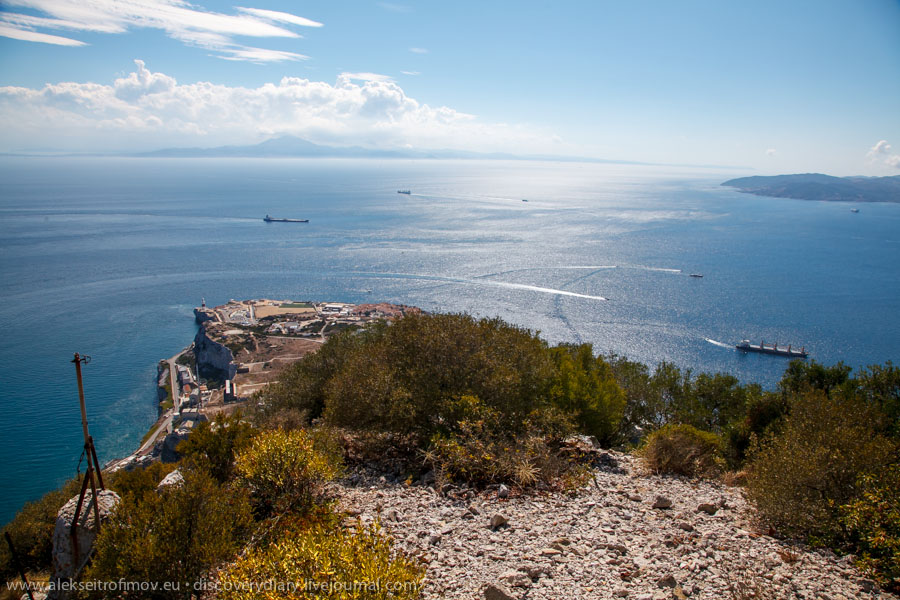
Looking down from the cannon. Africa, i.e. Morocco, is in the centre. To the side is Spain’s Algeciras peninsula, which extends way more to the South than Gibraltar but has no strategic importance because it’s flat.
Underground tunnels built during the World Wars inside the O’Hara Battery.
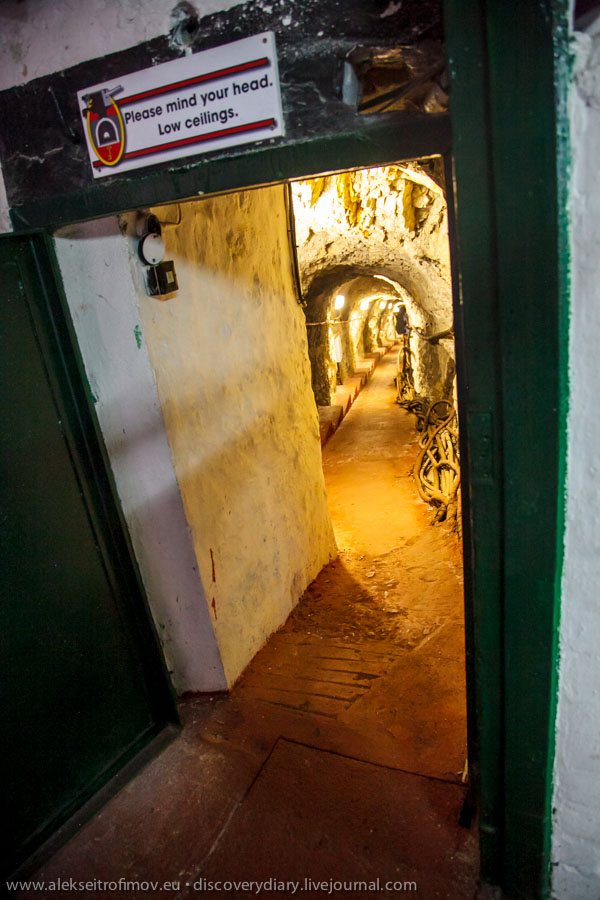
A WWII era control station dug in the Rock below the Battery.
Контрольный пункт времён Второй Мировой войны в подземелье под батареей.
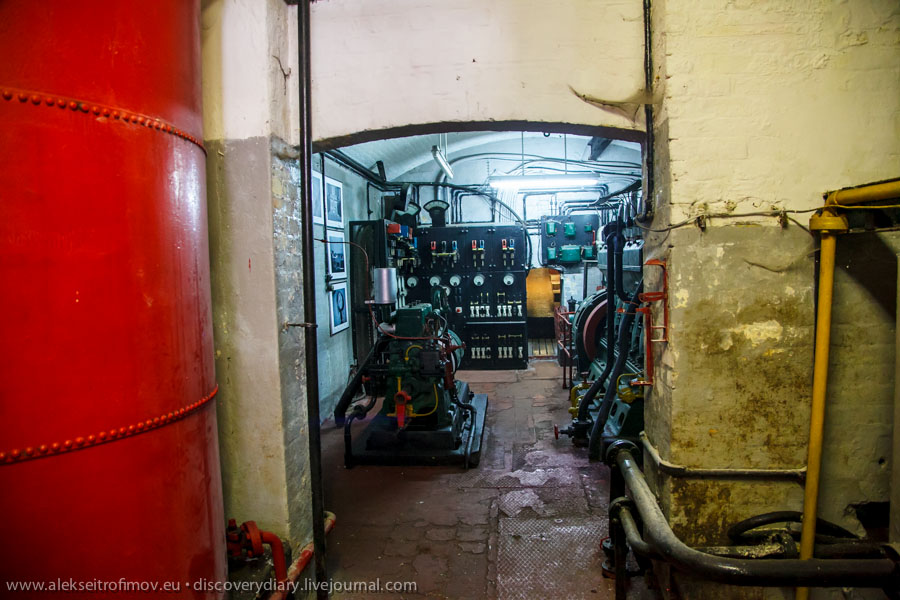
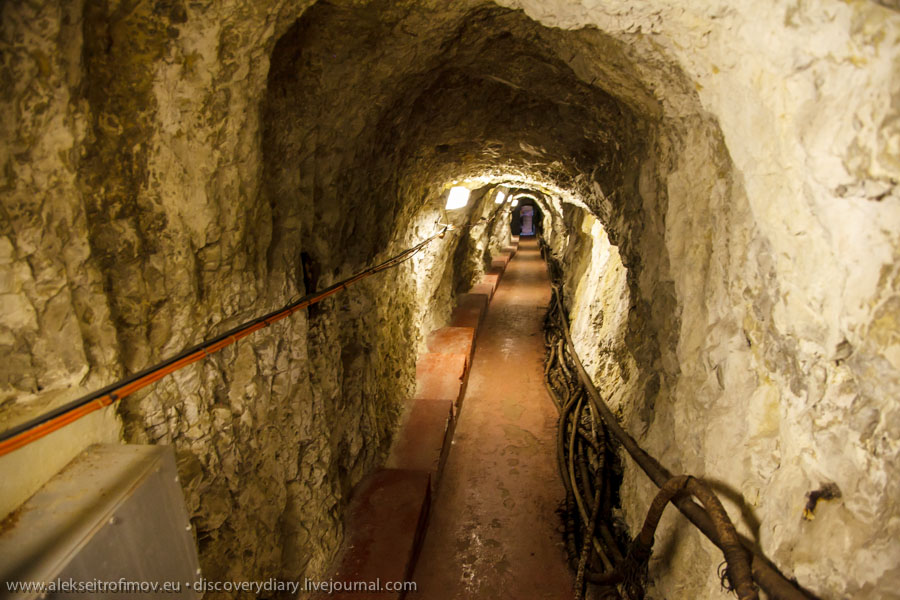
All of the Rock is in fact infused with innumerable tunnels. The English started this hundreds of years ago, but the majority of tunnels were dug in the 20th century, especially during WWII. At some point Gibraltar served as the Allies’ main headquarters and Eisenhower was managing the African campaign from here.
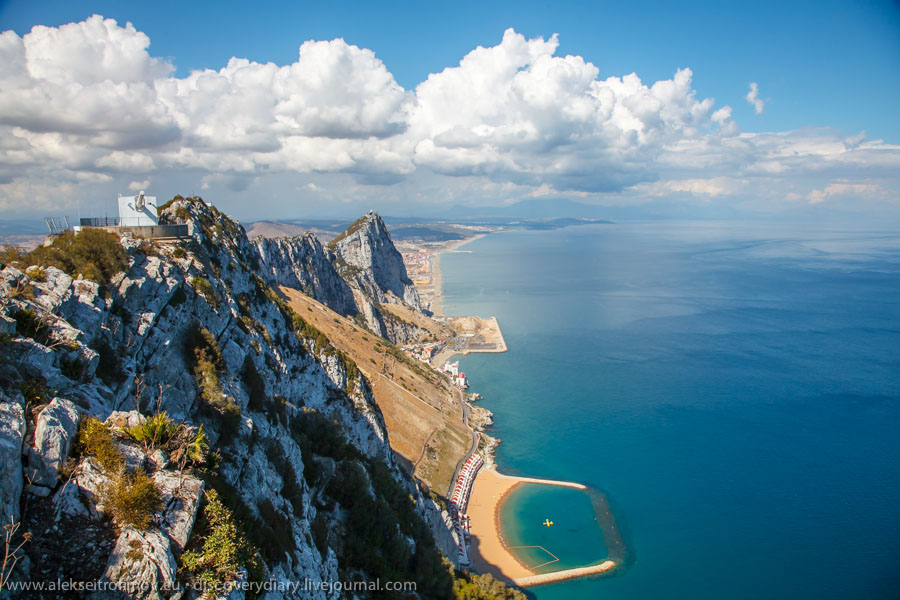
The Eastern shore of Gibraltar.
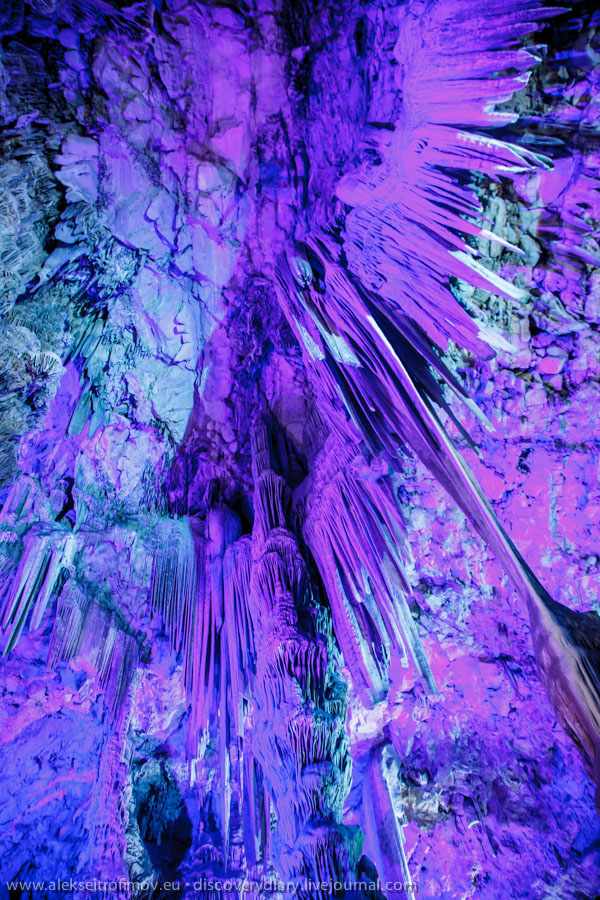
Yet another incredible sight inside the Rock – the so-called St Michael’s cave. In fact it is a huge complex of caves that has naturally formed inside the Rock. In the old days it was believed that the endless corridors inside the cave eventually end up in Africa. I’d recently been to the amazing Sardinian caves, but even so I was smitten by this cave complex. Here it is enterprisingly lit with flowing coloured lights. An unexpected use has been found for the main cave – it’s a concert hall!
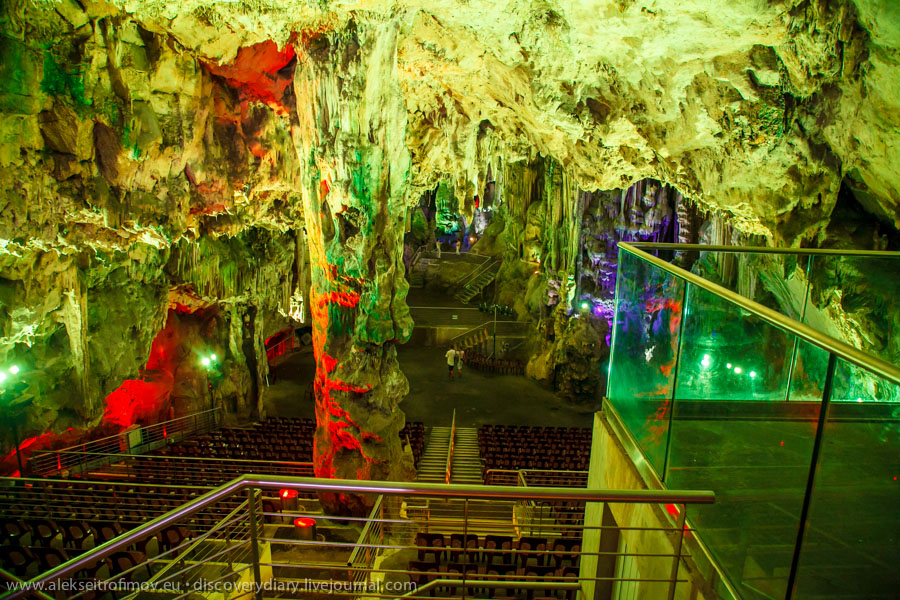
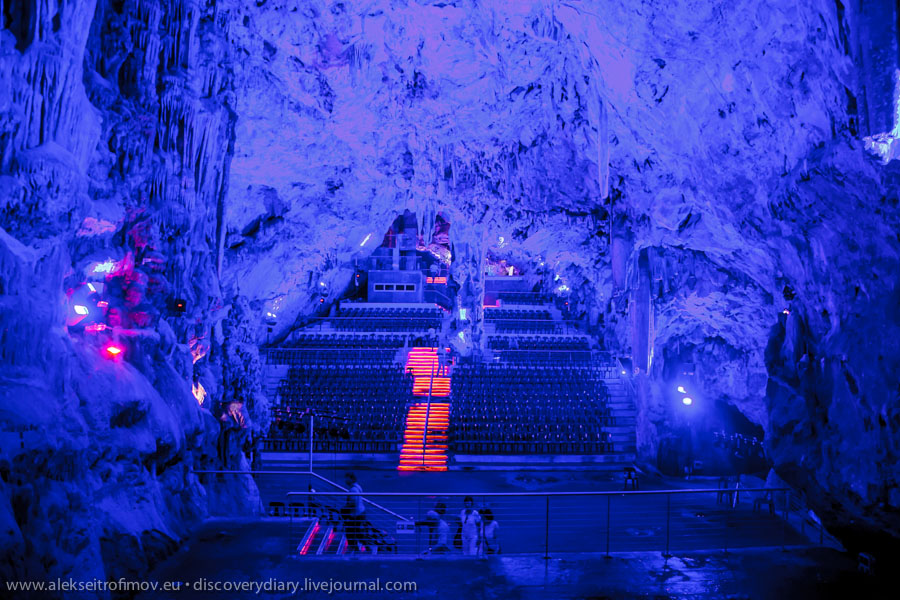
Fantastic!
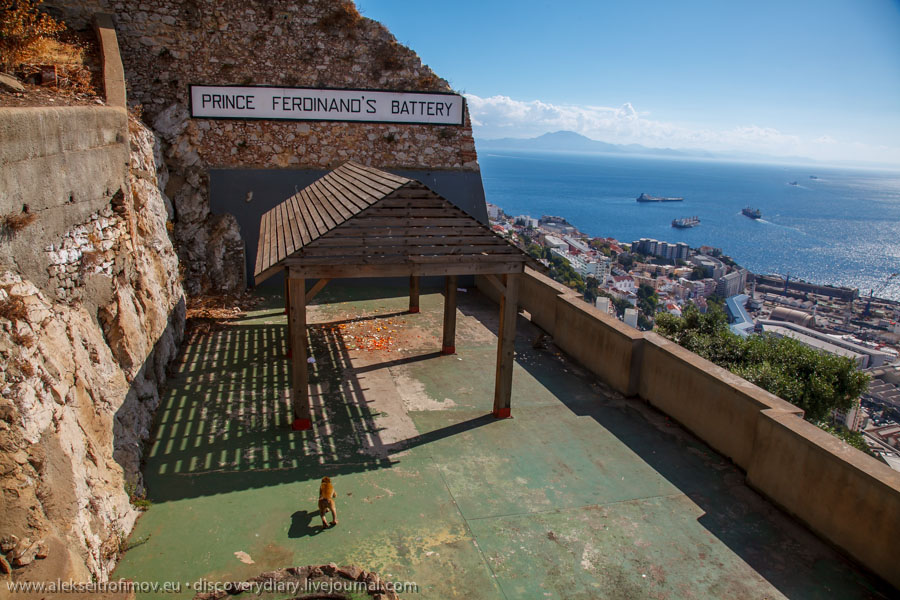
As you walk down the Rock you pass through another Battery that today serves as Apes’ Den – a refuge for the local apes. I opted out of going to the Den itself.
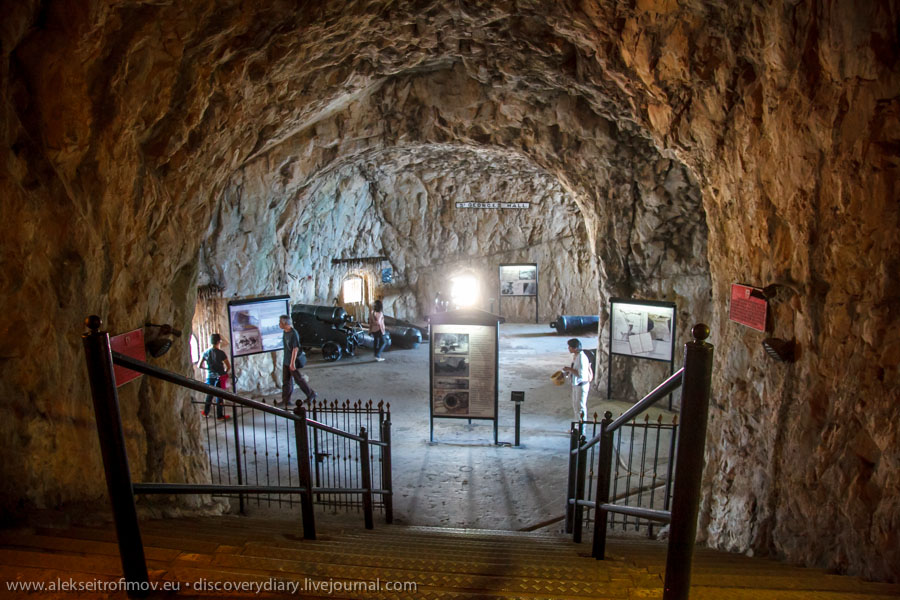
Great Siege Tunnels are another fascinating attraction inside the Rock. These were built during the 14th (!!!) and longest siege of Gibraltar which took place in 1789-1793. The siege was laid by the joint forces of Spain and France. Despite the length and the violence of the siege, it ultimately failed. This tunnel in the Northern part of the Rock was built in order to control the Eastern approaches to the Rock – the one strip of land where the fire of the English cannons could not reach previously. The Tunnel is incredibly long – it takes about an hour to go through it all to the end. Its main destination near the end is this hall. Once it was built and a range of cannon was installed, the siege was doomed.
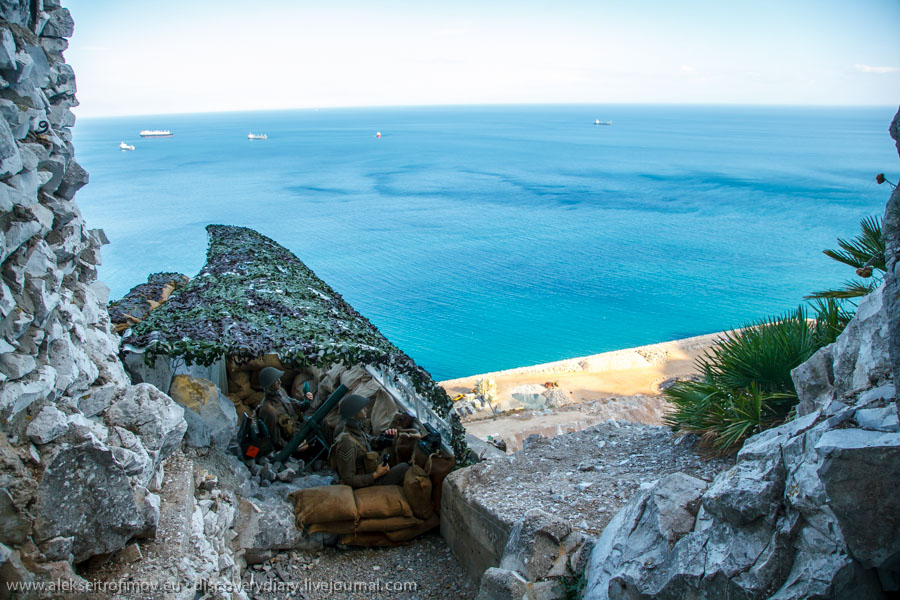
The very end of the Tunnel – its exit in the Eastern wall of the Rock. The soldiers are of course mannequins built to represent how this place looked during WWII. And they leave quite a realistic impression. I could almost hear the bullets.
The post Gibraltar appeared first on Around the world in three years.
]]>The post Cadiz appeared first on Around the world in three years.
]]>Cádiz’s location is surreal. Old Cádiz is found on a peninsula connected to the mainland only by a sliver of narrow land. As if a classical ruler had decided in his flight of fancy to build a fairytale city based on a project imagined by a court philosopher. In our days the town no longer fits to the peninsula and has steadily grown towards and onto the mainland.
When Columbus discovered America, the first base where the riches flowed and where they were counted and distributed was Sevilla. Sevilla is the point where the river Guadalquivir loses its navigability, hence that was where the ships had to stop and unload. Later a disaster struck: Guadalquivir silted and the unloading point with all the riches was moved here, to Cádiz, bringing with it an unimaginable wealth. This went on until the fall of the Spanish colonial empire in the beginning of 19th century.
Here in the distance you can see the narrow strip of land that leads towards the mainland (it has the wide sand beach, whereas Old Cádiz only offers a boring and narrow stone beach).

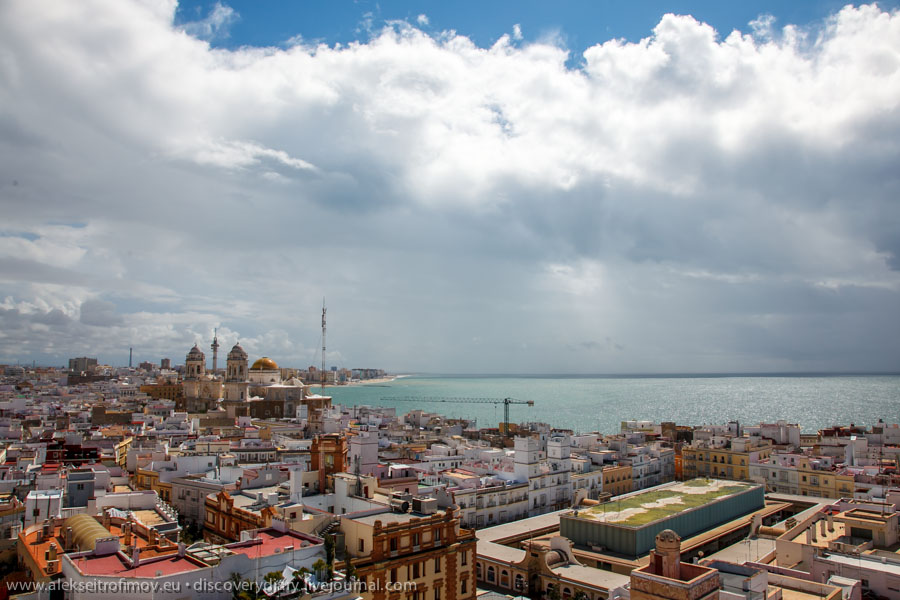
A look in the direction of the ocean.
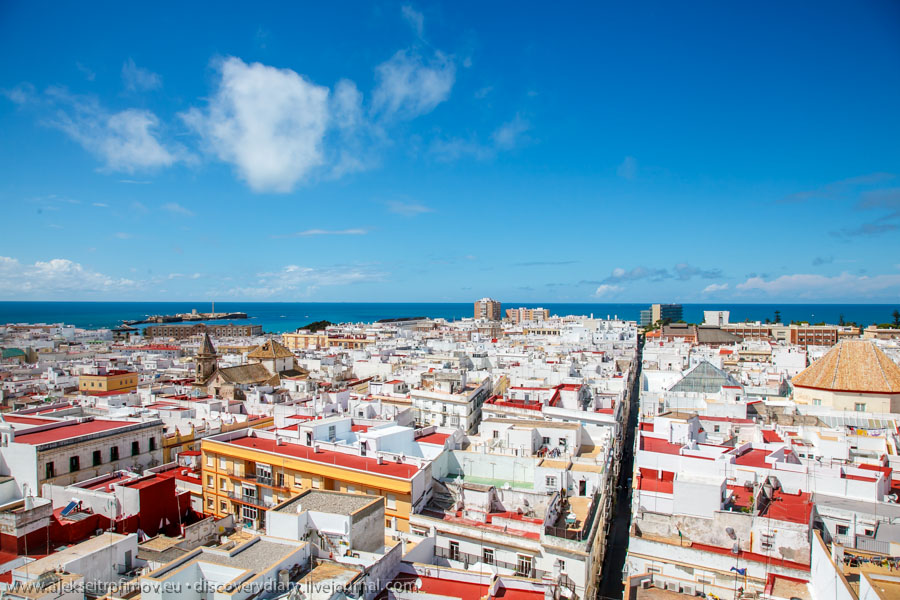
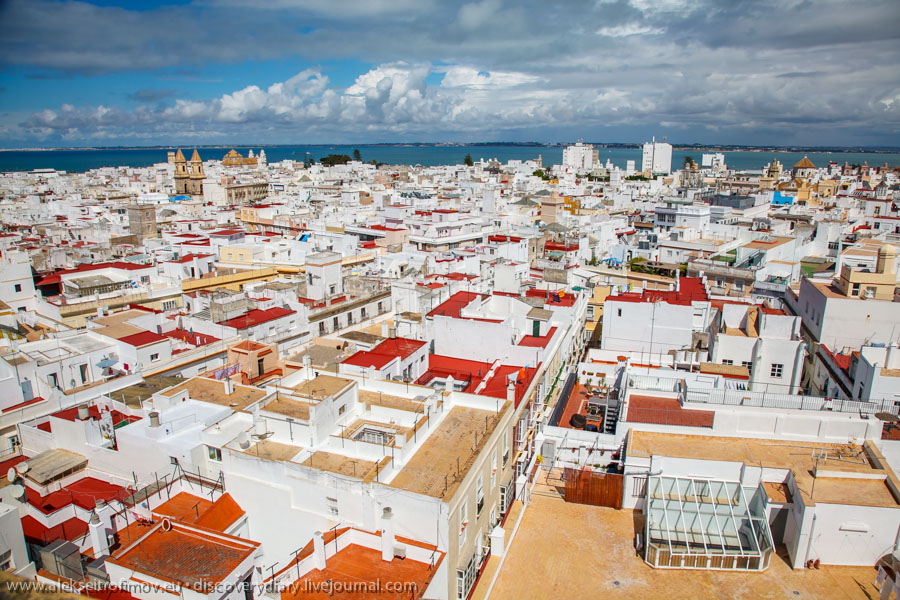
The most characteristic feature of Cádiz’s skyline is the innumerable observation towers. Every family would build one, in order to be the first to spot an arriving ship. Hundreds of towers were built in the days of flourish. Here the three main types of towers can be seen: the chair type (on the right); the octagon type (in the middle); and the mixed type – chair and octagon together (on the left).
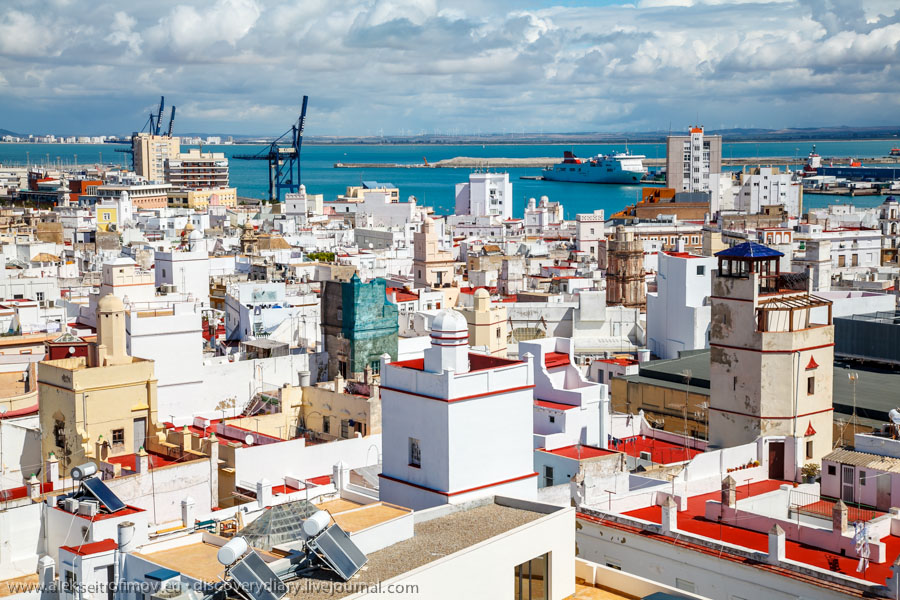
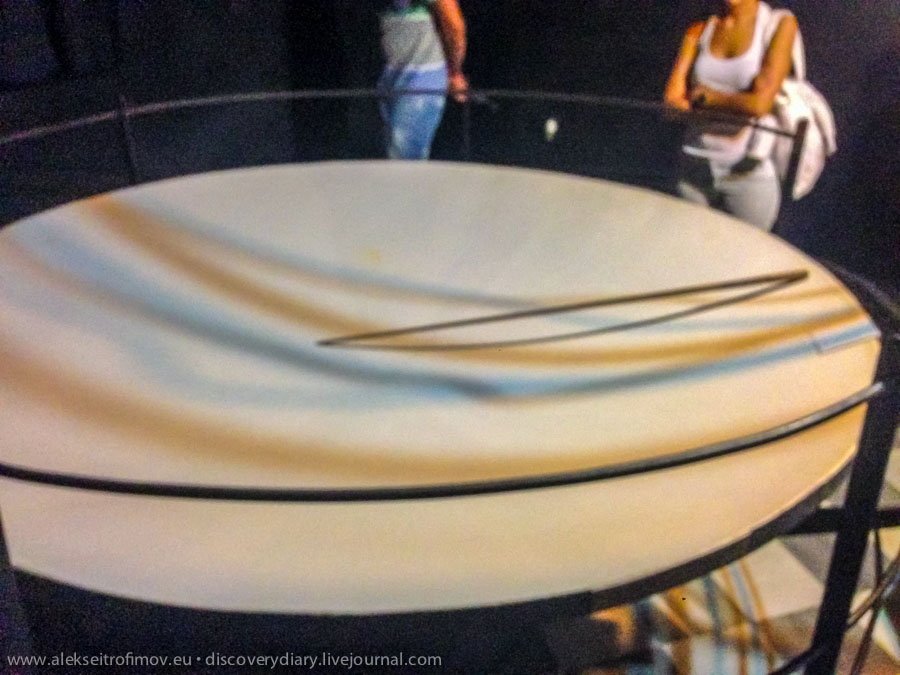
The previous photos were made from the tallest of the towers of Cádiz, which hosts today a camera oscura. The camera oscura is a popular attraction in Spain found in a number of cities especially in Andalusia. Using a mirror installed on the roof, the reflection is beamed into the white cloth located in a dark room. By moving the mirror around it is possible to look at different parts of the city. Quite a fascinating process! It is also very interesting to listen to the stories that a guide would tell you as she moves the mirror. The optical principle in use is the saem as the mirror in a reflex photo camera. No photos were allowed inside the camera oscura, but I made a quick snap of the white cloth which we all surrounded to look at the magical show.
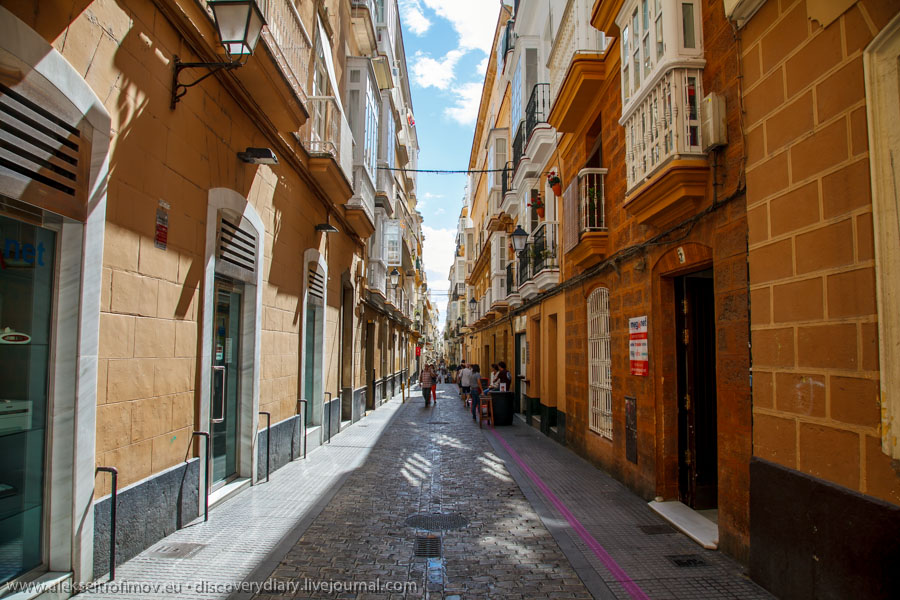
Extremely narrow is how all the streets of Cádiz are. This is one of the main ones:
In one of the parks in the old town. It so happened that even though it was my old dream to visit Cádiz, as I found myself here I was completely overtaken by a computer game (Europa Universalis IV, if you need to know). And so I played all night long and only went to sleep at around 9 am. And already at 11 I had to free my hotel room! At 11.15 loud knocks were heard on my door, the hotel owner shouted that I should get out. I packed my stuff in record time – about 5 minutes – although was quite angry at the owner. Normally checkout in Spain is at 12. Having slept 2 hours, I walked around Cádiz like a zombie and I feel that I didn’t give it its due. Overall it’s very hard to find an ok hotel in Old Cádiz – too few hotels in the middle category, and very poor price-quality ratio.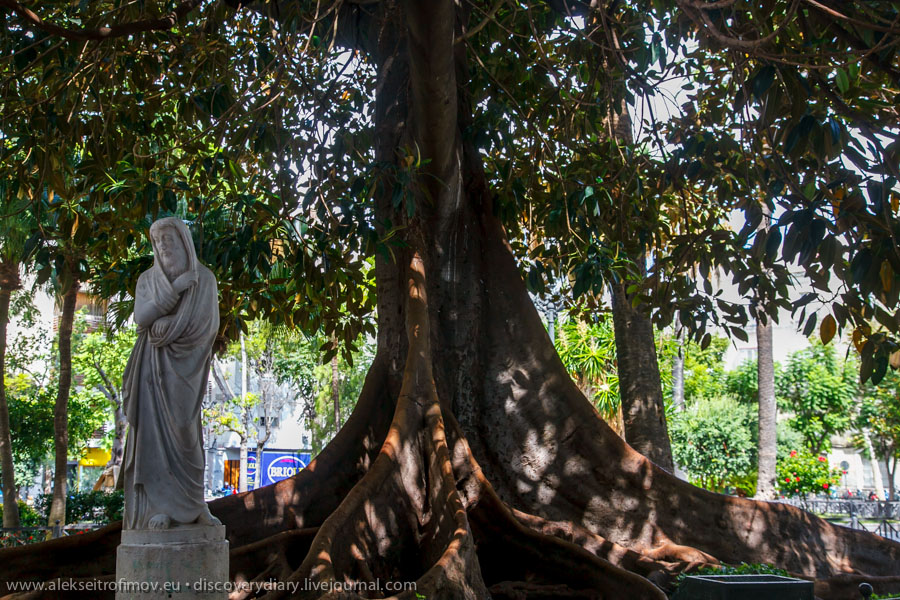
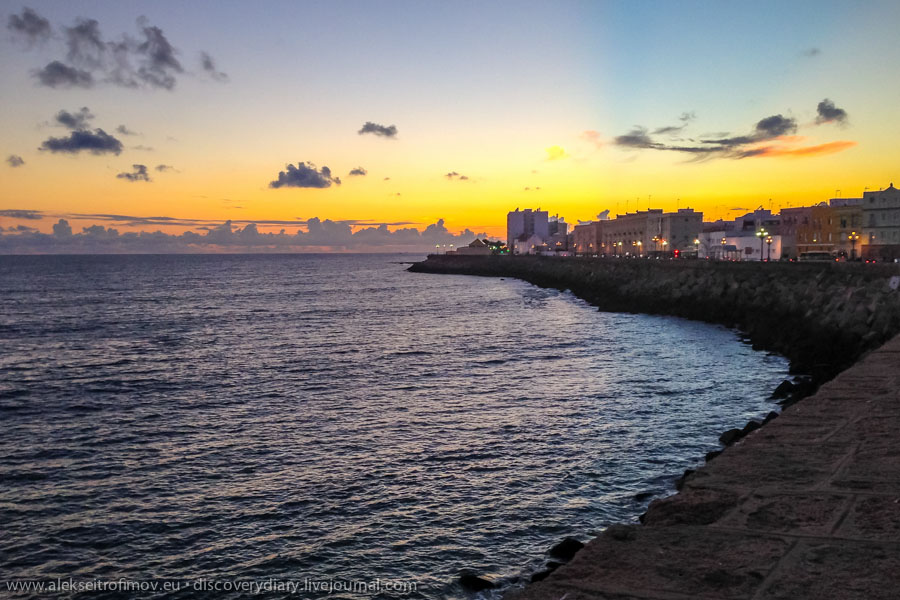
The Сádiz seafront after dusk.
The post Cadiz appeared first on Around the world in three years.
]]>The post Welcome to Andalusia: Jerez de la Frontera appeared first on Around the world in three years.
]]>Jerez is most famous thanks to sherry, the famous fortified wine that originates here. The very word sherry is a linguistic derivative of Jerez. The wine is rather strong, up to 20 degrees. I was surprised to find the amazing variety of various sherries to be found in any Jerez restaurant. Wikipedia has a wealth of info on all of them, I will say that I liked the sweet varieties the most – such as Pedro Ximenez.
Jerez’s attractions do not stop at sherry. Jerez is famed in Spain as a city of wine, flamenco and horses. Flamenco traditions are also still alive here, and simply walking around town in the evening I could here the sad songs accompanied by the spectators’ clapping in random courtyards. And finally for the horses – the Royal Andalusian School of Equestrian Art is found here, the main such school of the Spanish army. It can even be visited. The main festival in Jerez is Fiesta del Caballo, and for this one week the town is full of equestrian enthusiasts. I decided to discover flamenco in its cradle – Sevilla – so mostly it was sherry tasting for me, as well as simply walking around the city.
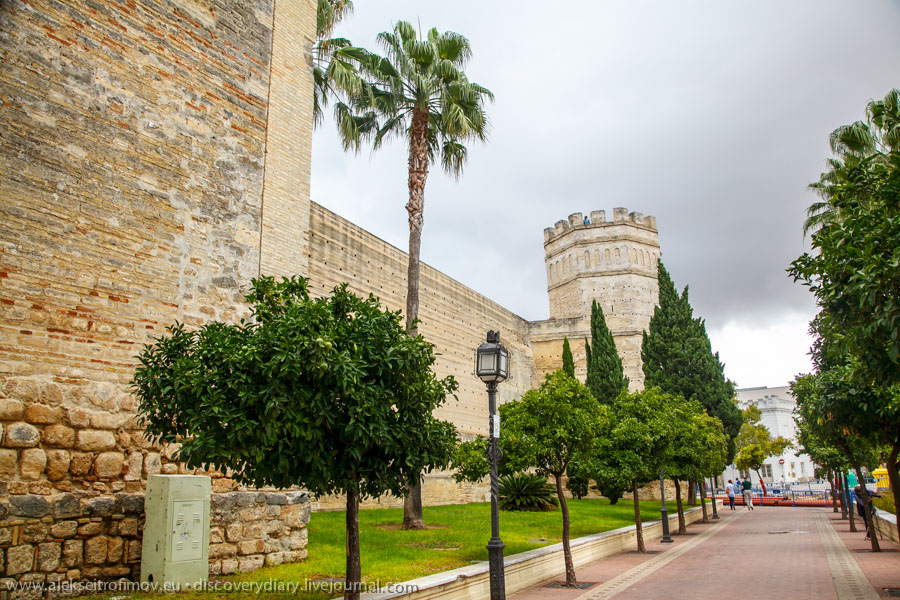
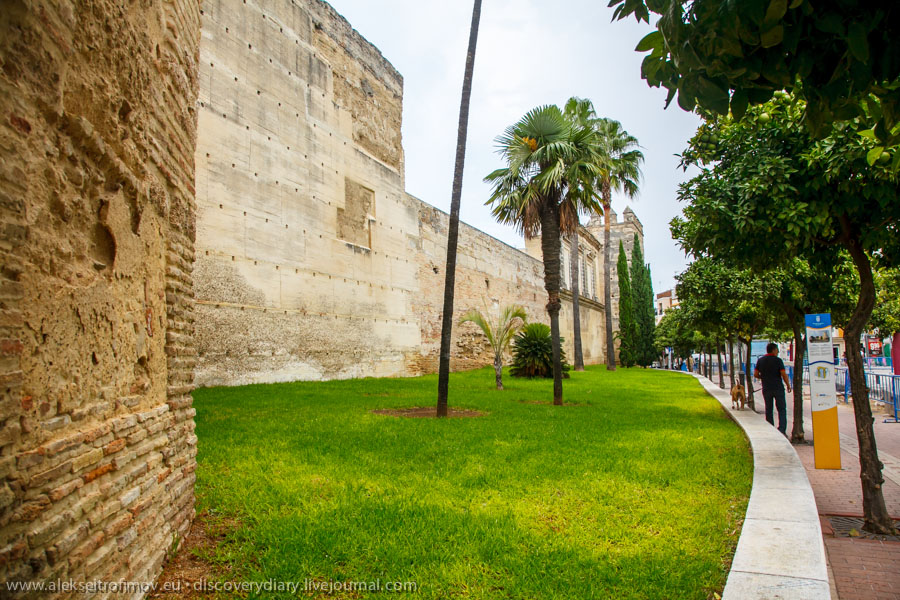
The main architectural and historical sight of Jerez is no doubt Alcázar. It is a Muslim fortress originally built in 11-12 centuries. Jerez is called Jerez de la Frontera for a reason – for many centuries it belonged to Muslims. Only in 1255 the Castilians took it and the frontier of the Reconquista lied here for a long time. The fortress from outside:
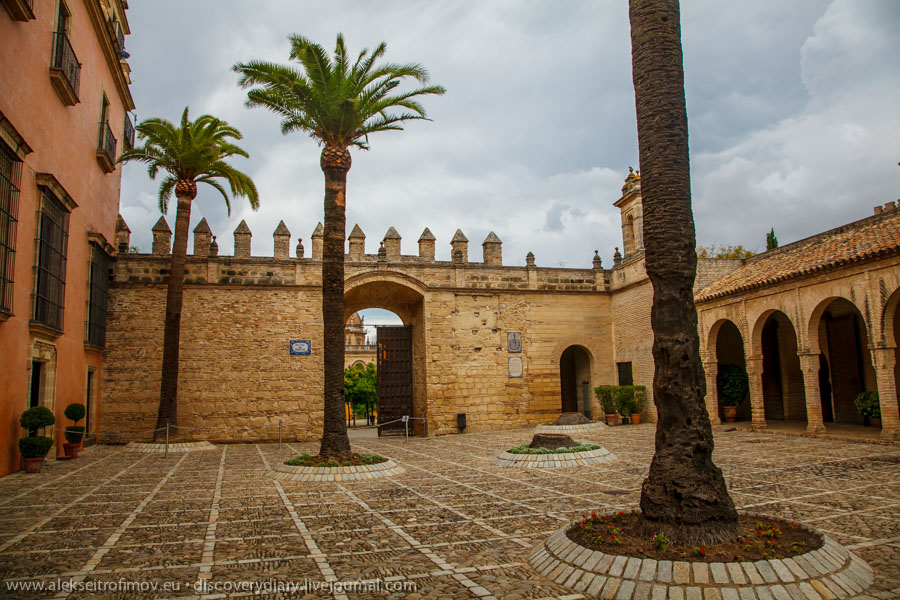
The main gates of Alcázar from it’s main courtyard:
From the same point, the centre of the fortress:
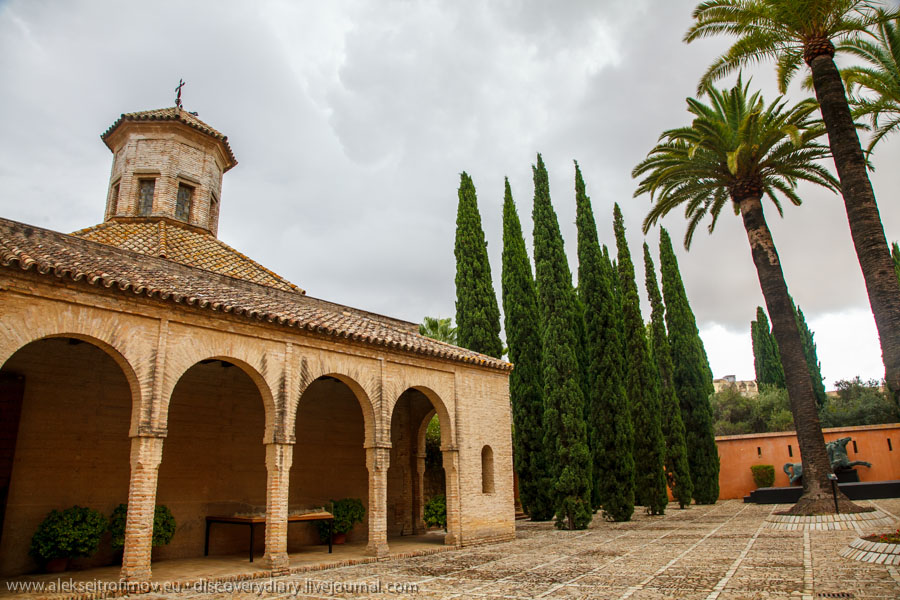
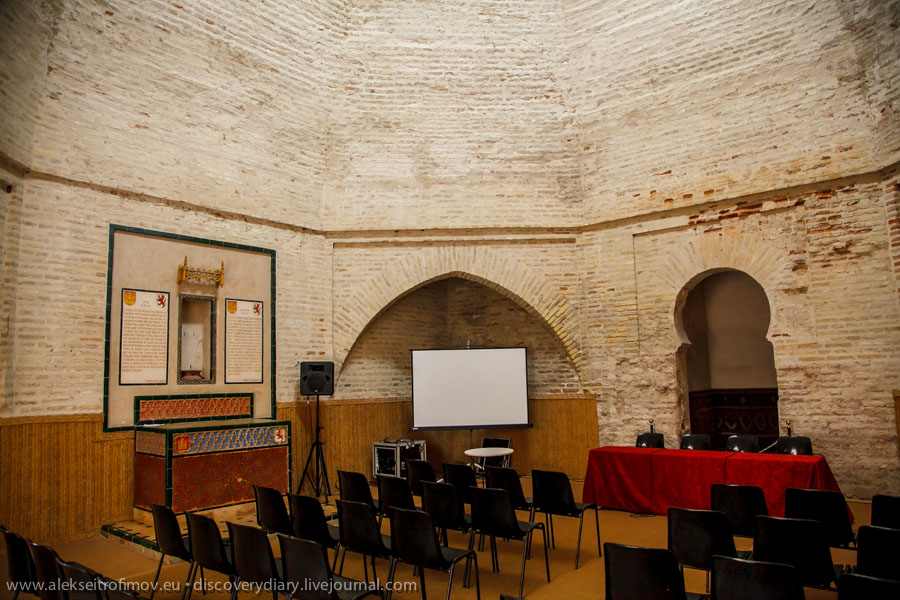
As you pass the arches on the previous photo, you enter this chapel. You can easily see that it’s a former mosque. The very first Catholic king who conquered Jerez converted the mosque into a church.
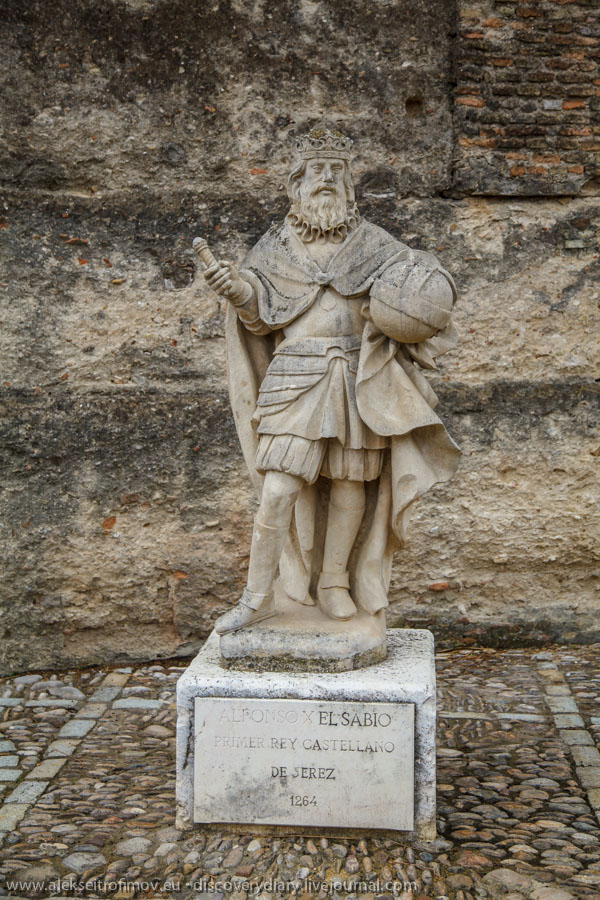
That’s him – Alfonso X the Wise, the conqueror of Jerez.
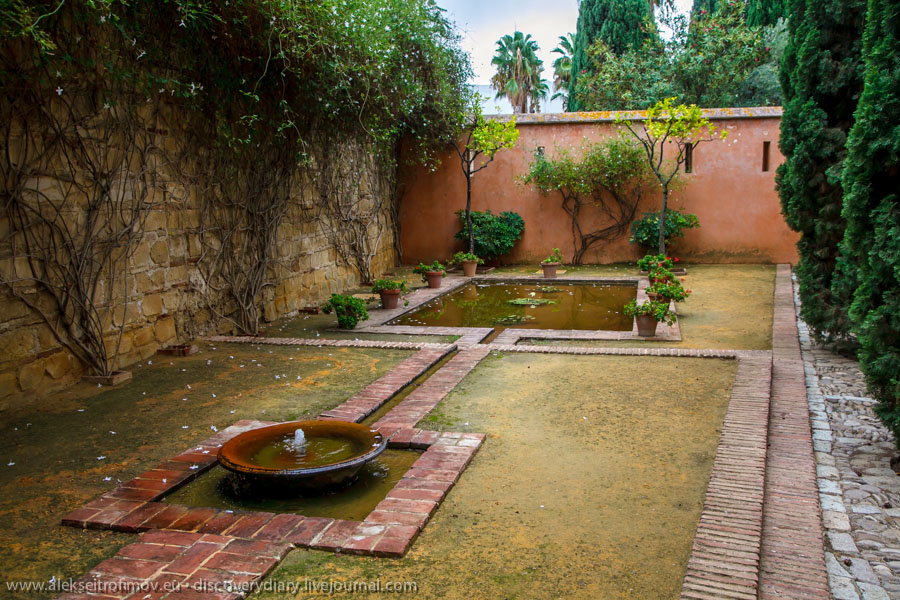
The first internal courtyard.
The view of the main courtyard which you can enjoy from the surrounding bastions. The pink building in the background is the Villavicencio palace, built in 18th century over the ruins of the old Muslim palace. The palace belong to the most distinguished aristocratic family in Jerez.
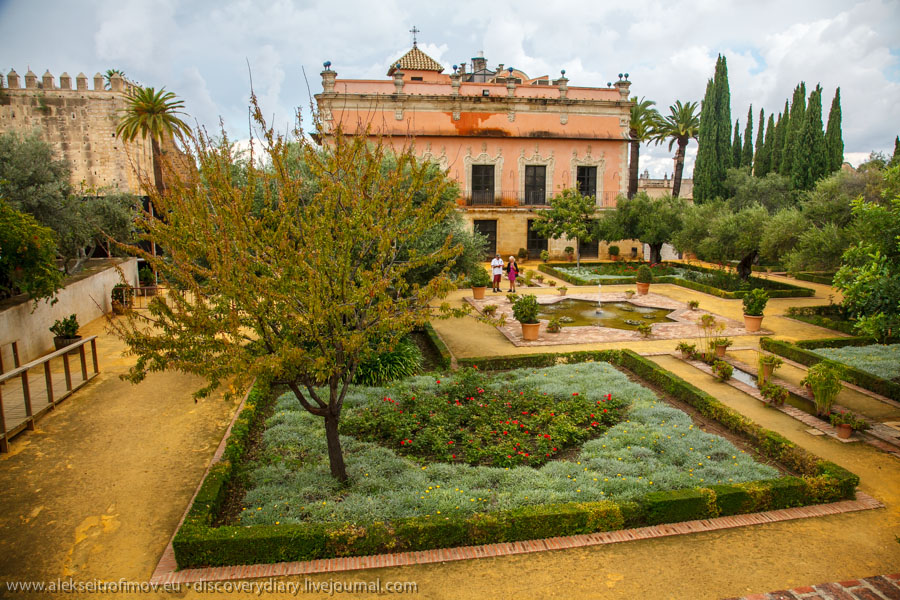
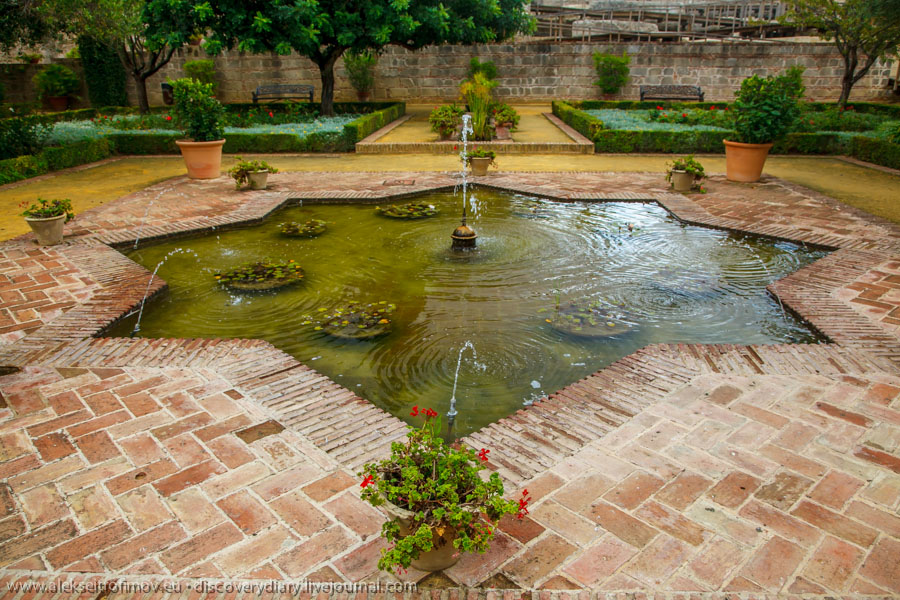
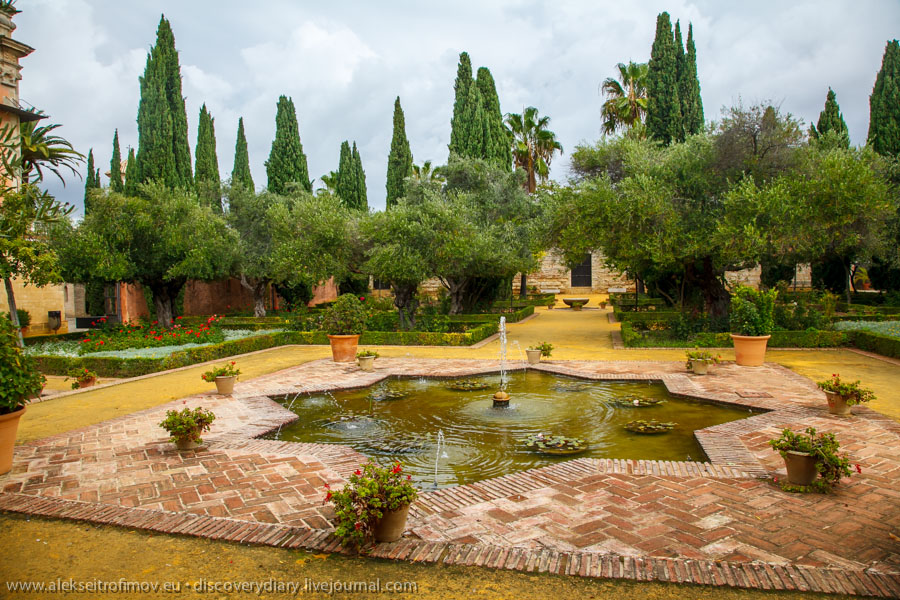
This beautiful fountain is at the centre of the garden.
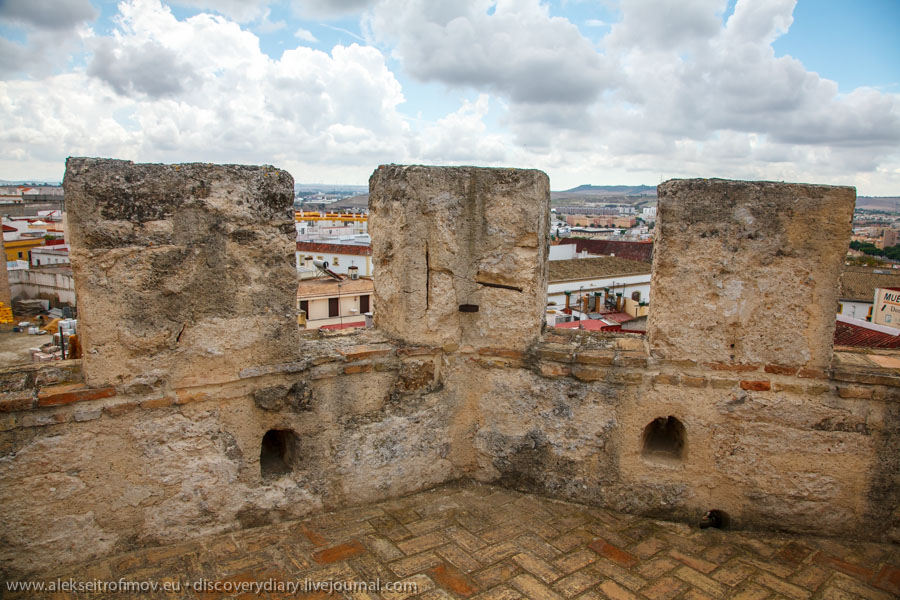
I climbed the corner tower:
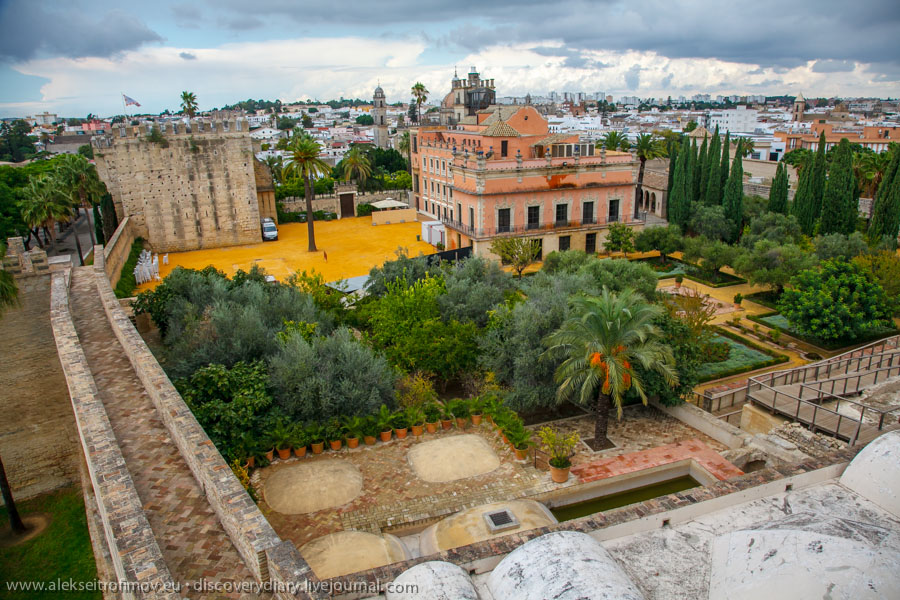
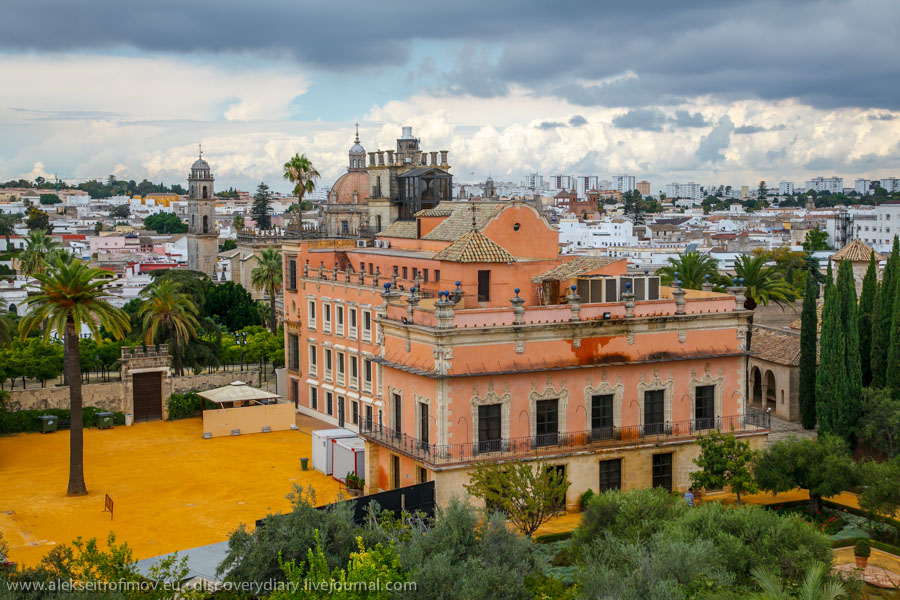
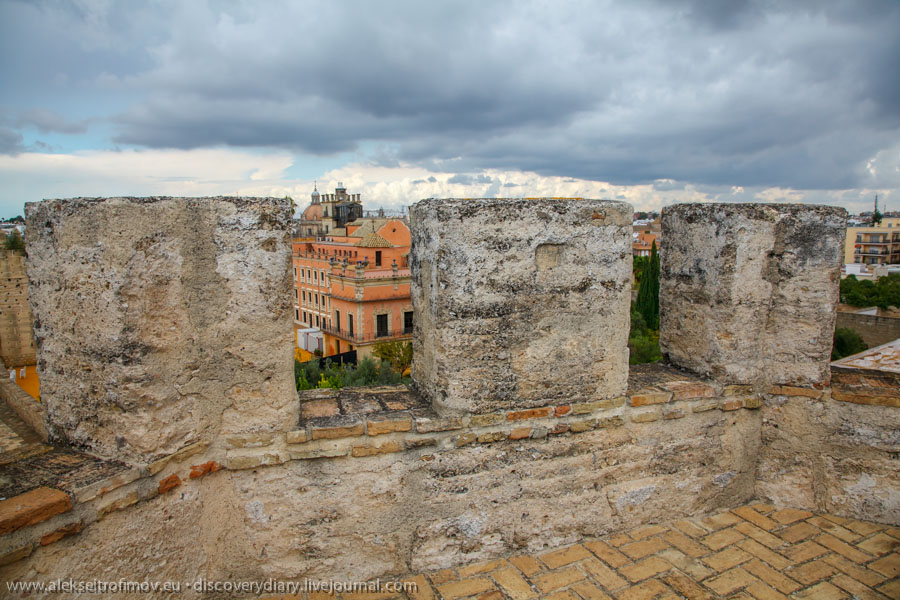
From the corner tower you can look at the hills surrounding Jerez from every side. You can easily imagine there how in the Middle Ages the tower keepers would look into the distance trying to make out the advancing enemy troops.
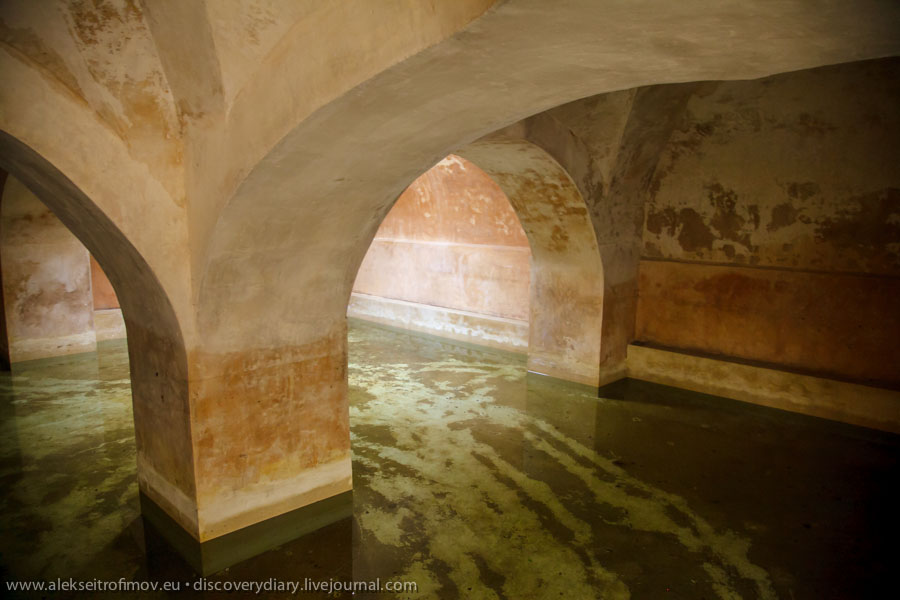
Apart from the garden and the walls, there are very few traces of Muslim buildings left in Alcázar – but among them is this unexpected water reservoir. The entrance is hidden among the trees in the garden.
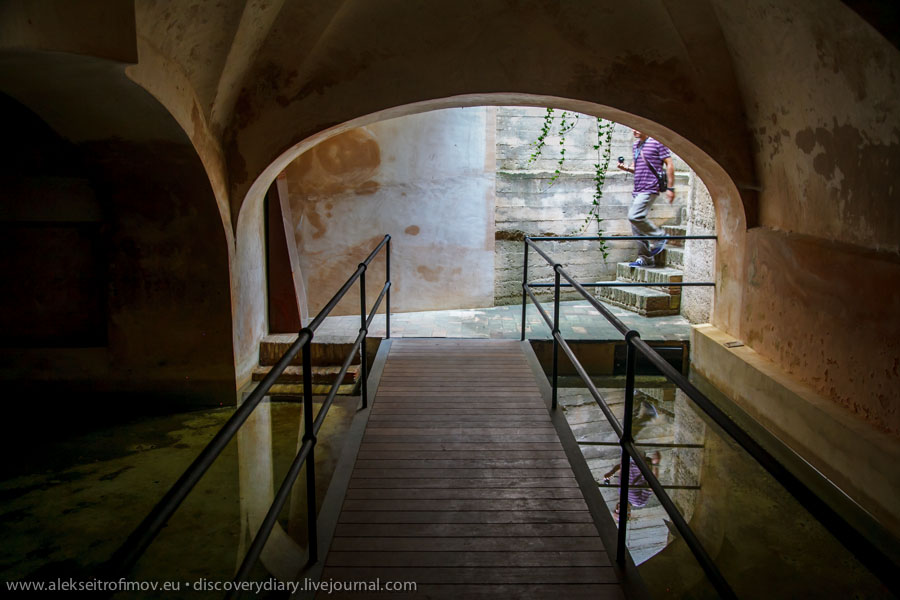
The reservoir is quite sizeable. The Muslim rulers of Spain had a sophisticated taste and very highly cultured, easily surpassing their European contemporaries in that regard. The geography and ultimately history were however on the side of the advancing Catholic wave from the North. Cut from their brothers in faith by the Mediterranean sea, the Muslim states of Iberia fell one after another under the attack of the North. I keep wondering how the cultural contrast has flipped through the centuries too.
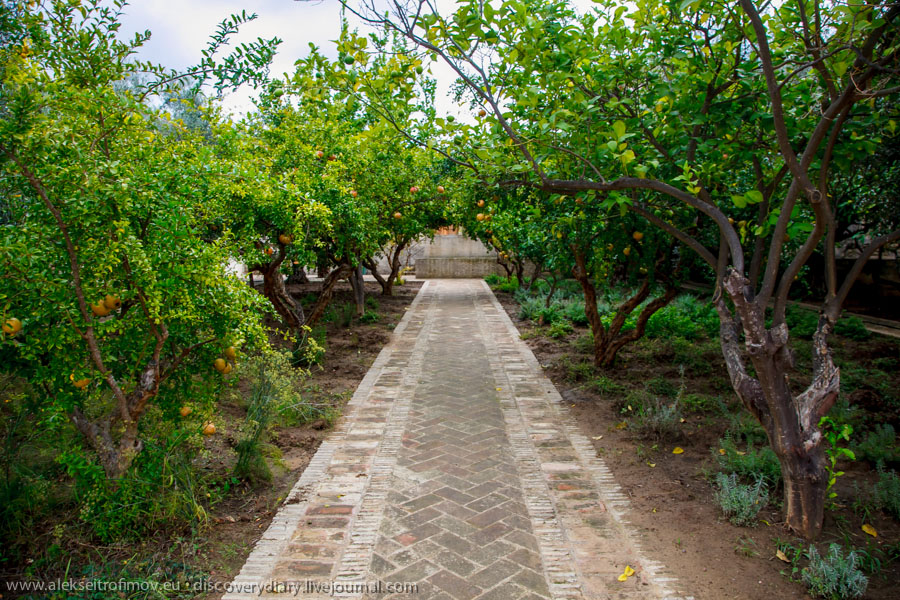
In Alcázar’s paradise garden.
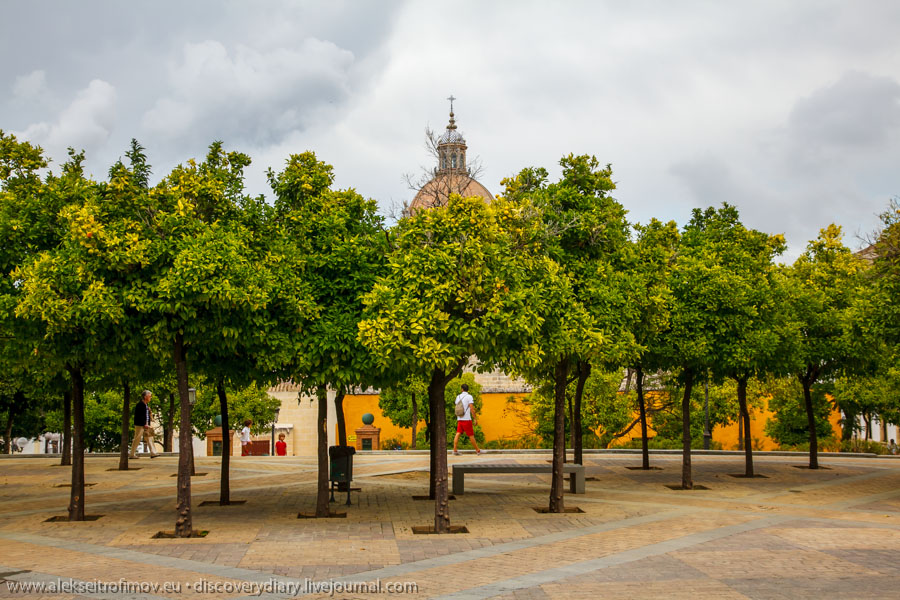
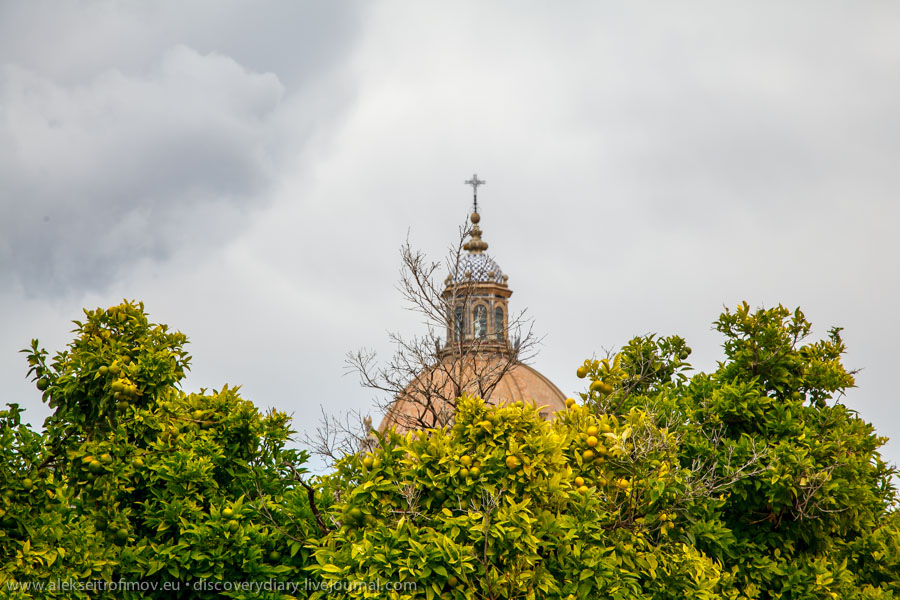
In front of Alcázar’s entrance there is this wonderful grove. You can see the dome of the Jerez Cathedral though the trees.
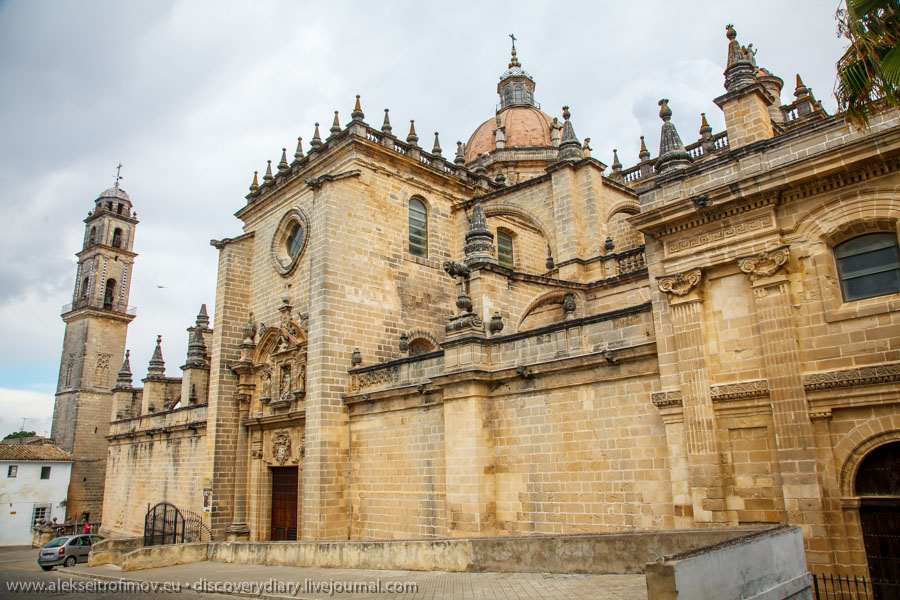
It’s just a short walk away. The back wall of the Cathedral which you face first as you approach from Alcázar.
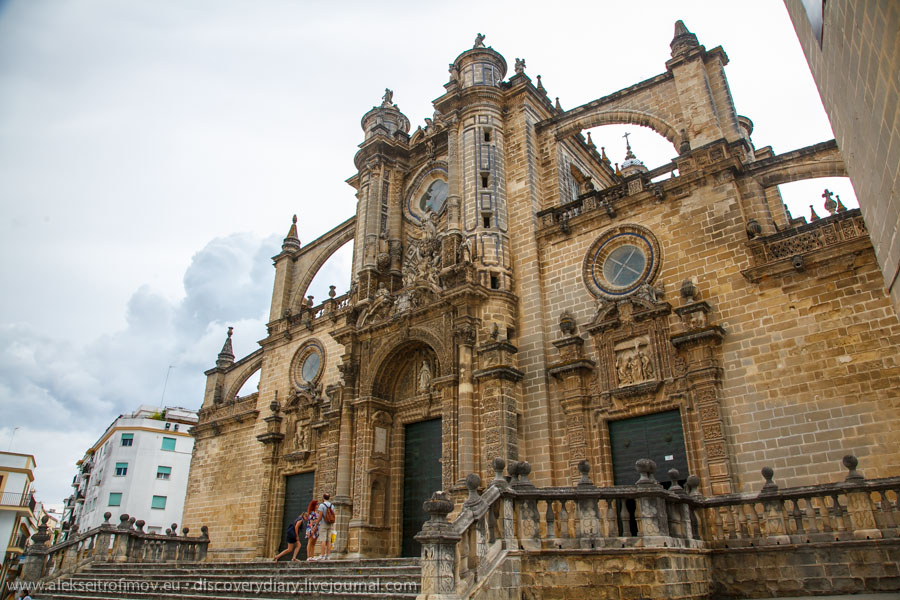
And it’s main façade – pretty remarkable it has to be said. Considering its size, Jerez really impresses. It’s full of tourists, everybody speaks English, and it’s quite difficult to imagine here that Spain has been in economic crisis for so long.
The post Welcome to Andalusia: Jerez de la Frontera appeared first on Around the world in three years.
]]>The post Barcelona appeared first on Around the world in three years.
]]>Barcelona is a middle sized city, but it feels like a huge one. You can’t come here unannounced and expect to find accommodation easily, the way I do most everywhere in the world on my big trip. In terms of hotel availability and prices Barcelona is in the same league with London, Paris and New York, despite the fact that it’s way smaller. For me Barcelona is full of unexpected twists that are no problem if you know about them, but that keep disorienting you if you come here as a visitor. Above all it is counter-intuitive: things are not where you expect them to be and clear information is hard to obtain.
For example it always throws me off that there are two airport terminals which are a long way apart. Another example: chaos tends to reign at the main train station. Trains arrive seemingly at random. Sometimes trains are full. In Belgium at least you can make order of the chaos by carefully studying the electronic screens announcing arrivals and departures; in Barcelona these are pretty useless, as only some trains are included on them according to some medieval logic. And so it goes. The locals though not only know these peculiarities by heart, but have automated various shortcuts to such an extent that they are surprised when a hapless visitor shares his annoyance with them.
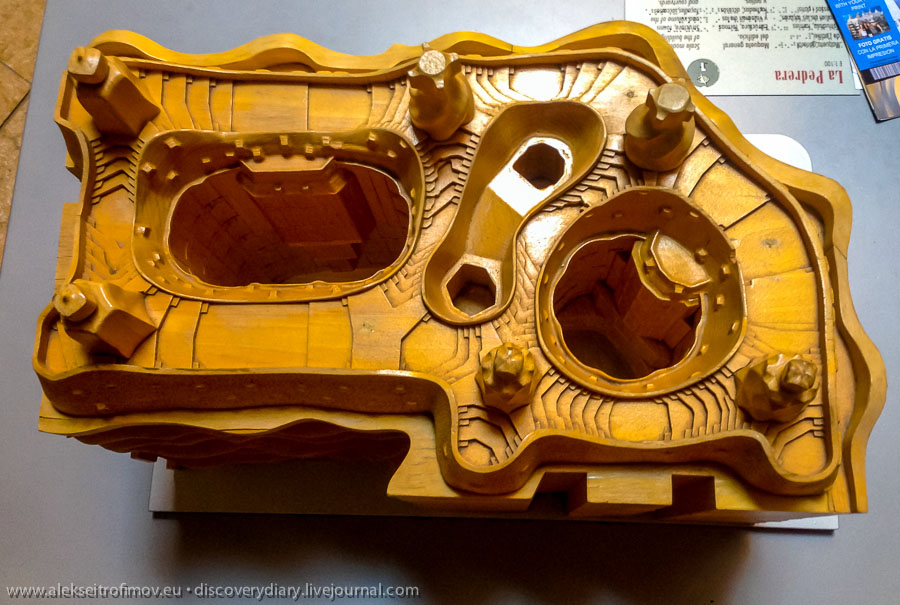
Of course all this said, Barcelona is still a fascinating place. This time I decided to finally visit one of those places which I always wanted to see but never quite had the time. It is Casa Milò, also known as La Pedrera (the Quarry). It got its sobriquet thanks to the particular look that Gaudí gave it, much like a rock that has been attacked by an army of stonemasons. A model, to give an idea of the look of the place:
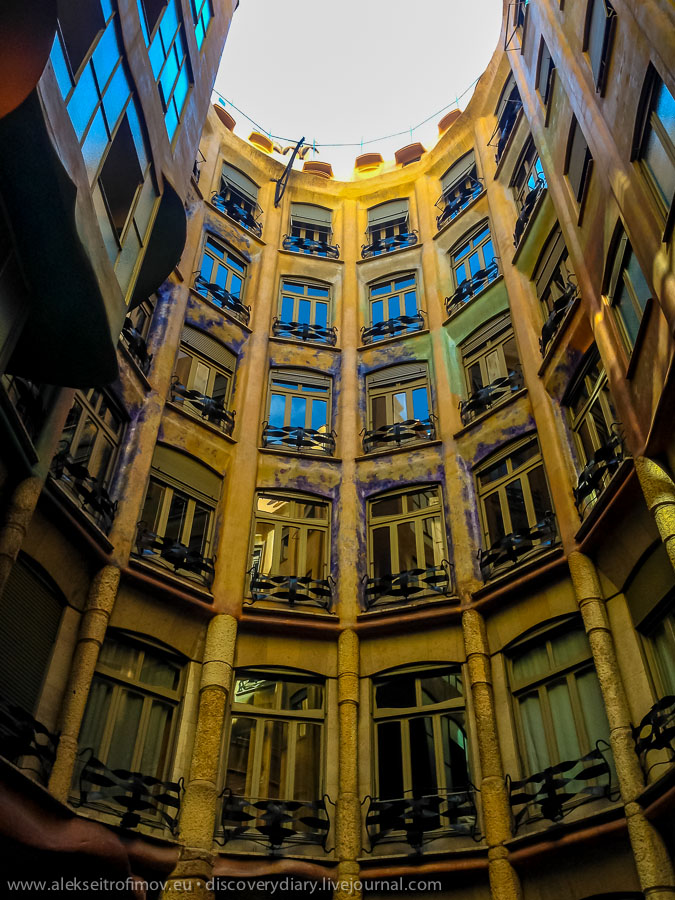
And its actual courtyard:
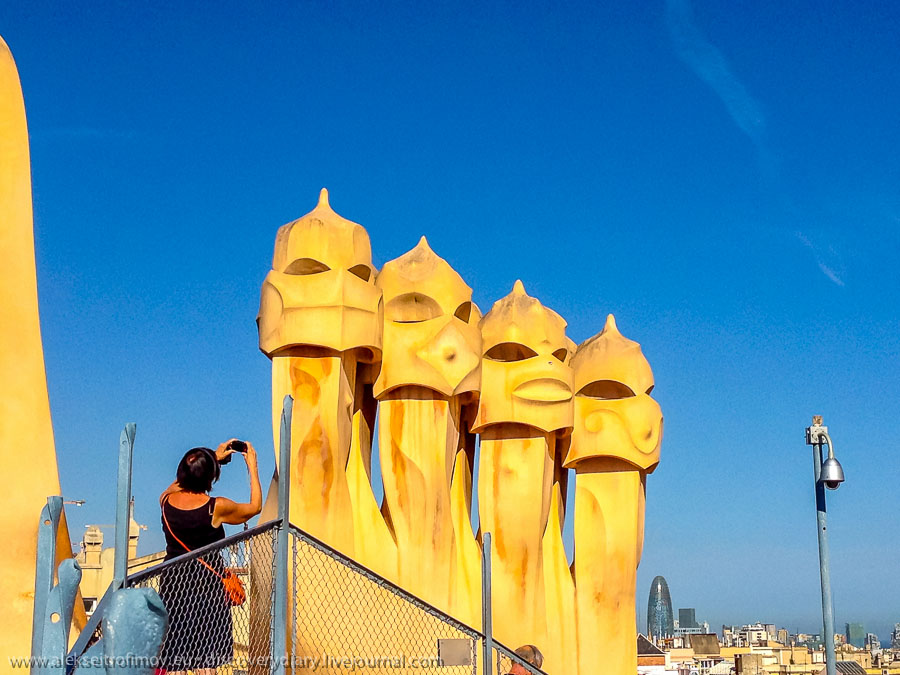
Surely the most outstanding feature of Casa Miló is its roof. A fantastic labyrinth of strange passages and vaguely archaic statues, it offers a wonderful view over the central Barcelona:
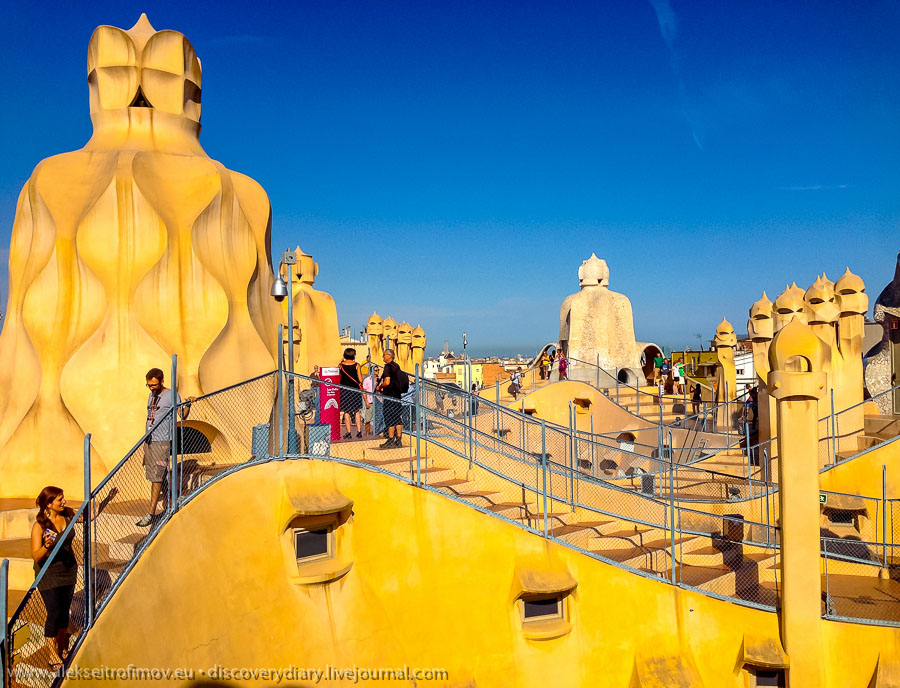
Personally I doubt that I could live in a house constructed by Gaudí. And so I’m not too surprised that the lady of the house of Casa Miló immediately threw out all the Gaudí-designed furniture as she moved in. Though it does of course looks like a sacrilege from today’s perspective. But try living in this enchanted kingdom!
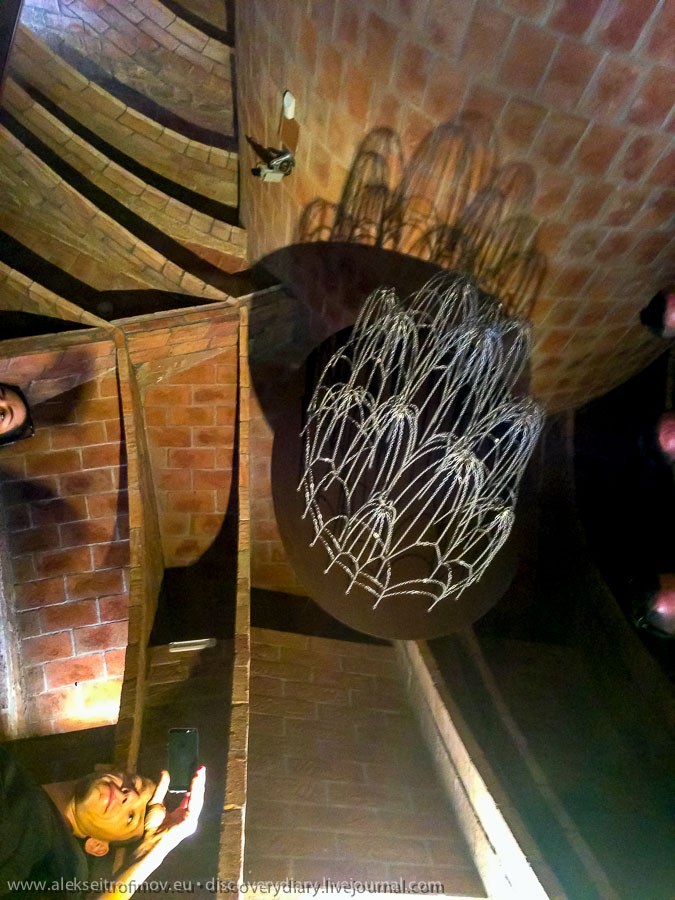
An element of internal decor – a lamp hanging from the ceiling. As you realise, it is placed above a mirror. The reflection creates a visual illusion of a model of another of Gaudí’s designs – a chapel in Parc Güell.
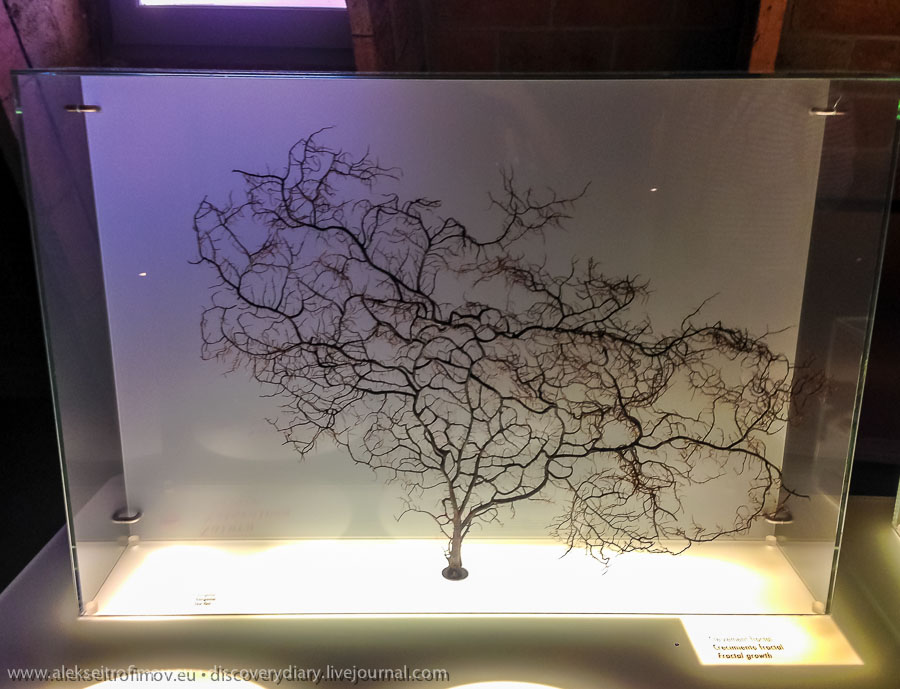
There is a Gaudí museum inside Casa Miló. The exhibition identifies various sources of inspiration for the mad architect. For example these diverging tree branches – these could be also river systems or leaf patterns or anything else in nature. These are referred to as fractals and fractal geometry is the branch of science that studies them.
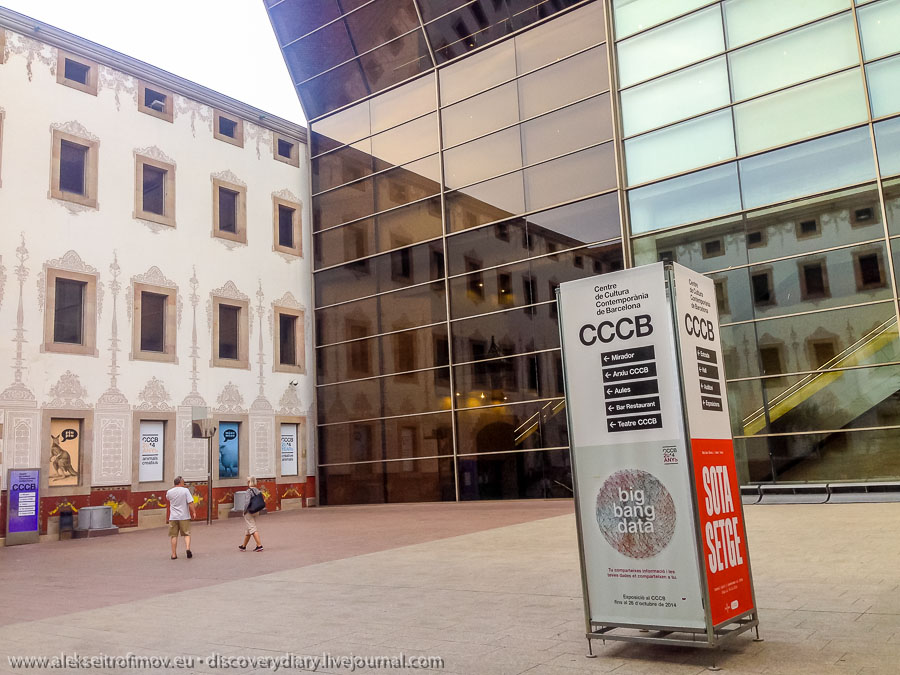
In Barcelona, as everywhere, I always visit the contemporary art museum. This is the courtyard of CCCB – the Centre of Contemporary Culture – in Raval neighbourhood. I love this place, the combination of the old and the new. I also went to MACBA.
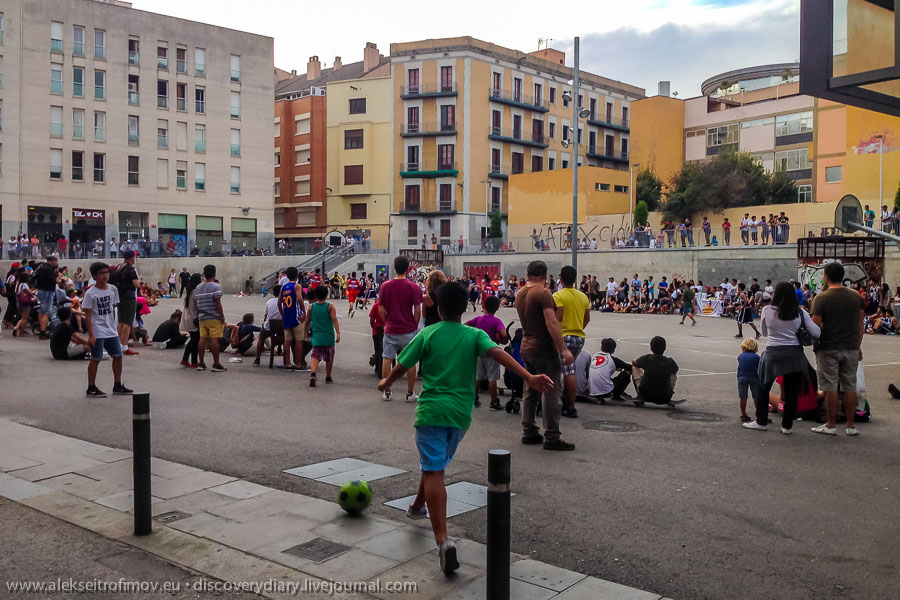
Walking around Raval I came across this action. A football match with a crowd of spectators, and everyone – the players and the spectators – looked like South East Asian immigrants.
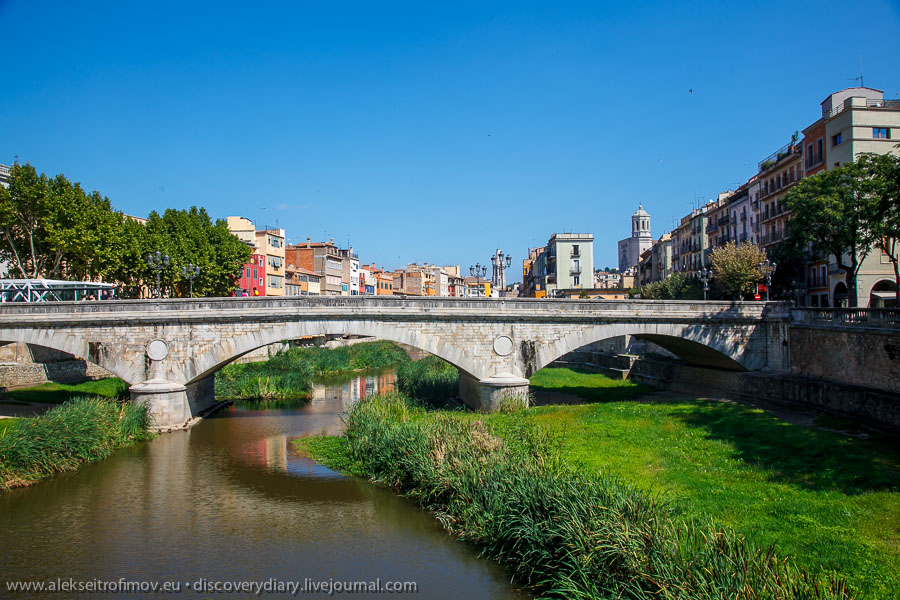
I arrived in Barcelona on a Ryanair plane from Alghero. In fact Ryanair flies to the Girona airport, which is quite far from Barcelona. I decided to stay for the night in the town of Girona and I didn’t regret this decision – it is a wonderful and atmospheric old Catalan town. This is the bed of the river that goes through the old city.
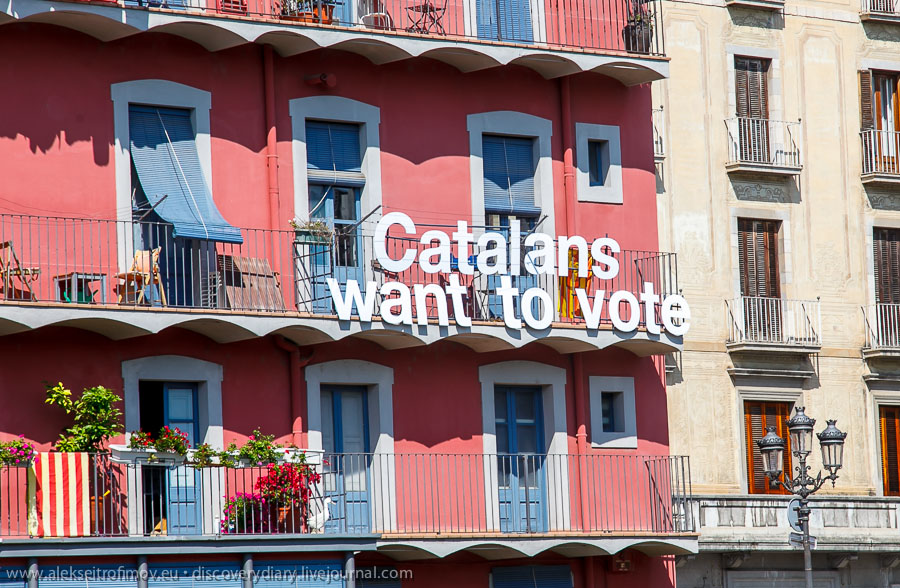
As you walk around Girona (and Barcelona), you can’t ignore the pro-independence slogans and Catalan flags everywhere. At that time it was not yet clear that the Catalan referendum could not go ahead. But it was and still is obvious that the desire for independence is no joke.
The post Barcelona appeared first on Around the world in three years.
]]>